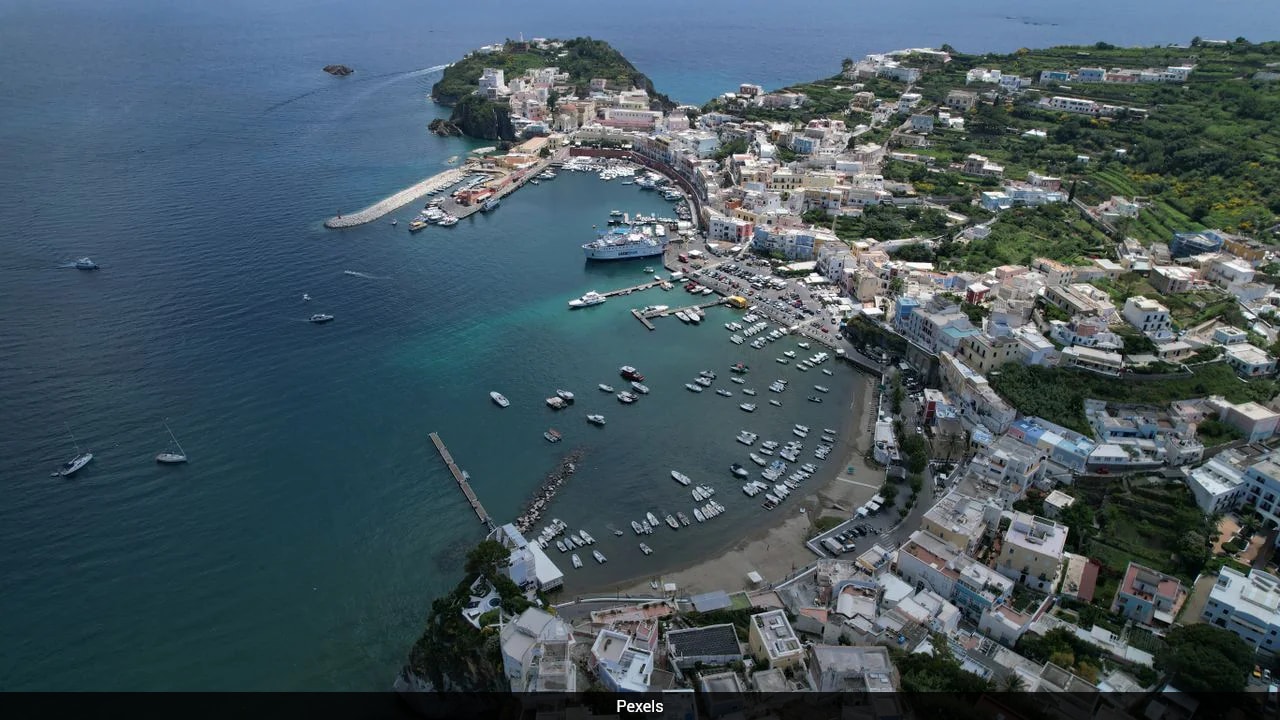
Italian police divers have intercepted a massive 40-kilogram haul of high-grade hashish, valued at over 500,000 euros (approximately Rs 5 Crore), hidden deep within a submerged sea cave on the exclusive holiday island of Ponza. The underwater discovery, executed just days before the peak summer tourist season begins, exposes a sophisticated logistical network designed to supply high-end contraband to wealthy VIPs, tech magnates, and celebrities who flock to the Pontine Islands. While standard law enforcement reports paint this as an isolated tactical victory, the reality points to an engineered supply chain utilizing the geography of the Tyrrhenian Sea to bypass conventional port security.
For decades, the dramatic volcanic cliffs of Ponza have served as a playground for Europe's elite, offering privacy away from the mainland. That exact isolation is what makes it an ideal transit hub for maritime trafficking rings.
The Mechanics of Underwater Dead Drops
The seizure reveals a shift from traditional overland smuggling routes toward highly specialized marine operations. Cartels are no longer relying on vulnerable speedboats rushing beaches at night. Instead, they utilize commercial-grade diving gear and waterproof positioning systems to establish underwater supply depots.
The location chosen—a dark, semi-submerged cavern accessible only from the sea—indicates intimate local knowledge of the island’s jagged coastline. Smugglers transport the compressed bricks of hashish via sea-bobs or small inflatables, anchoring the waterproofed cargo below the low-tide mark. This method allows the product to sit securely in international or territorial waters until regional distributors retrieve it in small, inconspicuous increments. By utilizing natural geological formations, traffickers eliminate the need for land-based warehouses, which are increasingly vulnerable to thermal imaging and local informants.
Security agencies have noted that the packaging used in the Ponza haul was specifically designed to withstand prolonged submersion, utilizing heavy-duty polymer layers and vacuum-sealing to protect the contents from saltwater degradation and pressure changes.
High Premium Demands of the Floating Sandbox
The timing of the drop aligns perfectly with the arrival of the superyacht fleet. During July and August, the waters surrounding Ponza, Capri, and the Amalfi Coast see a dramatic influx of private vessels. This seasonal spike creates a transient, high-net-worth market where consumers are willing to pay astronomical premiums for luxury goods and illicit substances alike.
+--------------------------------------------------------+
|             THE TYRRHENIAN SUPPLY CHAIN                 |
|                                                        |
|  [North African Producers]                             |
|             │                                          |
|             ▼ (Commercial Freighters / Speedboats)     |
|  [Deep-Sea Transit Hubs]                               |
|             │                                          |
|             ▼ (Specialized Divers)                     |
|  [Submerged Caves / Ponza Depots]                       |
|             │                                          |
|             ▼ (Local Pleasure Craft)                   |
|  [Superyachts / High-End VIP Consumers]                |
+--------------------------------------------------------+
Mainland supply lines are heavily monitored by the Guardia di Finanza, Italy's financial and customs police. Rail terminals, ferries, and regional airports employ drug-sniffing K9 units and random baggage screenings. The open ocean presents a different challenge entirely. A bag of contraband transferred from a local utility boat to a multi-million-dollar yacht anchored off the coast of Frontone Beach is incredibly difficult to detect without active, ongoing wiretaps or structural intelligence.
The Limits of Underwater Enforcement
While the recovery of 40 kilograms of product disrupts immediate local supply, it does little to damage the structural integrity of the broader Mediterranean trafficking routes. The maritime borders of Southern Europe are immense, and the resources required to monitor every underwater fissure are fundamentally unsustainable.
Detecting these hidden caches requires specialized diving units, sonar equipment, and precise intelligence. Most municipal police forces are unequipped for sustained subsurface operations. The traffickers know this. For every cave discovered by a routine patrol or an observant local diver, dozens of others remain untouched along the rugged Italian coastline. The Ponza bust proves that the traditional war on drugs has moved beneath the surface, into a space where law enforcement is permanently playing catch-up against the tides.