The solder smells like burnt pine resin and copper, a sharp, metallic tang that clings to the back of your throat long after you leave the cleanroom.
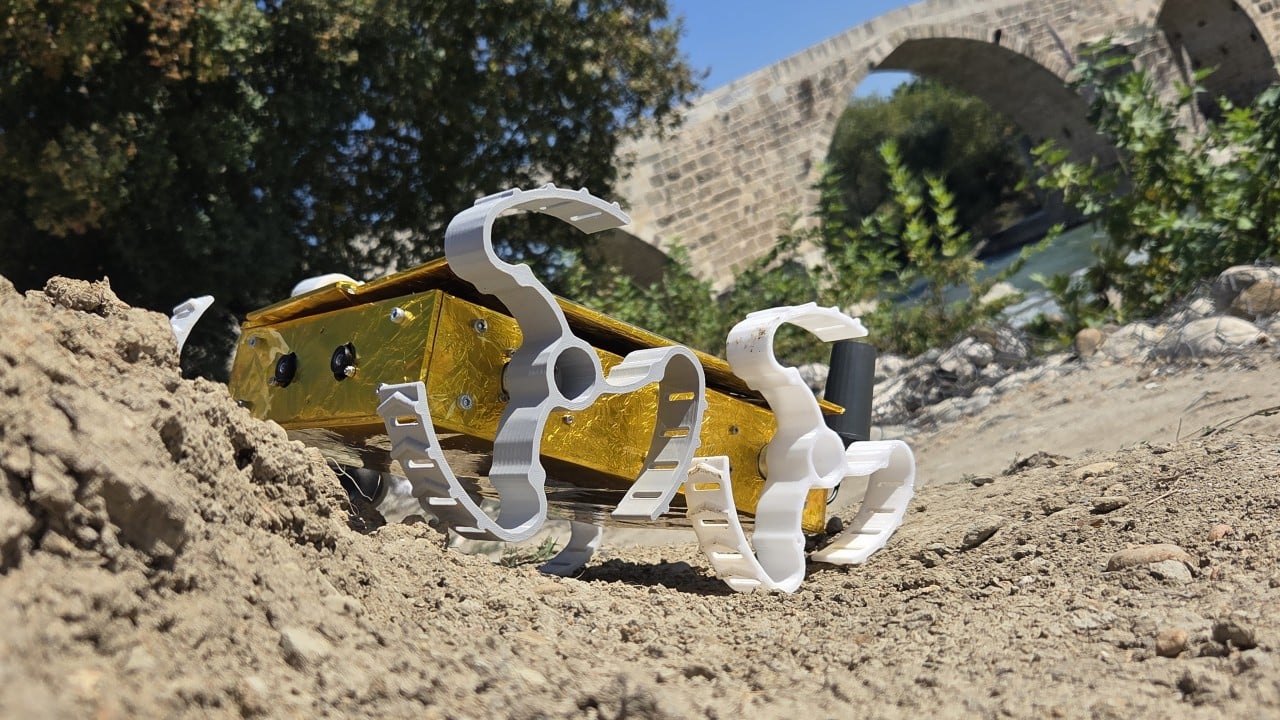
Picture a young propulsion engineer in Ankara—let us call her Elif, a composite of the hundreds of twenty-something graduates currently pouring out of Middle East Technical University and Istanbul Technical University into the cavernous assembly halls of the Turkish Space Agency. It is two in the morning. Under the harsh, shadowless glare of white LEDs, she is inspecting a gold-foil-wrapped micro-rover no larger than a microwave oven. Every millimeter of aluminum alloy has been shaved down to save grams. Every circuit board has been baked in vacuum chambers to survive the brutal, airless freeze of a lunar night where temperatures plummet to minus two hundred degrees Celsius.
Elif does not care about the ink drying on diplomatic parchment in Washington, D.C. She does not care about press releases drafted in Beijing. She cares about whether the lithium-ion battery pack will hold enough charge to fire a single telemetry pulse back across three hundred and eighty thousand kilometers of empty black void.
Yet the metal resting on her workbench is caught squarely in the gravitational pull of two colliding superpowers.
In the spring of 2024, Turkey walked into a room in Washington and signed the Artemis Accords, a sweeping, US-led framework governing the peaceful exploration of the Moon, Mars, and beyond. Months later, or rather along a parallel track running quietly beneath the radar of Western commentators, Ankara finalized the engineering reality of its lunar ambitions. When Turkey’s twin micro-rovers finally descend toward the gray, pulverized glass of the lunar surface later this decade, they will not ride atop a NASA Space Launch System rocket or a SpaceX Falcon Heavy. They will hitch a ride inside the belly of China’s Chang’e-8 lander.
To a casual observer reading a three-paragraph wire brief, this looks like a diplomatic glitch. A typo in the grand ledger of Cold War II. Turkey is a founding member of NATO, an alliance whose entire nervous system is wired around countering Russian aggression and containing Chinese strategic expansion. Signing Washington’s space rulebook while booking a ticket on Beijing’s lunar bus feels, at first glance, like showing up to a wedding in two different tuxedos.
Look closer, though. The confusion is ours, not theirs.
The Architecture of a False Choice
We have grown addicted to binary maps of the world. Red team, blue team. Democratic supply chains versus authoritarian blocs. In the sterile conference rooms of Washington think tanks, space exploration is increasingly viewed through the narrow prism of a zero-sum race—a replay of 1969, only with helium-3 deposits and water-ice craters replacing flags and footprints.
If you live in Istanbul or Ankara, binary maps get you killed. Or, at the very least, they leave you broke and stranded.
Geography is not an abstract concept in Turkey; it is a daily, physical pressure. You stand on a ferry crossing the Bosphorus, watching massive Russian oil tankers glide south toward the Mediterranean while American warships occasionally anchor a few miles away, all beneath the shadow of ancient Byzantine walls and Ottoman minarets. For centuries, survival on this narrow bridge between Europe and Asia has required a specific kind of muscle memory: never burn a bridge until you have already built two more beside it.
I remember sitting in a cramped café in Karaköy years ago, listening to a veteran Turkish defense contractor explain why his company bought machine tools from Germany, software from California, and raw titanium from wherever the shipping lanes were open. "When the giants dance," he told me, stirring sugar into a tulip-shaped glass of tea until the spoon clinked rhythmically against the rim, "the grass gets trampled unless the grass learns how to weave between their feet."
That is the emotional and historical core of Turkey’s lunar balancing act. It is not cynicism. It is pragmatism forged in the heat of a neighborhood where alliances shift like sandbars after a winter storm.
When Turkey established the Turkish Space Agency (TUA) in late 2018 and unveiled its ambitious National Space Program in 2021, skeptics laughed. The country was battling punishing inflation, currency volatility, and a battered economy. Critics at home and abroad dismissed the promise of putting a Turkish spacecraft on the Moon as political theater—bread and circuses projected onto the night sky.
They missed what was happening on the factory floors.
Over the past two decades, starved of Western defense exports during periods of diplomatic friction—most notably after Ankara’s purchase of the Russian S-400 missile defense system and its subsequent expulsion from the F-35 fighter jet program—Turkey did something unexpected. It built an indigenous aerospace and drone industry from scratch. Engineers who could not buy sensors from abroad learned to etch their own silicon. Metallurgists who could not import high-grade composites baked their own in domestic autoclaves.
By the time Ankara looked up at the Moon, it no longer wanted to be a passive passenger buying a seat on someone else’s rocket. It wanted to build the hardware.
What the Ink Actually Says
To understand how Turkey can legally and technically straddle both Washington and Beijing without violating either side’s rules, you have to strip away the political theater and look at the mechanics of the agreements themselves.
Consider what the Artemis Accords actually are. Despite the grand, treaty-like pomp surrounding every signing ceremony, the Accords are not a legally binding international treaty. They do not require Senate ratification. They do not establish a military alliance, nor do they contain a exclusivity clause forbidding signatories from talking to the neighbors.
Think of the Artemis Accords as a homeowners' association agreement for a neighborhood that hasn't been built yet.
Established by NASA and the US State Department in 2020, the Accords translate the broad, dusty principles of the 1967 Outer Space Treaty into practical rules of the road for the twenty-first century. Signatories agree to:
- Maintain transparency around their space policies and scientific plans.
- Rescue astronauts in distress, regardless of nationality.
- Register space objects properly and manage orbital debris responsibly.
- Share scientific data openly with the global community.
- Respect "safety zones" around lunar landing sites and mining operations so one country’s rover doesn't accidentally kick abrasive lunar dust onto another country’s solar panels.
Notice what is missing from that list. Nowhere does it say you must buy American rockets. Nowhere does it forbid a signatory from placing a scientific instrument onto a Chinese spacecraft.
In fact, NASA officials have quietly welcomed nations like Turkey into the Artemis fold precisely because Washington wants its norms—transparency, open data, conflict avoidance—to become the global default before anyone starts carving up the lunar south pole. By signing the Accords, Turkey aligned itself with the Western legal framework for how humans should behave on the Moon.
Meanwhile, over in Beijing, China has been constructing its own lunar architecture: the International Lunar Research Station (ILRS), a sprawling, multi-decade plan to build a permanent robotic—and eventually human—base near the Moon’s south pole by the mid-2030s.
While the United States is legally barred from bilateral space cooperation with China under the 2011 Wolf Amendment, middle powers face no such handcuffs. Beijing knows this. China has aggressively courted nations from Pakistan and South Africa to Egypt, Thailand, and Turkey, offering something NASA rarely hands out to newcomers: free or heavily subsidized payload mass on flagship lunar missions.
In late 2023, the China National Space Administration opened the doors for international payloads aboard Chang’e-8, a mission slated for launch around 2028 to test in-situ resource utilization—essentially, learning how to melt lunar soil into bricks and extract water from shadowed craters.
Turkey applied. And Turkey won a slot.
The Physics of Hitchhiking
Getting to the Moon is violently expensive. Every kilogram you want to soft-land on the lunar surface requires roughly a hundred kilograms of propellant and structural mass sitting on the launchpad back on Earth. For a country executing its very first deep-space missions, building a heavy-lift rocket capable of throwing a lander across cis-lunar space would take fifteen years and tens of billions of dollars Ankara simply does not have.
So you hitchhike.
First, Turkey plans to send a domestically built spacecraft into lunar orbit—a hard landing mission designed to test its homegrown hybrid rocket propulsion system developed by DeltaV Space Technologies. That mission proves Turkish engines can fire in deep space and navigate across hundreds of thousands of kilometers.
Then comes the surface. Under the agreement with China, two tiny Turkish micro-rovers—weighing just a few kilograms each, developed by Turkish engineers and institutions—will ride inside the Chang’e-8 descent module. Once China’s lander touches down near the lunar south pole, a ramp will deploy, and Turkey’s miniature machines will roll out onto the regolith.
They will map the terrain. They will test radiation shielding. They will prove that Turkish electronics can survive the jagged, static-charged dust that ruined equipment during the Apollo era.
Let us pause and appreciate the sheer audacity of this maneuver.
If you are an engineer like our hypothetical Elif in Ankara, the politics evaporate the moment you look at the telemetry budget. Whether the booster beneath your rover burns kerosene in Florida or liquid hydrogen in Wenchang, the gravity of the Moon pulls at the exact same rate of 1.62 meters per second squared. The vacuum is just as unforgiving. The victory of seeing a Turkish flag—and a Turkish telemetry signal—beaming back from the lunar south pole is identical.
Yet for diplomats in Washington and Beijing, this twin-track strategy is profoundly unsettling, because it exposes a quiet shift in global power that neither capital fully controls.
The Rise of the Space Non-Aligned Movement
We are witnessing the birth of a new kind of non-aligned movement, written not in the jungle conferences of Bandung in 1955, but in orbital mechanics and payload manifests.
For sixty years, space was an exclusive club owned by two nations. If you wanted to leave Earth, you knelt before Moscow or Washington. You adopted their ideology, used their hardware, and accepted their strategic umbrella.
That monopoly is dead.
Today, launch costs are plummeting, micro-electronics have shrunk satellite buses to the size of shoeboxes, and middle powers—Turkey, India, the United Arab Emirates, South Korea, Brazil—possess the domestic engineering talent to build world-class space hardware. These nations refuse to let a terrestrial trade war dictate their cosmic ambitions.
Look at the UAE. The Emirates sent a probe to Mars on a Japanese rocket, trained astronauts in Russia and Houston, signed the Artemis Accords, and briefly explored putting a rover on a Chinese lander before US export control rules—specifically the International Traffic in Arms Regulations (ITAR)—forced a pivot because the rover contained American-made components.
Turkey watched that episode carefully.
When Turkish engineers designed their lunar micro-rovers, they deliberately scrubbed the schematics of restricted American components. By building the flight computers, propulsion valves, and structural chassis domestically—or sourcing non-ITAR parts—Ankara immunized itself against Washington’s veto. No export license from the US State Department can stop a Turkish rover from boarding a Chinese rocket if there isn't a single American microchip inside it.
That is the hidden leverage nobody talks about in the headlines. Technological sovereignty isn't just about pride; it is about buying yourself the freedom to say yes to two rivals at the exact same time.
The Friction Beneath the Surface
Still, walking a tightrope over an abyss is never effortless. Even the most skilled acrobats feel the wire tremble beneath their boots.
As the 2028 launch window for Chang’e-8 draws closer, Turkey will inevitably walk straight into a minefield of technical and diplomatic friction.
Consider the data problem. Under the Artemis Accords, Turkey has committed to the open sharing of scientific data and strict adherence to international standards for lunar safety zones. China’s space program, closely intertwined with the People’s Liberation Army, operates under vastly different protocols regarding transparency and dual-use technology.
What happens when Turkey’s micro-rovers roll off a Chinese lander and begin mapping subsurface water ice—the single most valuable strategic resource on the Moon, essential for producing rocket fuel in deep space?
Washington will demand to know that no sensitive Western-adjacent aerospace techniques are leaking into Chinese hands through joint integration meetings. Beijing will expect operational discretion and loyalty to the ILRS mission architecture. Meanwhile, Turkish engineers will be stuck in the middle, trying to calibrate spectrometers while lawyers argue over non-disclosure agreements.
There is also the deeper, lingering question of trust.
In Washington, skepticism toward Ankara already runs deep across Capitol Hill. Lawmakers who spent years blocking F-16 upgrades and lecturing Turkey over its foreign policy independence will look at a Turkish rover riding a Chinese rocket and see confirmation of their worst suspicions—that Turkey is drifting inexorably eastward, using NATO membership as a shield while cuddling up to America’s primary strategic competitor.
That reading is too simple, and dangerously wrong.
If Washington pushes Ankara to choose between Artemis and Chang’e, Washington will lose. Not because Turkey prefers Beijing—historically, culturally, and economically, Turkey remains deeply tied to Europe and the West, and its defense forces still train and fight within NATO standards—but because no proud, rising regional power will accept an ultimatum that cripples its own scientific ascent when the critic offers no comparable alternative on the same timeline.
Beijing, for its part, harbors no illusions about Turkey’s loyalty. Chinese strategists understand that Ankara is using China’s heavy-lift capacity as a stepping stone. Once Turkey masters lunar surface operations and scales up its domestic launch vehicles—perhaps eventually building a spaceport in Somalia, a project Ankara has actively pursued to gain equatorial launch access—it won't need rides from anyone.
China is fine with that. Every time a NATO ally puts hardware onto a Chinese Moon lander, Beijing scores a quiet, undeniable propaganda victory. It signals to the Global South that the future of space exploration does not run exclusively through Cape Canaveral.
The Dust Doesn't Care
It is easy to get lost in the grand chessboard of geopolitics, to reduce human ambition to arrows on a map and percentages in a budget ledger.
Let us go back to that cleanroom in Ankara, to the smell of burnt resin and the hum of HEPA filters scrubbing the air clean of stray skin cells.
In a few years, a heavy rocket will roar off a pad on Hainan Island in southern China, riding a pillar of blinding white fire into the humid tropical sky. Four days later, after braking into lunar orbit and descending through the black void above the Moon’s rugged southern highlands, a lander will settle onto gray dust that has lain undisturbed for four billion years.
A small ramp will unfold. Two tiny machines, born in the workshops of Anatolia, will roll forward on titanium wheels, leaving thin, jagged tracks in the ancient soil.
They will carry the legal blessing of an American-authored accord and the physical boost of a Chinese rocket. They will carry the bruised, stubborn pride of an engineering generation that refused to wait for permission to touch the sky.
Up there, in the silent, airless glare of the lunar noon, there are no borders drawn in ink. There is only the cold vacuum, the blinding sun, and the tracks left behind by whoever was clever enough to make the trip.