The chattering class of naval "experts" is currently hyperventilating over what they call a "catastrophic miscalculation." They claim that a shift toward aggressive maritime posturing in the current theater is a shortcut to World War III. They argue that we are poking a sleeping dragon with a short stick. They are wrong. They are not just wrong about the strategy; they are wrong about the fundamental physics of modern naval power.
The consensus view—the one you’ll find in every sanitized op-ed from D.C. to London—is that "de-escalation" is the only path to stability. This is a fairy tale told by people who haven't looked at a shipyard or a VLS (Vertical Launch System) cell count in a decade. You don't stabilize a spiraling war by retreating into the horizon and hoping the adversary respects your "restraint." You stabilize it by making the cost of their next move mathematically impossible to justify. Don't forget to check out our recent post on this related article.
What the critics call "miscalculation," a seasoned strategist calls "re-establishing the threshold."
The Myth of the "Spiraling War"
The term "spiraling" is a linguistic crutch used to avoid admitting that one side has already lost the initiative. A war only "spirals" when the dominant power refuses to set boundaries. For the last several years, the West has operated under the delusion that naval presence is the same as naval power. It isn't. To read more about the context here, The Washington Post offers an informative breakdown.
I have watched billions of dollars in carrier strike group deployments result in exactly zero deterrence because our adversaries knew the Rules of Engagement (ROE) were written by lawyers, not admirals. We’ve been playing a game of maritime "tag" while the other side is playing a game of territorial expansion.
The "experts" fear that aggressive maneuvers will trigger a kinetic response. They fail to see that the response is already happening. It’s happening in the form of "gray zone" tactics—lasers pointed at pilots, "accidental" collisions, and the slow-motion blockade of international shipping lanes.
If you aren't willing to risk a spike in tension, you have already surrendered the sea.
The Mathematics of the VLS Deficit
Let’s talk about the data the "miscalculation" crowd ignores: the magazine depth.
The U.S. Navy and its allies are facing a terrifying math problem. In any sustained high-end conflict, we run out of interceptors long before the enemy runs out of cheap, mass-produced suicide drones and anti-ship cruise missiles (ASCMs). This is the "asymmetric trap."
- The Cost Ratio: We spend $2 million on a RIM-162 ESSM to take out a drone that costs $20,000.
- The Capacity Gap: A standard Arleigh Burke-class destroyer has 90 to 96 VLS cells. Once they are empty, that ship is a billion-dollar paperweight until it reaches a port equipped for re-arming—which usually isn't in the combat zone.
The "conservative" strategy of staying back and intercepting incoming threats is a death sentence by depletion. The "aggressive" stance being criticized—striking the archer instead of the arrows—is the only way to win the math war.
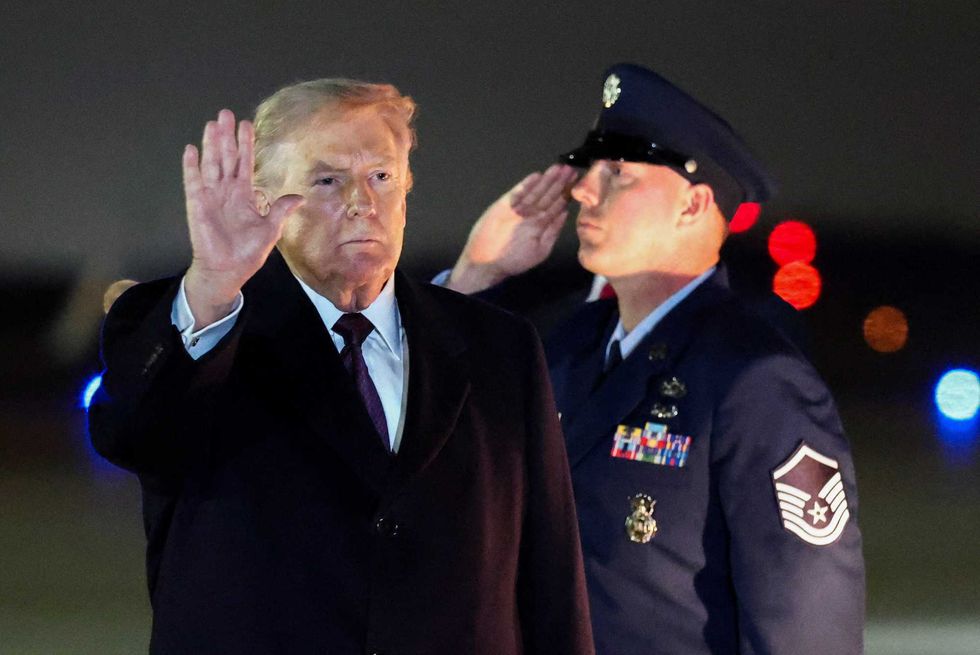
If Trump’s policy shift moves the target from the incoming missile to the launch platform on the coast, it isn't an escalation. It’s a survival necessity. If you wait for the "spiral" to reach your hull, you’ve already lost the exchange.
Why "Proportionality" is a Loser’s Game
One of the loudest complaints is that recent maneuvers are "disproportional."
Proportionality is a concept for police work, not peer-level naval conflict. In the maritime domain, the second-best navy is the first one to sink. If an adversary harasses a commercial vessel, a "proportional" response is to harass one of theirs. That achieves nothing. It merely validates their behavior as a low-cost tactic.
A "disproportional" response—say, the total elimination of the offending unit's home port infrastructure—changes the risk-reward calculation permanently.
Critics argue this invites "total war." This is a classic false dichotomy. Adversaries like China or Iran are deeply rational actors. They push because they find soft spots. When they hit a wall, they stop. The "experts" have spent twenty years telling us that the wall is a provocation. I’ve seen what happens when you don't build the wall: you get the South China Sea of 2026, where international law is a suggestion and "freedom of navigation" is a dangerous chore.
The Carrier Vulnerability Thought Experiment
Imagine a scenario where a U.S. Carrier Strike Group (CSG) continues the "de-escalation" policy. They stay 500 miles off the coast, operating in a defensive posture.
The adversary launches a saturation attack of 200 drones and 50 ballistic missiles. Even with a 95% intercept rate—which is heroically high—five to ten projectiles hit the carrier. The deck is fouled. The "symbol of American power" is smoking and retreating.
Now, imagine the "aggressive" alternative: At the first sign of massed battery mobilization, the CSG launches a preemptive electronic warfare suppression and follows it with kinetic strikes on the command-and-control nodes.
Which scenario leads to a shorter war? The first invites a follow-up attack because the enemy sees blood in the water. The second forces the enemy to the negotiating table because their "invincible" coastal defense just turned into a graveyard.
The critics call the second option a "catastrophe." I call it the only way to keep 5,000 sailors alive.
The Tech Reality: We are Out of Time for "Fostering Dialogue"
The luxury of slow, diplomatic "synergy" died with the proliferation of hypersonic tech and autonomous swarms. We are now in an era where the "OODA loop" (Observe, Orient, Decide, Act) has been compressed from minutes to seconds.
If our naval strategy is bogged down by the fear of "escalation," our AI-driven sensors will be identifies targets that our human commanders are too terrified to hit. We are building Ferraris but driving them like golf carts because the "experts" are worried about the noise.
We need to stop asking "How do we stop the war from spiraling?" and start asking "How do we end the conflict on day one?"
The answer isn't "holistic" maritime security. It is the credible, terrifying threat of overwhelming force.
The Flaw in "People Also Ask" Logic
If you look at what people are searching for, you see questions like:
- Can the U.S. Navy win a two-front war?
- Is Trump’s naval policy legal under international law?
These questions are built on flawed premises.
First, "winning" isn't about having more ships; it's about having more will. The UK had a massive navy in 1939, but they lacked the positioning and the early-strike mindset to prevent the Atlantic from becoming a slaughterhouse.
Second, "international law" at sea is only as strong as the hegemon willing to enforce it. If the U.S. retreats into a "defensive" shell to avoid "miscalculations," there is no international law. There is only the law of the closest missile battery.
The Battle Scars of "Restraint"
I’ve seen what happens when we prioritize "de-escalation" over readiness. I’ve seen multimillion-dollar assets shadowed by rust-bucket trawlers because our captains were told that "bumping" would cause a diplomatic crisis.
What the experts don't tell you is that the sailors on those ships feel the shift. They know when they are being used as "presence" (targets) rather than "power" (deterrents). The current move toward a more "unpredictable" and "aggressive" naval posture isn't a mistake—it’s a long-overdue correction.
It’s an admission that the last two decades of "liberal international order" at sea were a fluke supported by a lack of peer competition. That era is over.
The Price of This Perspective
Is there a risk? Of course. Taking a hard line at sea is inherently dangerous. You might actually have to fight.
But the "experts" offer a far more dangerous path: the slow, certain erosion of maritime dominance until we find ourselves in a conflict we are no longer equipped to win. They prefer the "peace" of a boiling frog.
I’ll take the "miscalculation" of a leader who understands that in naval warfare, the only thing more expensive than a strike is a missed opportunity to end the threat before it fires.
Stop listening to the people who think a navy is a diplomatic tool. A navy is a hammer. If you aren't willing to hit anything with it, don't be surprised when your enemies start treating you like a nail.
Get the ships out of the defensive "huddles." Push the engagement zones forward. Let the "experts" moan about the "spiral" while the actual combatants regain the high ground—or in this case, the deep water.
The catastrophe isn't the escalation. The catastrophe was the decades of pretending that weakness is a strategy.
Burn the white papers. Reload the VLS.