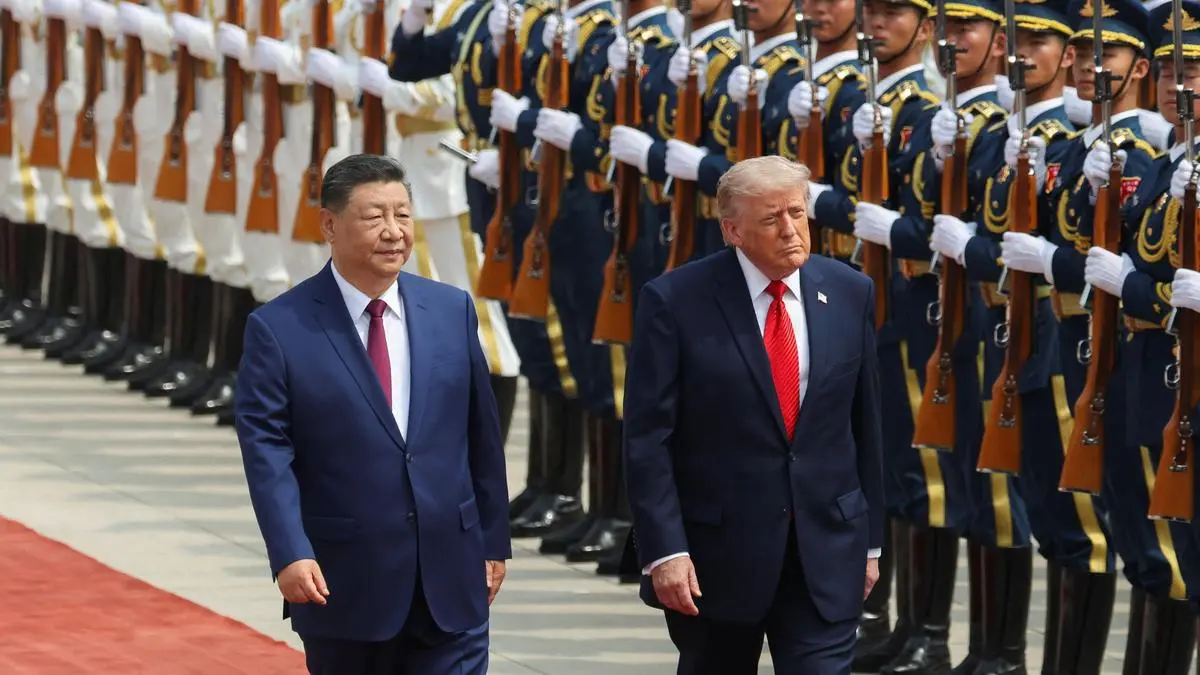
We’ve seen this movie before. The red carpets are rolled out, cannons fire salutes, and world leaders trade handshakes that look more like wrestling matches. Donald Trump’s latest meeting with Xi Jinping in Beijing is basically a masterclass in "state visit plus" energy. It’s got the flavor of a historical epic, with tours of the Forbidden City and primary school kids waving flags, but don't let the spectacle fool you. Underneath the gold leaf and the marble of the Great Hall of the People, the actual friction between these two superpowers is as sharp as ever.
If you’re looking for a quick answer on whether this meeting actually fixed anything, the reality is a resounding "not really." These summits are designed to look successful while kicking the hardest problems down the road. While Trump is busy calling Xi a "great leader" and a "friend," the Chinese side is issuing stern warnings about Taiwan and global conflicts. The gap between the friendly optics and the cold geopolitical reality isn't just wide; it's a canyon.
The 250 billion dollar mirage
Everyone loves a big number. During the 2017 visit, the headline was a staggering $250 billion in commercial deals. It sounds like a landslide victory for American trade, but look closer. Most of those "deals" were non-binding memorandums of understanding. They’re basically pinky-promises that might or might not turn into real contracts.
In the world of international trade, there’s a massive difference between a signed contract and a "letter of intent." Trump wants to close the trade deficit by getting China to buy more American "5B" goods:
- Boeing aircraft
- Beef and other agricultural products
- Beans (soybeans)
- Board of Investment and Board of Trade agreements
Xi has his own "3T" agenda: Taiwan, Tariffs, and Technology. While Trump focuses on sales figures, Xi focuses on long-term structural power. He’s looking to protect China's tech sector and ensure the U.S. doesn't cross what he calls his "red lines" regarding Taiwan. You can't bridge that gap with a few plane orders.
Why the fentanyl fight is a stalemate
Opioids have become a weirdly specific bargaining chip in these talks. Trump has made it clear that stopping the flow of fentanyl into the U.S. is a top priority. In 2017, he basically told Xi, "You've got to help us with this." Beijing eventually agreed to schedule fentanyl and its precursors as controlled substances, but the problem just moved.
When China cracks down on one chemical, producers in small, clandestine labs just switch to a different one. It’s like a game of whack-a-mole. Beijing uses its cooperation on drugs as a lever to get concessions on trade or sanctions. They’ll give a little, wait for the U.S. to lower a tariff, and then move the goalposts. It's a cycle that addresses the symptoms but never the disease of supply and demand.
The Thucydides Trap and the ego factor
Xi Jinping doesn't just talk about trade; he talks about history. He’s brought up the "Thucydides Trap" multiple times—the idea that a rising power and an established power are destined for war. While Trump tries to use his personal relationship with Xi to grease the wheels, the Chinese leadership is much more calculating. They see Trump’s unpredictability as something to be "boxed in" by a schedule of meetings and formal protocols.
You’ve got two men who both view themselves as the architects of their nations' "rejuvenation." Trump’s "Make America Great Again" and Xi’s "China Dream" are essentially two versions of the same pitch. When they meet, the goal isn't just a trade deal; it's about who looks stronger on the world stage. Xi’s hospitality isn't just being nice; it’s a way to project that China is now a "peer competitor" rather than a student of the West.
Reality check on the "state visit plus"
The Chinese government goes all out for Trump because they know he loves the pageantry. They gave him a "state visit plus," which is basically a state visit with extra gold trim. But don't confuse being a good host with being a pushover. While the cameras capture them smiling at the Temple of Heaven, their negotiators are digging in their heels on:
- Rare Earths: China knows the U.S. is vulnerable here and uses it as leverage.
- Advanced Chips: The U.S. wants to block China's tech rise, which Beijing views as a direct attack on its future.
- South China Sea: Military posturing continues regardless of how many banquets they hold.
If you're waiting for a single "breakthrough" that solves the trade war or the Taiwan issue, stop holding your breath. These meetings are about managing a rivalry, not ending it. They create a temporary "pause" in hostilities, but the underlying competition is baked into the DNA of both countries right now.
The next step for anyone following this isn't to watch the handshake. Watch the export controls. Watch the military drills in the Pacific. That’s where the real story is happening. If you want to understand where this is going, look at the actual policy changes in the weeks following the summit, not the "memorandums of understanding" announced during the gala dinner. Don't buy into the fanfare; the hard work of diplomacy happens after the red carpet is rolled up and the cannons go silent.
What the US and China get wrong about each other
This video provides an expert breakdown of the misconceptions and political narratives that continue to drive the rivalry between the two superpowers.
http://googleusercontent.com/youtube_content/1