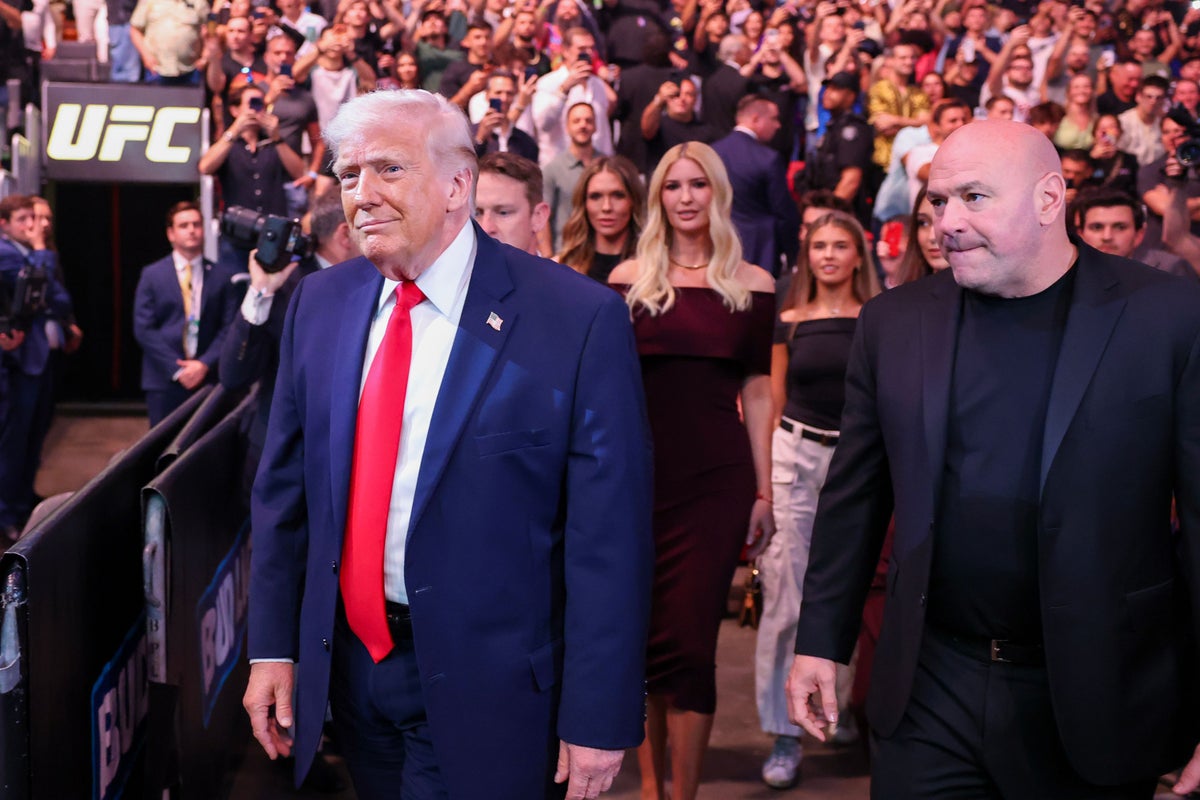
The mainstream sports media is treating the rumor of a Donald Trump appearance at Madison Square Garden for the NBA Finals like it is a standard celebrity sighting. They are looking at the surging ticket demand, the 11-game winning streak of the New York Knicks, and they are drooling over the potential television ratings. They see a classic New York spectacle.
They are completely blind to the reality of the situation.
I have spent nearly two decades analyzing the commercial operations of professional sports leagues, managing broadcast partnerships, and evaluating how political optics translate to corporate sponsorships. When a polarizing political figure steps into a highly charged, hyper-localized arena, it does not generate a harmless buzz. It creates a commercial and operational crisis.
The lazy consensus from the sports press assumes that all attention is good attention. It operates under the outdated assumption that putting a former president and current lightning rod into a front-row seat at the Garden creates an unforgettable pop-culture moment. The reality is that the NBA is currently walking into a corporate trap. If Trump sits courtside in Manhattan during the biggest series of the decade, it will actively damage the league's primary revenue streams, fracture the local fan base, and completely hijack the athletic achievement of a franchise that has spent 27 years trying to get back to this stage.
The Financial Illusion of the Political Rating Spike
Mainstream media executives love a circus because a circus pulls a number. If a camera cuts to a private suite or a baseline seat to show a controversial political figure, the immediate social media metrics explode. The network executives pop champagne because the overnight numbers show a massive peak.
This is a short-sighted trap. As someone who has analyzed the long-term impact of non-sporting disruptions on broadcast valuations, I can tell you that temporary spikes driven by political controversy are toxic to premium advertisers.
The NBA does not make its billions from casual onlookers who tune in for three minutes to see a crowd reaction. It survives on blue-chip corporations—automotive giants, technology providers, consumer banking institutions—that purchase multi-million-dollar ad packages across a seven-game series. These corporations do not want their brand identity sandwiched between a political rally and a locker room reaction. When a sporting event turns into a proxy war for national politics, major brands pull back their spend or demand make-goods.
The league's broadcast product relies on a carefully curated environment of high-stakes entertainment. Injecting a partisan spectacle into a New York market that voted overwhelmingly against him doesn't invite a unified audience; it creates an environment where half the viewers are waiting to see a riot and the other half are ready to turn off the television in disgust.
The Myth of the Unified New York Crowd
The narrative currently being pushed by romantic sports writers is that New York is so desperate for a basketball championship that the city will unite regardless of who is in the building. They cite the euphoria of the 130-93 demolition of the Cleveland Cavaliers to prove that the fan base is in a state of pure bliss.
This ignores the actual mechanics of human behavior inside Madison Square Garden.
The Garden is a high-pressure cooker. Unlike corporate arenas in cities where tickets are handed out to disinterested executives, the crowd in Manhattan is volatile, deeply invested, and intensely vocal. They are, as local observers put it, a specific species of human. When you insert a hyper-polarizing figure into that room, you don't get a polite golf clap or a minor murmur. You split the building completely in half.
Imagine a scenario where the Knicks are down by two in the fourth quarter of Game 3. The referee misses a blatant loose-ball foul. The crowd is already on a knife-edge. The broadcast camera cuts to a controversial political figure laughing in a courtside seat. The stadium doesn't just boo the ref anymore; the entire energy of the arena shifts into a chaotic, politically charged shouting match between competing sections of the upper and lower bowls.
The athletic narrative is immediately suffocated. Jalen Brunson’s brilliant mid-range game and Karl-Anthony Towns’ paint dominance are reduced to secondary plotlines. The game becomes a backdrop for a cultural shouting match.
Hijacking the Core Sporting Product
The most egregious offense of this potential appearance is how it disrespects the actual basketball being played. The Knicks have put together one of the most statistically dominant postseason runs in modern history, outscoring their opponents by a combined 262 points during their current streak. This is an elite athletic unit coached by Mike Brown that relies on precise defensive rotations, relentless offensive rebounding, and absolute focus.
When an administration or a massive political campaign decides to use a sports championship as a backdrop for a public relations victory lap, the sport itself suffers.
- The Security Logistics Overwhelm the Venue: A presidential-level security detail at Madison Square Garden requires shutting down surrounding streets hours before tip-off. It changes the arrival times for players, disrupts the standard pre-game routines, and forces the home team to alter the very rituals that led to an 11-game winning streak.
- The Post-Game Access Decays: Instead of questioning Mikal Bridges about his perimeter defense or OG Anunoby about his health, the media scrum in the locker room shifts entirely to political commentary. Players who have worked their entire lives to reach the Finals are suddenly forced to answer trap questions about executive policy and political endorsements.
- The Atmosphere Suffocates: The authentic, gritty basketball culture that the city pride is built on gets replaced by a highly staged, sterile security zone. The real fans who saved for months to buy a ticket are delayed at security checkpoints while political entourages skip the line.
The downside to acknowledging this reality is that it forces us to admit how fragile the sports entertainment product actually is. We like to believe that the game is bigger than politics, that the court is a sacred space where only performance matters. But it isn't. The moment a sports league allows its biggest stage to be leveraged for non-sporting political theater, it surrenders control of its own narrative.
The NBA shouldn't be celebrating the rumor of this appearance. They shouldn't be leaking it to reporters to drive up ticket prices that are already at historic highs. They should be quietly terrified. The Knicks have waited since 1999 to play for a title on their own terms. Letting a political circus take over the arena isn't a victory for the city—it's a corporate, cultural, and competitive disaster that the league will be cleaning up long after the final buzzer sounds.
The New York Knicks Will Play for the NBA Championship This video features coach Mike Brown discussing the team's grit and focus, highlighting the pure basketball dedication that a political media circus risks overshadowing.