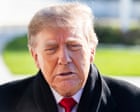
Most corporate boards don't reverse a major leadership decision in six days because the president of the United States picked up the phone. Yet that's exactly what just happened in Silicon Valley. When Donald Trump backed calls for the reinstatement of Jensen Huang as Nvidia CEO, it wasn't just a political endorsement. It was a calculated intervention to stop a massive stock market bleed that threatened the broader American economy.
If you've been watching the ticker symbols this month, you know how ugly things got. Nvidia's valuation cratered after Huang stepped down on November 12, dragging the S&P 500 into correction territory and wiping out hundreds of billions of dollars in market value. Wall Street panicked. Tech leaders lobbied. And Trump stepped in to broker a deal that put Huang right back in the corner office. Also making headlines recently: Why U.S. Crude Oil Dropping to $87 a Barrel Means Less Than You Think.
What Actually Happened at Nvidia
To understand why the White House got involved, you have to look at the timeline of this mess. It moved fast.
- November 12, 2026: Jensen Huang resigns as CEO and president of Nvidia after reports surface about multiple workplace affairs, including an alleged relationship with Alice Huang, a former executive at Singapore-based AI firm Megaspeed.
- Mid-November: U.S. officials raise red flags because Megaspeed is under criminal investigation by the Justice Department for allegedly smuggling restricted Nvidia AI chips to China, and intelligence officials suspect Alice Huang had ties to Chinese intelligence.
- November 17: After an online petition circulates and Huang offers to return, Nvidia board chair Harvey Jones flatly rejects the idea. He calls the push "noise and distraction" and says the board sees "no chance" of bringing Huang back.
- November 21–22: Nvidia's stock continues to tank, falling roughly 40% to 50% from its October all-time high of $239.24. Trump and Vice President JD Vance spend the weekend lobbying the board.
- November 23: Nvidia's board reverses course completely and reinstates Huang. Interim CEO Colette Kress returns to her role as CFO.
That's a whiplash-inducing sequence of events. On Tuesday, the board says there's zero chance. By Monday morning, Huang is walking back into the headquarters atrium to cheering employees. Further details on this are explored by The Economist.
The Real Reason Trump Intervened
Competitor coverage often frames this as simple cronyism or personal loyalty between Trump and a billionaire donor. That's too simplistic. Honestly, when you look at the numbers, Trump's motivation comes down to cold macroeconomic math.
Nvidia isn't just another chipmaker anymore. Before the scandal broke, the company was worth $4.5 trillion. Its stock performance had become the primary engine propping up Americans' 401(k) accounts, fueling consumer spending, and keeping the broader stock market afloat. When Huang walked out the door, institutional investors treated Nvidia like a rudderless ship. The resulting sell-off triggered one of the worst weeks on Wall Street since the 2008 financial crisis.
Trump didn't hide this. In a Monday interview with CNBC, he openly admitted that the market crash drove his thinking. "When the stock starts dropping forty, fifty percent, it was a lot easier for me to do it yesterday than it would have been," Trump said, taking credit for convincing the board.
To get the board to flip, the White House didn't just offer moral support. According to CBS News and the Associated Press, Trump and Vance—who used his Silicon Valley background to act as an emissary—provided board members with legal assurances. Attorney General Todd Blanche confirmed to the board that the federal government possessed no evidence that Huang had engaged in unlawful conduct. Trump even floated the idea of a presidential pardon in a New York Post interview, calling it "always an option," though Vance later downplayed the need for one.
The market reaction proved Trump's thesis right—at least in the short term. On the day Huang returned, Nvidia shares surged over 31% to close at $165.05. That single bounce snapped a seven-day losing streak on Wall Street, sending the Nasdaq up 6.5% and the S&P 500 up 4.7%.
Corporate Governance vs. "Too Big to Fail"
If you've ever sat in a corporate boardroom or studied governance crises, you know this reversal violates every rule in the textbook. Boards exist to provide independent oversight, manage risk, and enforce ethical standards. When a CEO admits to workplace relationships with a direct report and gets tangled up in a foreign espionage probe, the board's job is to protect the institution.
Instead, Nvidia's board caved to executive branch pressure and market panic.
Russell Hancock, CEO of Joint Venture Silicon Valley, called it a "bad business practice," asking how a board can make credible representations to shareholders when its chief executive no longer merits trust. Kathleen Day, a financial crisis lecturer at Johns Hopkins Carey Business School, went further. She described the reinstatement as "wallpapering over mold" just to get a short-term stock bump.
They have a point. By bringing Huang back before its own internal investigation is finished, Nvidia's board signaled that founder charisma and share price matter more than compliance. It also exposed a massive vulnerability in modern tech companies: key-person risk. If a $4 trillion enterprise can't survive two weeks without its co-founder, that's a structural failure of succession planning.
The National Security Fallout Isn't Over
While Wall Street celebrated, Washington erupted. And the pushback isn't just coming from Democrats.
Republican lawmakers broke sharply with the White House over the decision. Senator John Curtis of the Senate Commerce Committee publicly questioned what intelligence senior U.S. officials shared with Nvidia's board to convince them Huang posed no national security risk. Representative Don Bacon of Nebraska stated bluntly that the U.S. can't claim to want to win the AI race while risking its best technology leaking to China.
Meanwhile, Senate Banking Committee Chair Tim Scott confirmed that Huang is still scheduled to testify before Congress on December 3. He also faces interviews with three House committees investigating whether sensitive chip architectures were compromised through Megaspeed.
Here's the catch that investors seem to be ignoring: a White House endorsement doesn't stop congressional subpoenas. Nor does it shield Nvidia from shareholder derivative lawsuits or state attorney general probes. The Justice Department's criminal investigation into Megaspeed is still active, and the U.S. government just placed Megaspeed on a trade blacklist alongside new export licensing rules for Singapore, Thailand, Malaysia, Indonesia, and Brazil.
How Investors and Tech Leaders Should Read This
If you hold tech stocks or make decisions in the AI sector, don't mistake a one-day relief rally for a clean bill of health. The dust hasn't settled.
Watch the December 3 Senate Banking Committee hearing closely. Pay attention to whether lawmakers produce concrete evidence of export control violations or intelligence compromises, rather than relying on cable news punditry. Track the Commerce Department's new licensing requirements across Southeast Asia, because tighter enforcement on third-party distributors will directly impact Nvidia's quarterly revenue guidance. And if you're managing a portfolio heavily weighted toward mega-cap AI stocks, use this volatility as a reminder to check your concentration risk—because when a single executive's personal life can wipe $700 billion off a company's valuation in ten days, no stock is truly safe.



