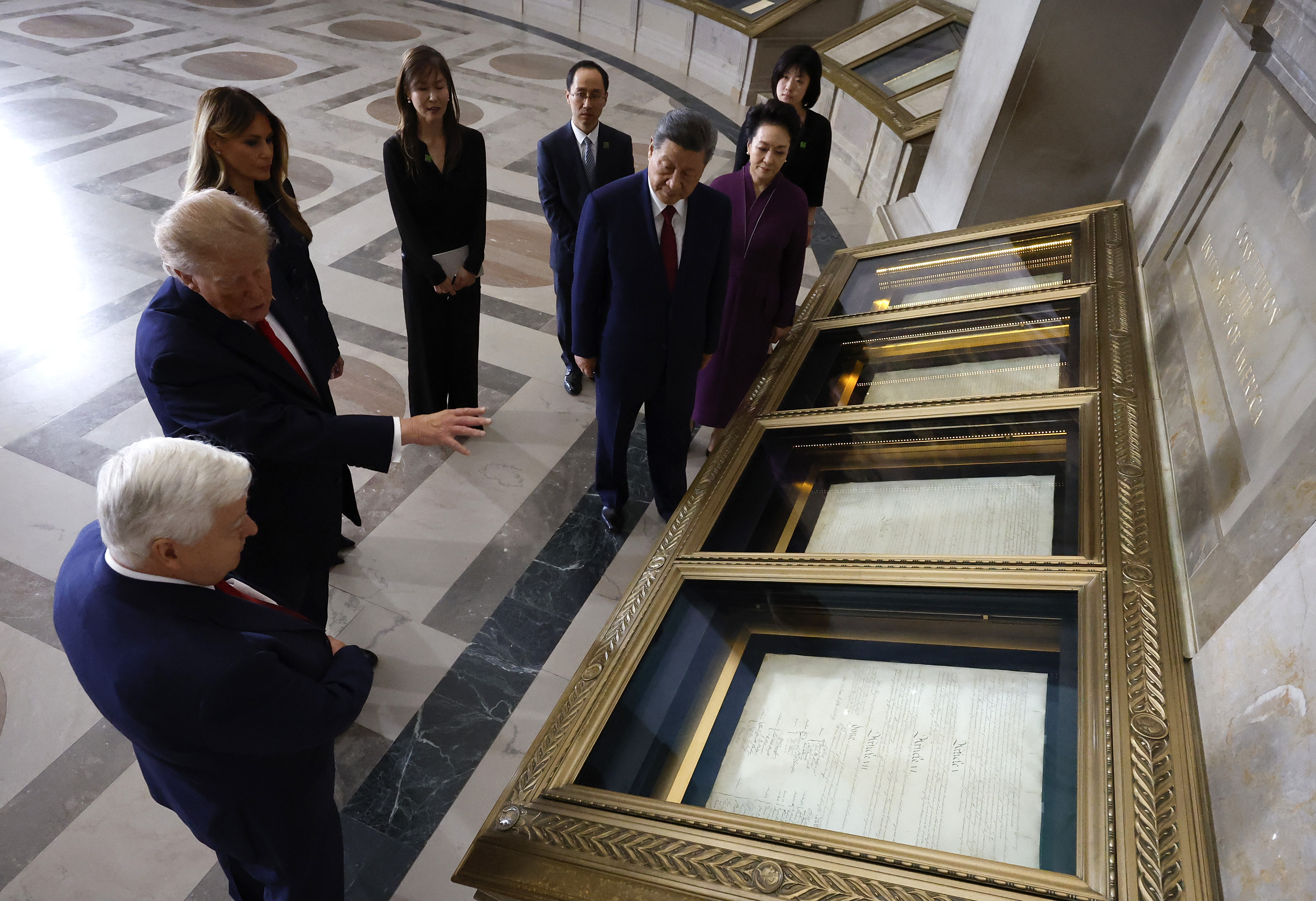
Geopolitical wires lit up when U.S. Ambassador to China David Perdue went on national television and claimed Donald Trump had casually asked Chinese President Xi Jinping if Beijing wanted to buy American weapons. It sounded like a massive policy earthquake. Decades of strict U.S. export controls and Taiwan defense commitments supposedly sidelined for a quick sales pitch.
Except Trump flat-out denied it ever happened.
Standing before reporters, Trump dismissed the claim with characteristic bluntness. When asked about Perdue’s comments on "Fox News Sunday," Trump countered with a question of his own.
"To China? You mean to Taiwan?" he asked. "I never heard of that one. I'm going to have to ask him."
The Mixed Messaging From Washington
Ambassador Perdue told interviewer Shannon Bream that Trump had floated the idea during high-level meetings, pointing out that Washington sells arms globally. It was meant to highlight a transactional, business-first approach to foreign policy.
The State Department scrambled behind the scenes to distance the administration from the remark, reminding everyone that federal law strictly prohibits direct military sales to Beijing. Hours later, Trump cleaned up the mess himself, though he added a twist that left foreign policy analysts scratching their heads.
He mused that China would probably love to buy American equipment because it is superior, adding that "maybe it's a good idea
When Donald Trump Contradicts His Own Envoy on Arms Sales
news
Foreign policy gets messy fast. When the commander-in-chief publicly clashes with his own diplomatic staff, international observers notice. Donald Trump recently made headlines by outright denying that he ever offered United States weaponry or arms deals to Chinese President Xi Jinping. The catch? His own administration's envoy had previously laid out a very different narrative during briefings.
It happens more often than politicians care to admit. Internal miscommunication inside diplomatic channels creates chaos. Let's break down why this contradiction matters, what actually transpired behind closed doors, and why Washington's messaging on Beijing remains permanently fractured.
The Discrepancy at the Center of US China Policy
Diplomacy relies on precision. Every word spoken across a negotiating table carries weight. So when a public denial directly collides with an envoy's official track record, foreign capitals pause.
Trump flatly rejected the notion that he dangled advanced military hardware or strategic arms concessions in front of Xi Jinping. The assertion surfaced amid broader debates regarding how the White House handles military tech transfers, trade leverage, and deterrence in the South China Sea.
Yet, reports and statements tied to diplomatic personnel suggested a softer or entirely different approach during high-stakes summits.
Why Envoys and Presidents Fall Out of Sync
You might wonder how a president and a handpicked envoy can end up on completely different planets regarding sensitive negotiations. It comes down to a few systemic realities.
- Dual-track messaging: Administrations often speak to multiple audiences simultaneously. A public posturing stance differs vastly from private backchannel bargaining.
- Overzealous staff: Envoys sometimes test boundaries or signal flexibility to keep talks alive, assuming the boss will back them up later.
- Political survival: When a policy proposal becomes politically toxic at home, the principal executive will throw it under the bus to protect domestic polling.
Trump operates on instinct. If a particular narrative hurts his leverage or paints him as too accommodating to a geopolitical rival, he shuts it down instantly. Envoy details matter very little when the political narrative requires a hardline stance.
What This Means for Future Negotiations with Beijing
Beijing watches Washington very closely. Consistency builds trust or at least predictable deterrence. Contradictions breed confusion, but they also create openings for foreign adversaries to exploit.
If Chinese leadership believes American diplomatic representatives cannot speak with the ultimate authority of the president, backchannel talks lose value. Why negotiate with a messenger who might get publicly contradicted on social media twenty-four hours later?
This friction exposes a deeper truth about modern statecraft. Bureaucratic machinery moves slowly, while political rhetoric moves at the speed of a digital feed. When those two speeds collide, the truth gets mangled.
Keep an eye on how future delegations are managed. If the White House continues to sideline or publicly correct its diplomatic corps, expect foreign policy execution to grow even more erratic.
Verify your sources, watch the primary statements rather than the spin, and remember that in geopolitics, public denials are just another weapon in the arsenal.