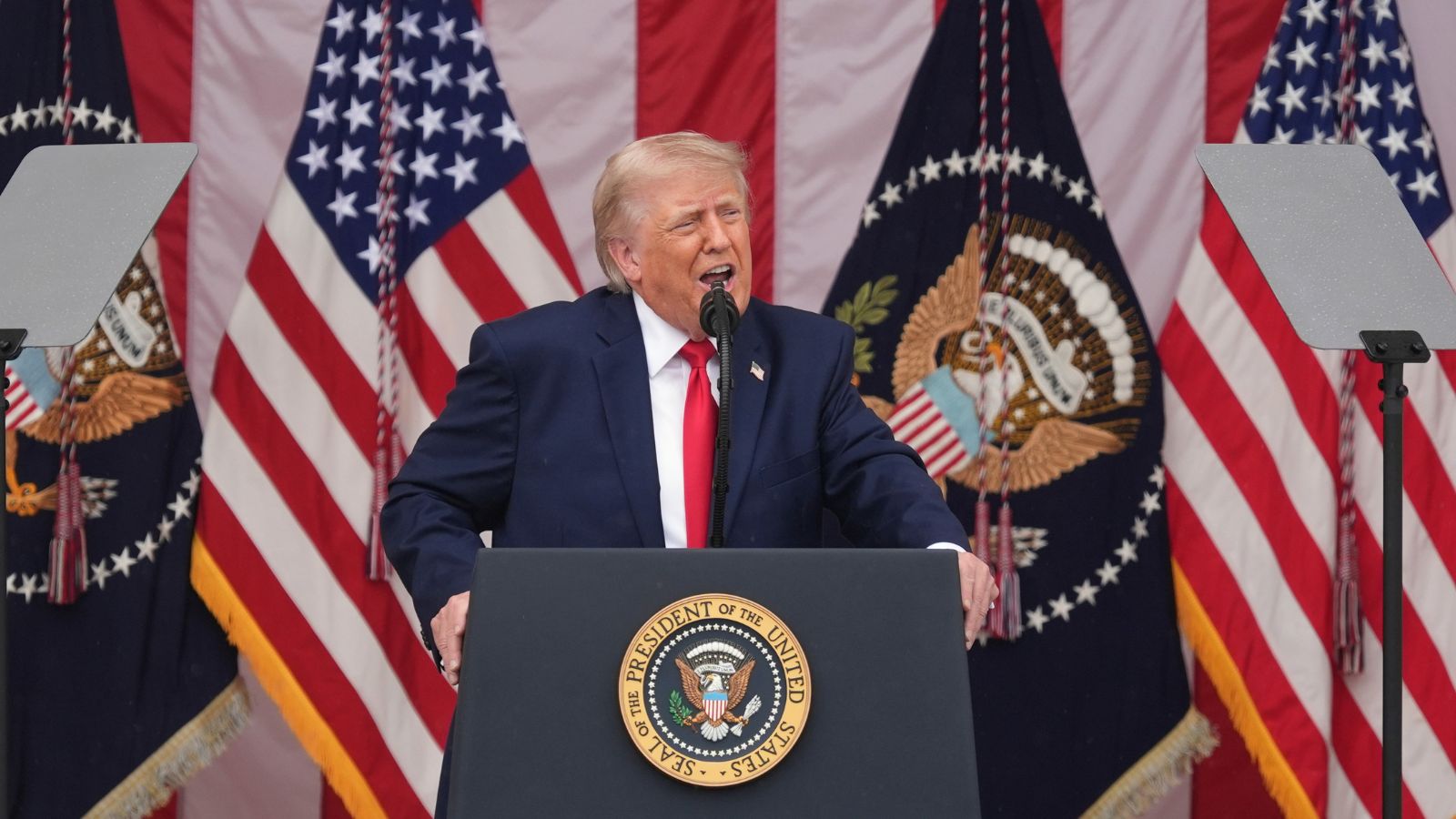
Donald Trump isn't mincing words about what it takes to end the war with Iran. He wants the enriched uranium, or there's simply no agreement. By calling the material "nuclear dust" on Truth Social, the administration signaled that a standard diplomatic compromise won't cut it this time. If Tehran wants the crippling US naval blockade lifted, they have to surrender or destroy every milligram of their highly enriched material.
This isn't just tough talk for the home crowd. Minutes after the ultimatum hit the internet, American Tomahawk missiles and precision weapons struck southern Iran near the Strait of Hormuz. US Central Command called them self-defense strikes, but the timing tells a different story. Washington is negotiating with a gun on the table.
The Reality Behind the Nuclear Dust Demand
The core issue holding up the peace talks in Doha isn't the borders or the shipping lanes. It's the material Iran spent years spinning in underground centrifuges. When Trump demands the removal of this "nuclear dust," he's aiming at the very heart of Iran's regional leverage.
The administration laid out a few specific paths for the stockpile:
- Physical transfer to the United States for immediate destruction.
- Supervised destruction inside Iran under the eyes of international watchdogs.
- Relocation to a neutral third-country location to be neutralized.
You can see why negotiations are stuck at the five-percent finish line. Turning over enriched uranium feels like absolute capitulation to the hardliners in Tehran. But the alternative is the continuation of Operation Epic Fury, the US-led campaign that has battered Iran's military infrastructure since late February.
Critics of the policy, including several hawkish US senators, worry that any deal short of total capitulation gives Iran room to breathe. They argue that a 60-day ceasefire is a trap. But the White House seems convinced that the current naval blockade has squeezed the Iranian economy tightly enough to force a permanent concession.
Explosions in Bandar Abbas Show the Cost of Delay
While diplomats argue in Qatar, the physical reality of the conflict continues to play out along the strategic coastlines of the Persian Gulf. Local residents in the critical port city of Bandar Abbas, as well as the coastal towns of Jask and Sirik, reported heavy explosions that shook windows and lit up the night sky.
CENTCOM spokesperson Captain Tim Hawkins confirmed that US forces targeted fast-attack boats attempting to lay mines and active missile launch sites. The message to the Iranian leadership is clear: the current ceasefire doesn't mean the US military will sit idle while the Islamic Revolutionary Guard Corps repositions its assets.
The military reality on the ground limits Iran's options. The US strikes on Larak Island reportedly killed several IRGC operatives, proving that American intelligence maintains real-time tracking of Iranian movements along the Strait of Hormuz. Tehran has called these strikes war crimes, pointing to civilian casualties in nearby residential areas like Lamerd, but the kinetic pressure isn't slowing down.
Pushing the Abraham Accords into Uncharted Territory
The real surprise in this diplomatic push isn't just the nuclear ultimatum. It's how the administration plans to lock the deal in place. Trump is explicitly tying an Iranian peace agreement to a massive, mandatory expansion of the Abraham Accords.
The plan demands that regional heavyweights and mediators sign onto the normalization framework with Israel. The target list includes:
- Saudi Arabia
- Qatar
- Pakistan
- Turkey
- Egypt
- Jordan
The administration even floated the idea of allowing Iran itself into the Accords down the line if they comply with the nuclear dismantle orders. It sounds wild, but it's a deliberate strategy to isolate regional actors. By forcing everyone into the same diplomatic framework, Washington hopes to build a permanent security architecture that outlasts the current presidency.
Many of these nations are hesitant. Countries like Pakistan and Saudi Arabia have historically tied normalization to the resolution of Palestinian statehood. Forcing them to sign onto the Accords as a prerequisite for a Gulf peace deal is a massive gamble that could easily backfire if regional public opinion sours.
What Happens if the Doha Talks Fail
We're at a critical tipping point. Negotiators from the US, Iran, and various Gulf intermediaries are running out of time. The broad framework of a deal exists, but the technical details of how to verify the destruction of the uranium stockpile remain an operational nightmare. United Nations nuclear watchdogs have already warned that verifying the complete elimination of hidden materials in a country as large as Iran is incredibly difficult.
If the Iranian leadership bluffs or refuses to hand over the material, the conflict will reignite at a much larger scale. The US military has already drawn up plans for a full-scale assault on Iran's domestic power grid and remaining energy infrastructure.
For anyone watching global energy markets or regional stability, the next few days are vital. Watch the movement of commercial shipping through the Strait of Hormuz and listen for official joint statements out of Doha. If Iran begins moving its material under international eyes, we're looking at a completely rewritten Middle East. If those centrifuges keep turning, the strikes in Bandar Abbas are just a preview of a much larger war.