The headlines are bleeding. Pundits are clutching their pearls. The Atlantic Council is likely drafting a dozen white papers about the "collapse of the liberal world order." The narrative is simple: Donald Trump is gutting NATO, leaving Germany defenseless, and handing Vladimir Putin the keys to the continent on a silver platter.
It is a comfortable narrative. It is also entirely wrong.
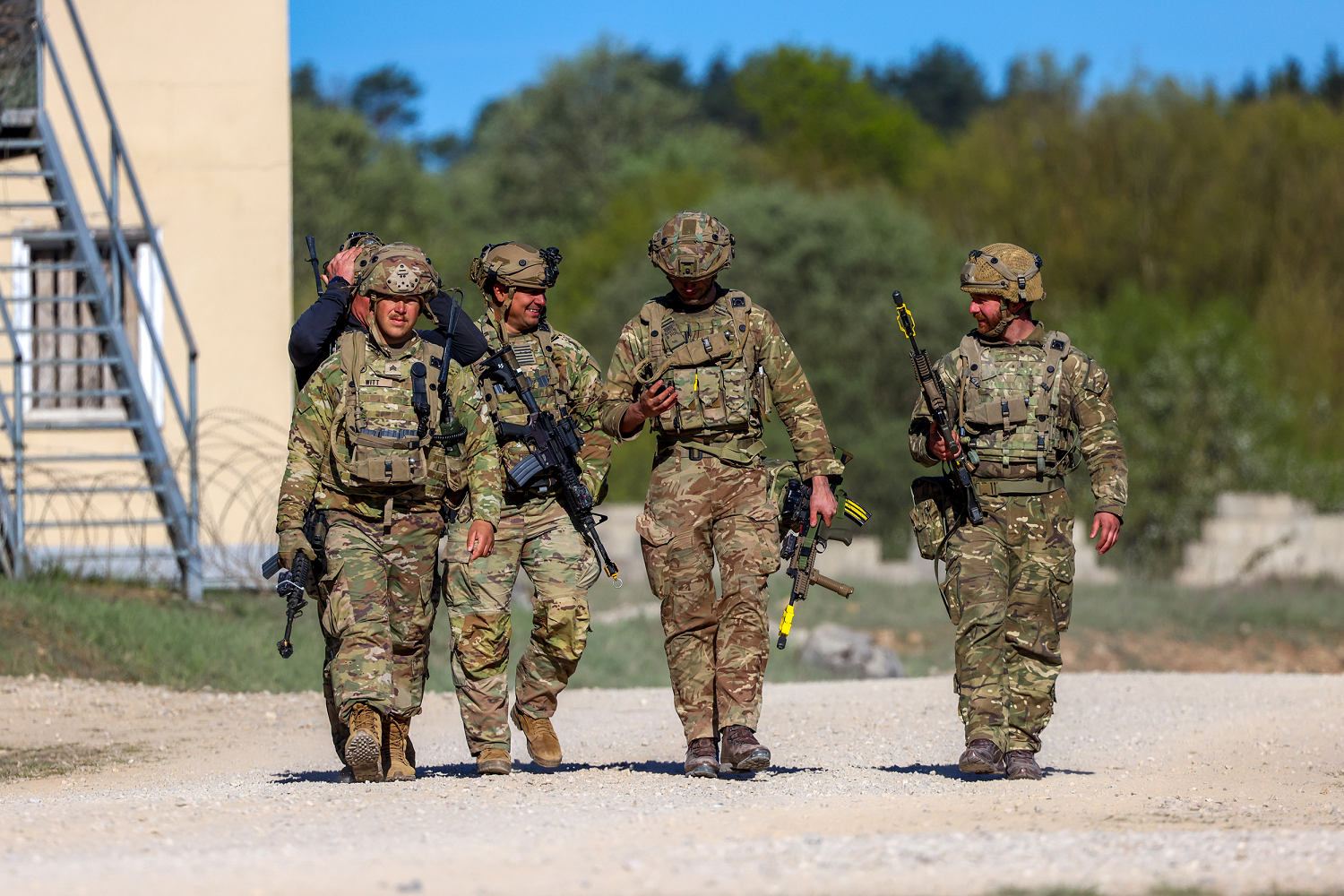
Moving 5,000 troops—or even 12,000—out of Germany isn't a disaster. It is a long-overdue correction of a strategic anachronism that has turned Europe into a geopolitical retirement home. For seventy years, the U.S. military presence in Germany has acted as a security sedative. By removing the needle, Washington isn't "abandoning" allies; it is finally forcing a wealthy, stagnant continent to wake up and face the realities of modern statecraft.
The Myth of the German Front Line
Most people talking about this are mentally stuck in 1985. They imagine Fulda Gap scenarios where Soviet tanks pour through the German plains and American GIs are the only thing standing between freedom and the abyss.
Look at a map. Germany is no longer the front line. Poland is the front line. The Baltic states are the front line. Romania is the front line. Germany is a rear-area logistics hub surrounded by friends. Keeping combat-ready brigades in Stuttgart or Vilseck while the actual threat sits a thousand miles to the east is the definition of military inertia.
I have watched defense contractors and mid-level bureaucrats fight to keep these bases open for decades. Why? Because the coffee is good, the housing is subsidized, and the schools are great. It has nothing to do with "deterring Russia" and everything to do with lifestyle and bureaucratic path-dependency. Moving troops closer to the Suwalki Gap or rotating them through the Black Sea region actually makes sense. Keeping them in a country that refuses to meet its basic NATO spending obligations does not.
Germany’s Strategic Moral Hazard
Economics 101 teaches us about moral hazard: when you insulate someone from the consequences of their risks, they become more reckless—or in Germany’s case, more complacent.
Germany is the fourth-largest economy on the planet. Yet, for years, their Luftwaffe has struggled to keep planes in the air, and their tank battalions have used broomsticks during exercises because they lacked actual equipment. They haven't been "unable" to fund their military; they have been "unwilling" because they knew the Americans would always foot the bill and provide the nuclear umbrella.
By pulling troops, the U.S. is finally dismantling this toxic incentive structure. You cannot claim to be a "moral leader" of Europe while outsourcing your physical survival to a country you constantly criticize. The "disastrous trend" isn't the troop withdrawal—it’s the decades of German underinvestment that made the withdrawal feel like a crisis in the first place.
The Pivot to Hard Power Reality
The competitor articles love to quote "unnamed officials" worried about the signal this sends to Moscow. Let’s talk about Putin. Does he care about 5,000 troops in a German barracks? No. He cares about readiness, lethality, and political will.
A static force in Germany is a political symbol, not a military deterrent. A mobile, rotational force that can deploy to Poland or the Baltics in forty-eight hours is a different story. The U.S. is shifting from a "static defense" model to a "dynamic force employment" model. It’s leaner. It’s faster. It’s harder to target.
If Europe is actually "rattled," that’s good. Fear is a powerful catalyst for reform. For the first time since the Cold War, Paris and Berlin are having serious conversations about European strategic autonomy. They are realizing that the American security guarantee is a variable, not a constant. This realization is the only thing that will ever produce a Europe capable of defending itself.
The Logistics of the "Disaster"
Let’s look at the actual numbers. We are talking about a fraction of the total U.S. presence in Europe. The logistical reality is that many of these troops aren't even going back to the States; they are being repositioned to Italy and Belgium to consolidate command structures.
The outcry isn't about military capability. It’s about money. These bases are massive economic engines for German towns. When a brigade leaves, the local economy takes a hit. The "disaster" the German government is worried about isn't a Russian invasion; it’s the loss of American rental income and retail spending in Rhineland-Palatinate. We are being asked to maintain a military posture based on the needs of German landlords rather than American national security.
The Wrong Questions Everyone is Asking
People ask: "Does this weaken NATO?"
Wrong question. The real question is: "Does a NATO where one member provides 70% of the capability actually function in the long run?"
The answer is no. A lopsided alliance is a brittle alliance. By forcing the issue, the U.S. is stress-testing the bridge. If the bridge collapses because 5,000 troops moved, the bridge was already a hallucination.
Others ask: "Is this just a political stunt?"
Even if it is, the outcome remains the same. It breaks the cycle of dependency. It forces the European Union to decide if it wants to be a global player or just a very large museum.
The Hard Truth of 21st Century Warfare
The next conflict won't be won by having the most boots on the ground in a peaceful Bavarian village. It will be won in the cyber realm, through long-range precision fires, and via rapid-reaction forces that don't need a permanent base to be effective.
The U.S. military is currently obsessed with "contested logistics." We know that in a real peer-to-peer conflict, permanent bases are just large, stationary targets for hypersonic missiles. Small, distributed, and mobile is the only way to survive. The troop withdrawal from Germany is a step toward that reality.
I’ve seen how this works from the inside. The resistance to these moves always comes from the "interagency"—the layers of diplomats and career officers who view "stability" as the highest virtue. But stability is often just another word for stagnation.
The Cost of the Status Quo
Maintaining the status quo in Germany costs billions. It ties up resources that are desperately needed in the Indo-Pacific. If you want to talk about "disastrous trends," look at the rise of the PLAN (People's Liberation Army Navy) while American troops are busy playing "guardian of the Rhine" in a region where there hasn't been a major border dispute in eighty years.
The world has changed. The threat has moved. The technology has evolved.
The only thing that hasn't changed is the European expectation that America will play world police forever while they lecture us on the benefits of a thirty-five-hour work week. The party is over. The withdrawal isn't a mistake; it's an eviction notice for a tenant that stopped paying rent decades ago.
Stop mourning the end of the post-war era. It’s been dead for years; we’ve just been propping up the corpse. Move the troops. Close the bases. Let Europe find its own spine.
Germany doesn't need more American soldiers. It needs to find its own.