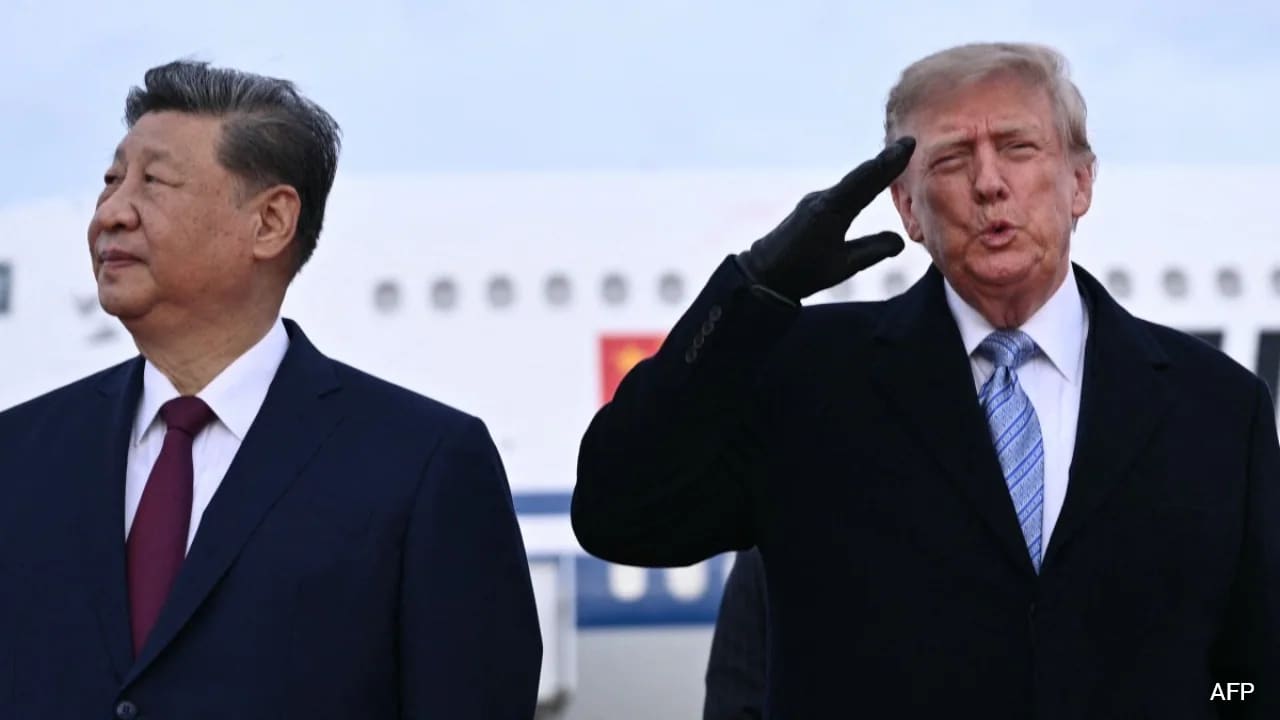
When Donald Trump gives a foreign leader a rare planeside welcome and rolls out the full state-dinner treatment, it isn't just about diplomatic pleasantries. It's a transactional setup. Behind the pomp, military reviews, and guest lists packed with tech titans, Washington's strategy relies on a specific set of demands.
If you look past the headlines about trade truces and photo ops, the real agenda is stark. Trump wants concrete concessions on supply chains, intellectual property, and tech dominance. Xi Jinping isn't handing them over for free. Let's look at what the White House is actually pushing for behind closed doors.
The Tech Chokepoint and AI Controls
Artificial intelligence and advanced semiconductors sit at the very center of modern superpower friction. American officials know that limiting China's access to high-end computing power is the primary leverage they hold.
Trump wants strict guardrails around artificial intelligence development and hardware exports. Beijing wants those restrictions lifted so its tech sector can scale without bottlenecks. During recent high-level talks, executives from major tech firms like Nvidia and Apple found themselves orbiting a diplomatic storm where commercial interests crash directly into national security.
Washington isn't backing down on chip controls. Instead, the administration wants Beijing to agree to enforceable boundaries regarding how advanced algorithms and microelectronics are deployed. China views these restrictions as an attempt to block its economic rise. That fundamental disagreement means every summit comes down to who blinks first on technology.
Agricultural Leverage and Supply Chains
You can't talk about U.S.-China negotiations without looking at America's farm belt. Soybean exports and agricultural commodities remain major pressure points.
Before tariff escalations took a heavy toll, Chinese buyers purchased massive shares of U.S. agricultural output. American producers have felt the squeeze as trade barriers shifted buying patterns toward South America. Trump wants locked-in purchasing commitments that force Beijing to buy American agricultural goods year after year.
At the same time, the U.S. is heavily focused on rare-earth minerals and critical supply chains. For years, China has used its dominance over rare earths as a geopolitical weapon. Trump's team wants permanent assurances that Beijing will not cut off the mineral lifelines required for American manufacturing, defense systems, and clean energy tech.
The Taiwan Flashpoint
Trade and tech deals get the press coverage, but Taiwan remains the ultimate fault line in the relationship.
Beijing views the self-governing island as a core sovereignty issue and consistently pressures Washington to halt all arms sales to Taipei. The White House maintains a dual approach: keeping economic channels open while ensuring the island remains defensively equipped. Xi wants a shift in U.S. policy on this front. Trump's advisers know that giving ground on Taiwan would signal weakness to regional allies like Japan and South Korea.
Managing this tension requires a delicate balance. Neither superpower wants an accidental military escalation in the Taiwan Strait, yet both refuse to alter their core strategic positions. Red-carpet summits temporarily freeze the friction, but they rarely resolve the underlying geopolitical contradiction.
The reality of modern superpower diplomacy is messy. Lavish ceremonies buy time, extend short-term trade truces, and keep communication channels open. But the core demands remain entirely unchanged.


