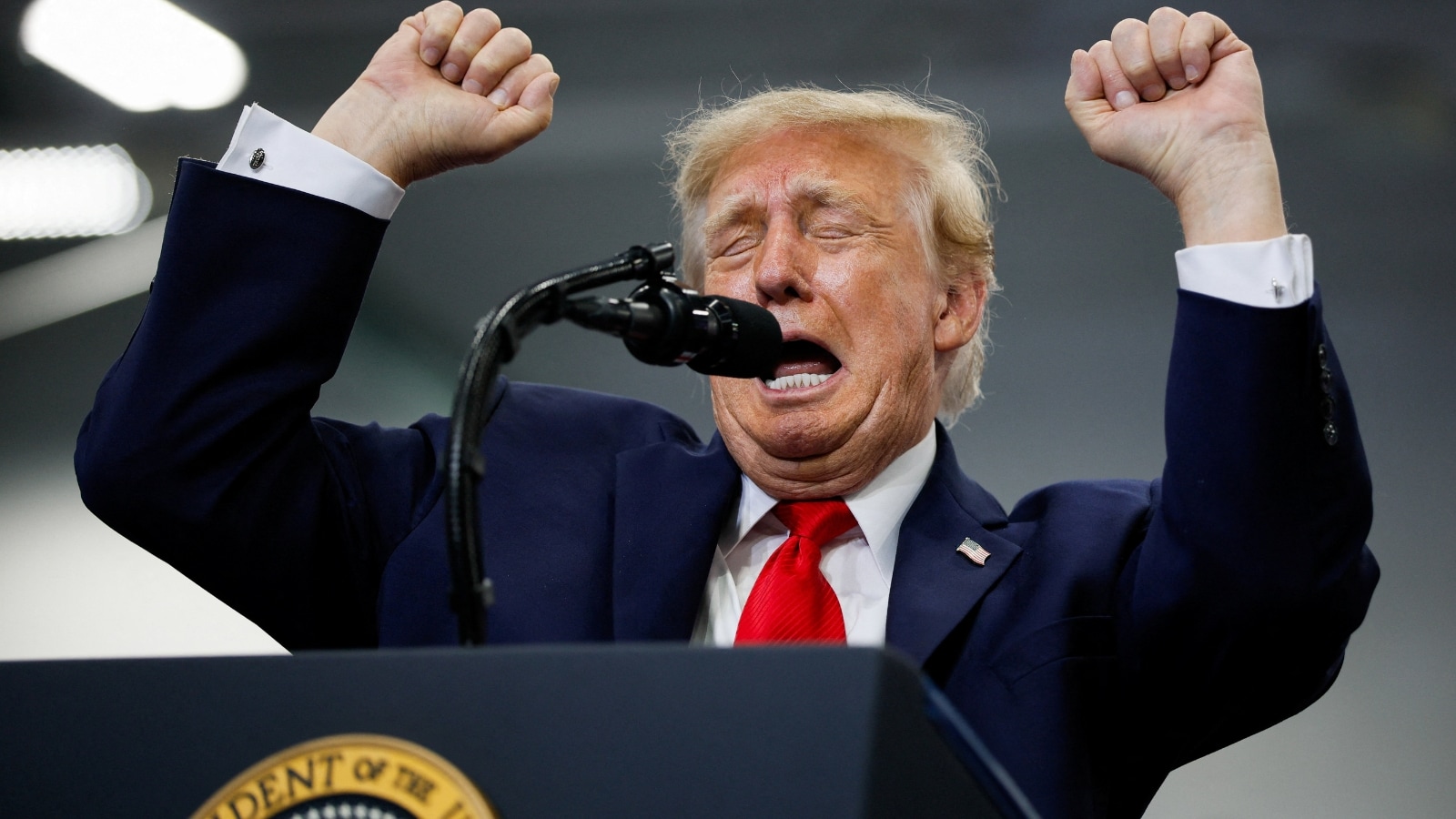
Donald Trump acknowledged Republican losses in the 2026 midterm elections, a rare public concession that followed a decisive night in which Democrats flipped the U.S. Senate. Rather than launching the prolonged legal challenges that defined his post-2020 posture, the president pointed to historical precedent, ticket-splitting voters, and localized campaign failures to explain the outcome.
The headline writes itself, yet the surface narrative misses the mechanical reality of what just occurred. When a sitting president accepts an electoral setback without claiming systemic sabotage, Washington pays attention. Not because the rhetoric has softened, but because the political math behind the concession tells a much sharper story about power, leverage, and survival heading into the final two years of a second term.
The Historical Gravity of the Six-Year Itch
American midterm elections rarely reward the party holding the White House. Since the Civil War, the president's party has lost seats in the House of Representatives in almost every single midterm cycle, with only a handful of exceptions driven by extraordinary wartime unity or economic anomalies. By the time a president reaches the sixth year of an administration—or the midterm of a non-consecutive second term—voter fatigue becomes an almost insurmountable structural headwind.
Trump's decision to frame the results around historical norms rather than fraud reflects a cold calculation. Fighting an unwinnable narrative burns political capital needed for legislative survival. When the numbers in key battleground states show clear, wide margins that cannot be litigated away in court, acknowledging the loss preserves credibility with remaining allies on Capitol Hill.
A concession is rarely an act of surrender. In high-stakes politics, it is an act of triage. By accepting the Senate losses quickly, the White House effectively drew a firewall around the executive branch, separating the president's personal brand from the specific vulnerabilities of down-ballot Republican candidates who failed to close the deal with independent voters.
How the Senate Map Flipped
The battle for the upper chamber came down to a familiar set of structural vulnerabilities. Going into the cycle, Republicans were defending seats in states that had swung wildly over the past decade, leaving little margin for error when national headwinds shifted.
The Suburban Defection
Across the Rust Belt and the Sun Belt, suburban voters who had drifted toward the GOP over inflation and border security concerns two years earlier swung back toward Democratic challengers. Exit polling and precinct-level data consistently show that while voters remained anxious about the cost of living, many balked at the legislative gridlock and internal party infighting that dominated the congressional calendar.
Ticket-splitting made a quiet but lethal return. In several states, voters expressed approval for specific executive actions on trade and deregulation while simultaneously rejecting Republican Senate candidates viewed as overly ideological or unprepared for governance. Democratic campaigns capitalized on this split, running disciplined, hyper-local races focused on healthcare costs, reproductive rights, and institutional stability rather than nationalizing the ballot around the president alone.
Candidate Quality and Primary Scars
Primary elections remain the Achilles' heel of modern party politics. In multiple battleground states, brutal GOP primaries drained campaign war chests and forced eventual nominees to take hardline positions that proved toxic in a general election.
Democrats avoided that trap in key races, clearing the field early for moderate, well-funded contenders who spent the spring and summer defining their opponents before Republican nominees could pivot to the center. By the time autumn arrived, the narrative in those states was already locked in concrete. No amount of late-stage spending from national super PACs could undo six months of uncontested messaging.
The Mechanics of a Strategic Concession
To understand why Trump accepted the defeats, one has to look at how executive power operates in a divided government. Losing the Senate strips the White House of its ability to easily confirm federal judges and cabinet replacements. That is a massive blow. However, contesting clear results would have triggered a months-long constitutional crisis that would have paralyzed the administration's remaining regulatory agenda.
By stepping back and acknowledging the Democratic victory, the White House accomplished three immediate objectives:
- Preserving Party Discipline: Blaming individual candidates and local party infrastructure keeps Senate Republicans aligned with the president out of fear of primary retaliation, rather than fracturing the caucus into warring factions.
- Shifting the Burden of Governance: With Democrats holding the Senate gavel, every legislative stalemate over the next two years can now be pinned on Democratic obstruction rather than Republican incompetence.
- Controlling the Media Cycle: A swift acknowledgment denies opponents the oxygen of a prolonged post-election scandal, forcing newsrooms to immediately pivot to covering how a Democratic Senate will govern alongside a Republican president.
This is basic political jujitsu. When you cannot stop the momentum of an opponent's wave, you step aside and let them crash into the realities of divided governance.
What a Democratic Senate Actually Means for Policy
A flipped Senate changes the trajectory of the administration overnight, though not always in the ways casual observers assume. The era of sweeping partisan legislation is dead until at least 2029, replaced by trench warfare over appointments, budgets, and oversight.
The Judicial and Executive Bottleneck
The most immediate casualty of the Democratic takeover is the judicial confirmation pipeline. During the first two years of the term, a Republican Senate processed federal district and appellate judges at a brisk pace. With Democrats controlling the Senate Judiciary Committee, that pipeline slams shut.
Any nominee put forward by the White House will now require genuine bipartisan appeal or face indefinite delay. The same applies to sub-cabinet officials, agency heads, and ambassadors. The administration will likely rely far more heavily on acting officials and executive orders to bypass confirmation battles—a tactic that carries its own legal vulnerabilities in federal court.
The Return of Subpoena Power
Control of Senate committees means control of the investigative calendar. Democratic committee chairs now hold the gavel and the subpoena power that comes with it. Expect immediate scrutiny into executive branch contracts, regulatory rollbacks, and agency staffing decisions.
Investigations rarely change the minds of die-hard partisans, yet they consume massive amounts of time and senior staff bandwidth inside the White House. Defending against congressional oversight pulls focus away from policy execution, creating a constant drag on administrative efficiency.
Budget Showdowns and Debt Ceiling Leverage
Fiscal policy becomes a game of chicken. With the Senate in Democratic hands, any spending bill, government funding extension, or debt ceiling increase must pass through a Democratic majority leader's desk.
The White House retains the veto pen, which remains the ultimate trump card in legislative negotiations. Neither side can force the other to swallow unpalatable policy riders without risking a government shutdown—a scenario that historically punishes whichever party voters perceive as the instigator. Expect short-term continuing resolutions to become the default mode of governance, punctuated by high-drama, last-minute budget deals negotiated behind closed doors.
The Overlooked Factor Turnout Geography
Pundits love to analyze national mood swings, yet elections are won and lost in the trenches of voter turnout mechanics. A closer look at county-level returns reveals that Democrats did not necessarily win because they persuaded millions of new voters to switch sides. They won because their base showed up in off-year elections at rates that outpaced the GOP coalition.
The modern Republican coalition relies heavily on lower-propensity, working-class voters who turn out reliably when Trump's name is at the top of the ticket, but frequently stay home during midterm cycles. Democratic coalition voters—specifically college-educated suburbanites and older voters—now represent the most reliable midterm electorate in American politics.
This structural asymmetry creates a recurring headache for Republican strategists. Every four years, the coalition surges. Every two years, it recedes. Until the GOP solves the problem of motivating irregular voters to cast ballots when the president is not personally on the ballot, midterm cycles will remain an uphill climb regardless of the economic climate.
Inside the GOP Autopsy
Behind closed doors in Washington, Republican operatives are already dissecting what went wrong, and the finger-pointing is brutal. Three distinct factions have emerged in the post-mortem debate, each offering a conflicting diagnosis of the midterm losses.
- The Populist Wing argues that the party lost because candidates watered down the president's economic nationalism, failing to campaign aggressively enough on tariffs and border enforcement.
- The Establishment Wing counters that extreme rhetoric alienated moderate swing voters in crucial suburbs, turning winnable races into referendums on personality rather than policy.
- The Structural Critics point to fundraising disparities and ground-game failures, noting that Democratic campaigns consistently out-raised Republican counterparts in small-dollar donations and early-vote banking.
All three critiques contain a grain of truth, which is precisely why the party struggles to course-correct. Fixing one vulnerability often exacerbates another. Moving toward the center risks depressing base turnout, while leaning harder into populist rhetoric alienates the suburban independents needed to win statewide majorities in swing states.
Why the Concession Surprised Washington
Political memory is notoriously short, yet the contrast between 2020 and 2026 could not be sharper. Six years ago, contesting election results became the central loyalty test within the Republican Party. Watching the same political movement pivot to rapid acceptance of midterm defeats caught many analysts off guard.
The difference lies in the stakes and the position of power. In 2020, contesting the outcome was a last-ditch effort to retain the presidency itself. In 2026, Trump remains in the Oval Office for two more years regardless of who controls the Senate.
Challenging the legitimacy of midterm results when you already hold the presidency creates an impossible contradiction. You cannot simultaneously claim that your administration is restoring order and competence to the federal government while insisting that the electoral system under your watch is completely broken. Accepting the losses protects the legitimacy of the presidency itself.
The Governing Reality Ahead
Washington now enters a familiar phase of divided government, stripped of campaign illusions. Democrats have reclaimed the Senate, giving them a vital institutional check on judicial appointments and legislative priorities. Trump has absorbed the political hit without triggering a party-wide meltdown over election integrity.
For the next twenty-four months, progress will be measured in executive orders, court rulings, and incremental budget compromises rather than sweeping statutory overhauls. Both parties have already begun positioning themselves for the 2028 presidential race, using every Senate floor speech and White House press briefing as an opening salvo for the next cycle.
The voters delivered a split verdict, handily rejecting one-party rule while leaving the executive branch intact. Now the real test begins—not at the ballot box, but in whether either side can extract actual governance from a system deliberately engineered for friction.