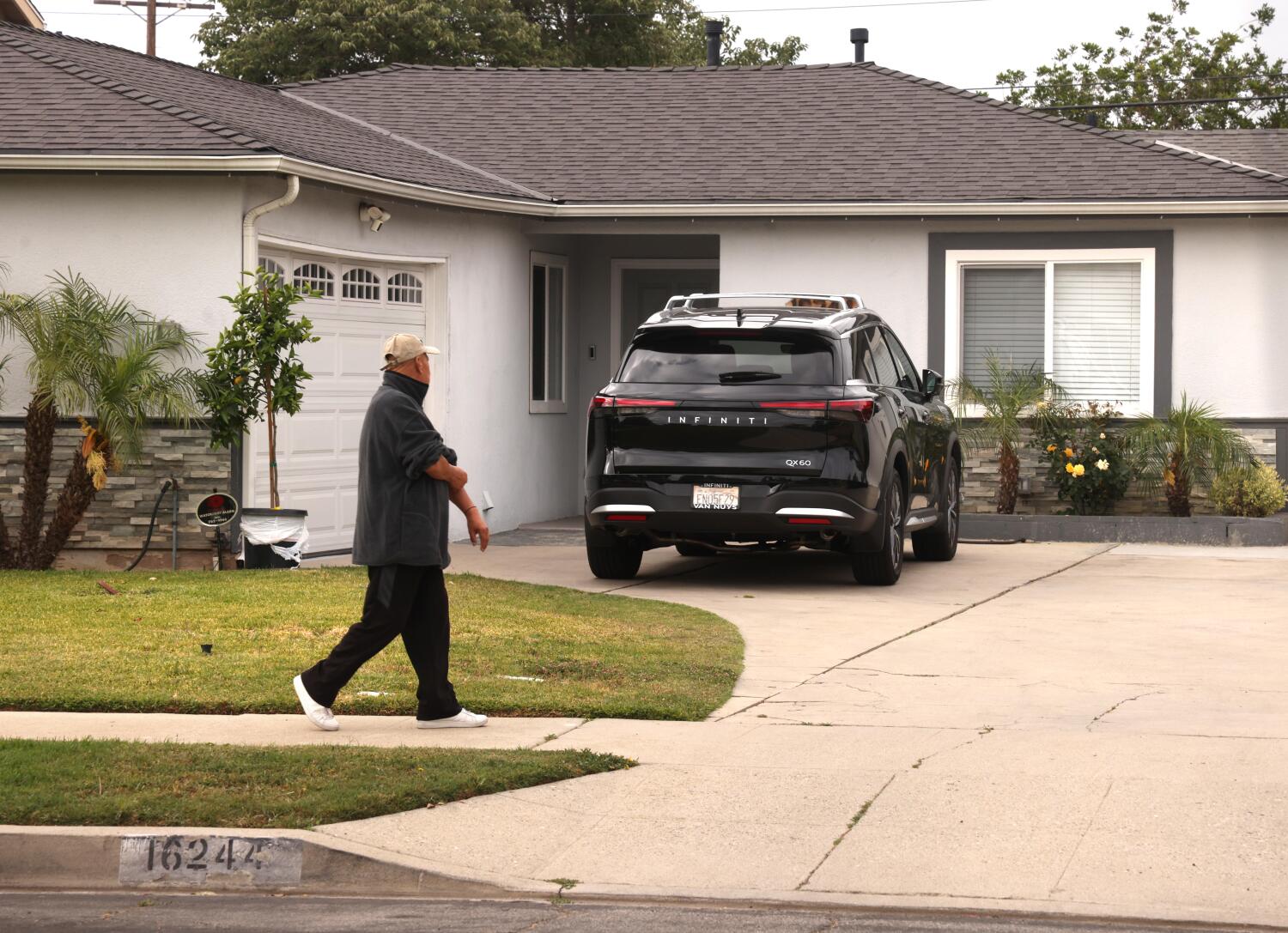
The media cycle follows a predictable, parasitic script whenever a family annihilation occurs. We saw it with the recent North Hills tragedy. The immediate response is a flurry of sanitizing headlines. "Identities released." "A community in shock." "Two parents, two children dead."
Then come the superficial post-mortems. Neighbors line up to tell local news anchors that the family was quiet, polite, and seemed completely normal. Journalists scramble to unearth a singular, neat catalyst—a sudden job loss, a pending divorce, or a history of mental illness. They construct a digestible narrative arc that treats a catastrophic collapse of human psychology like a predictable three-act play.
This approach is worse than lazy. It is dangerous.
By treating family annihilation as a bizarre, isolated anomaly triggered by a sudden bad day, the media actively obscures the systemic, predictable architecture of these crimes. I have spent years analyzing behavioral patterns and crisis intervention frameworks. The "sudden snap" theory is a comforting myth we tell ourselves so we can sleep at night, believing our own lives are immune. The reality is far colder, highly patterned, and entirely uncomfortable to face.
The Myth of the Sudden Snap
The dominant narrative surrounding domestic murder-suicides is built on the concept of temporary insanity. The prevailing assumption is that a previously loving individual simply broke under the weight of acute stress.
The data tells a completely different story.
Behavioral analysts and criminologists who specialize in family annihilation—such as those utilizing frameworks established by the Department of Justice and independent threat assessment teams—know that these events are rarely impulsive. They are premeditated, methodical executions.
When you examine the history of these perpetrators, you do not find a sudden pivot. You find a slow, deliberate escalation of coercive control.
The Reality of Coercive Control: True control does not always look like physical violence. It manifests as financial isolation, tracking software, severe emotional manipulation, and the systematic erosion of the victim's autonomy.
When the media focuses strictly on the absence of a prior police record, they miss the point. A clean rap sheet does not equal a safe household. It often just means the perpetrator was highly effective at keeping their abuse behind closed doors. To understand why a tragedy like North Hills happens, we have to stop looking for the moment someone "lost control" and start looking for the years they spent trying to maintain total dominance.
Dismantling the People Also Ask Fallacies
When these tragedies hit the headlines, public search trends spike with predictable queries. The answers provided by standard news outlets are fundamentally flawed because they address the wrong premises.
Why do seemingly normal people commit murder-suicide?
The premise is wrong because these individuals were never "normal" to begin with. They were masters of impression management. Perpetrators of family annihilation frequently maintain immaculate public personas. They are the helpful neighbor, the youth coach, the successful executive.
This public-facing mask is an essential part of their psychology. They crave external validation and control over how they are perceived. The moment that public mask is threatened with exposure—whether through financial ruin, impending legal trouble, or a partner threatening to leave—the perpetrator experiences a profound narcissistic injury. They do not kill because they are sad; they kill because they refuse to survive the destruction of their manufactured reputation.
Can mental health treatment prevent these tragedies?
This is the most common lazy consensus. The immediate outcry after a mass casualty event is always a demand for better mental health resources. While expanding access to psychological care is objectively good, throwing therapy at a family annihilator misses the mark entirely.
This is not a failure of serotonin. It is a failure of morality and entitlement.
Many family annihilators do not suffer from psychosis or clinical depression in the traditional sense. Instead, they exhibit severe personality traits:
- Pathological Narcissism: Believing their family members are extensions of themselves rather than independent human beings.
- Toxic Possession: The mindset of "If I cannot have you, no one will."
- Perverted Altruism: A delusional belief that they are "saving" their children from a harsh world after their own downfall.
You cannot medicate away a belief system rooted in absolute ownership over other human lives. Treating this strictly as a medical issue abdicates the perpetrator of accountability and shifts the focus away from behavioral threat assessment.
The Danger of the Tragic Narrative Arc
Look at the phrasing used in standard reporting on North Hills. Phrases like "ended lives" or "a tragedy that claimed four lives" employ a passive voice that softens the reality.
Lives were not just "ended" by some amorphous cloud of misfortune. They were actively, brutally taken by an individual who made a series of conscious decisions.
When the media frames the perpetrator and the victims under the same umbrella of tragedy—often publishing family photos where the killer smiles alongside their future victims—they commit a profound injustice. They blur the line between the predator and the prey. They grant the murderer a posthumous status as a victim of circumstances.
Imagine a scenario where a corporate executive embezzles millions, gets caught, and then burns down the corporate headquarters with the employees inside. We would never frame that executive as a tragic figure who succumbed to the pressures of financial stress. We would call them a mass murderer and a terrorist. Yet, when the headquarters is a suburban home and the employees are a spouse and children, the narrative softens into a somber melody about a family lost.
This softening creates a cultural blind spot. It teaches neighbors and relatives to overlook the actual warning signs because the person in question doesn't "look like a monster."
Redefining Threat Assessment: The Real Warning Signs
If we want to actually prevent these events rather than just mourn them with thoughts and prayers, we have to throw out the standard checklist and adopt a ruthless approach to behavioral monitoring.
I have watched organizations and communities ignore blatant red flags because the individual was a high earner or a charismatic leader. That complicity must stop. The indicators of high-lethal domestic violence are well-documented by threat assessment experts, yet they rarely make it into the news analysis.
| Disregarded Red Flag | The Hidden Mechanism | Why It Matters |
|---|---|---|
| Employment or Financial Ruin | Not a cause, but a final trigger. | The perpetrator views financial failure as a total loss of their status and control. |
| Stalking and Surveillance | Tracking locations, checking phones constantly. | Signals that the perpetrator views their family as property, not people. |
| Acquisition of Weapons | Sudden purchase of firearms under the guise of "protection." | Often the final logistical step in executing a premeditated plan. |
| The "Calm Before the Storm" | A sudden period of peace after a long period of volatile arguments. | Indicates the perpetrator has finalized their decision to kill and no longer feels the anxiety of conflict. |
The hardest truth to accept is that the downside of our current legal and social frameworks is their reactivity. The system is designed to intervene after a crime has been committed, not when a pattern of coercive control is escalating. Neighbors see the isolation, family members notice the hyper-vigilance, but everyone stays quiet because they don't want to cause drama in a "nice family."
Stop Looking for a Rational Reason
The human brain craves order. When we read about North Hills, we want a clean explanation. We want to hear that a specific bank account was empty or that a specific medical diagnosis was delivered. We want a rational reason for an irrational act because it gives us the illusion of predictability.
There is no rational reason.
There is only the cold, calculated logic of an individual who decided that their family’s right to exist was entirely contingent upon their own personal satisfaction. They chose annihilation over obscurity. They chose execution over a loss of control.
Stop reading the sanitized obituaries that treat killers like co-victims of a mysterious societal ailment. Stop waiting for the media to deliver a neat explanation that will never come. The North Hills story isn't a tragic mystery to be solved. It is a stark reminder that the most dangerous predators don't live in the shadows. They build pristine lives in the suburbs, hide behind flawless reputations, and wait for the moment their control begins to slip.


