A red digital readout flicks from 99.85 to 100.02 on a quiet morning in West Texas.
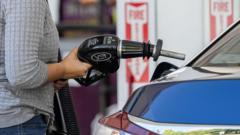
No alarms blare. No confetti drops from the ceiling of the trading floor. Yet thousands of miles away, inside a small diner outside Cleveland, an early-shift trucker stares at the glowing screen of a gas pump and feels a sudden, tightening knot in his chest.
Oil has breached one hundred dollars a barrel for the first time in months.
To Wall Street, it is a neat statistic—a clean, round benchmark that signals tightening supply, geopolitical friction, and shifting futures contracts. But money on a balance sheet is an abstraction. Crude oil, in its raw, viscous reality, is the hidden bloodstream of the modern world. When its price surges into triple digits, the pain does not stay confined to energy traders. It bleeds quietly, relentlessly, into every corner of human life.
The Invisible Pipeline
Consider a standard plastic container of yogurt sitting on a grocery store shelf.
At first glance, it has nothing to do with Middle Eastern crude production or North Sea Brent crude benchmarks. But look closer. The resin used to mold that white tub is a petrochemical byproduct. The fertilizer used to grow the corn that fed the dairy cows was synthesized using natural gas and petroleum derivatives. The refrigerated truck that carried the yogurt five hundred miles overnight ran on diesel. The asphalt beneath those heavy tires was refined from heavy crude.
When oil crosses the hundred-dollar threshold, the price of that single tub of yogurt ticks upward by a few cents.
Multiply those few cents across every item in a shopping cart, every delivery van on the highway, every flight taking off at dusk, and every light switch flipped on in a suburban living room. This is how inflation actually moves. It is not an abstract economic theory debated by central bank governors; it is a slow, creeping tax on existence.
Prices at the pump are simply the most visible symptom of a systemic fever. When crude was hovering in the eighties, the global economic engine was humming with manageable friction. At a hundred dollars, that friction turns into heat. A manager at a small regional logistics company suddenly faces a ten thousand dollar monthly spike in fleet fuel costs. She has two choices: absorb the loss and freeze hiring, or pass the cost down to her customers. She passes it down. The retailer receives the higher bill and passes it to the shopper. The shopper goes home, looks at the receipt, and wonders why a routine week of groceries feels like a luxury purchase.
How We Reached the Margin
Crude oil does not spike overnight because of a single dramatic event. It rises through a slow accumulation of small, quiet choices made across the globe.
Imagine the global energy grid as a vast, delicate game of musical chairs. On one side sit the nations that consume—factories churning out electronics in Asia, air conditioners humming through American summers, freighters crossing the Pacific. On the other side sit the producers, adjusting the flow through massive steel valves.
For months, major producing nations tightened their grip on those valves. Production cuts were announced quietly, trimmed by a few hundred thousand barrels here, half a million barrels there. On paper, a million barrels sounds like a rounding error in a world that consumes nearly one hundred million barrels every single day. But energy markets do not price the ninety-nine percent of supply that flows smoothly. They price the missing one percent.
When that final, tiny cushion of excess supply vanishes, panic takes the wheel. Refineries begin competing aggressively for available cargoes. Storage hubs watch their tanks drain to low levels. Traders, sensing momentum, pour capital into long positions, pushing the price higher and higher until the magic three-digit barrier breaks.
It is a subtle squeeze. The world did not suddenly run out of energy; it simply ran out of margin for error. A single port delay, a sudden cold front, or a minor pipeline maintenance outage is suddenly enough to send shockwaves through global markets.
The Human Geometry of $100 Oil
For the wealthy, a spike in energy costs is a minor nuisance—an extra twenty dollars to fill up an SUV, a slightly higher utility bill easily absorbed by a checking account. But for those living on narrow margins, energy prices operate with a brutal, mathematical precision.
Take a home health aide working in a rural county. Her job requires her to drive eighty miles a day, visiting elderly patients scattered across three towns. Her wage is fixed. Her route is non-negotiable. When gas prices jump by fifty cents a gallon, that money does not come out of a savings account she doesn't have. It comes directly off her dinner table. It means choosing between filling the gas tank to keep her job or buying fresh produce for her kids.
This is the psychological weight of triple-digit oil. It compresses lives. It forces micro-sacrifices that never show up in government economic statistics.
Businesses feel the same compression, written in different terms. Small, independent manufacturers find their margins entirely erased. Airlines quietly adjust their algorithms, raising ticket prices just enough to push a family vacation out of reach. Farmers look at the cost of running diesel tractors during harvest season and realize their profit for the year will be plowed right back into the ground.
Uncertainty becomes the primary operating environment. When oil sits at seventy dollars, companies plan for expansion. When it crosses a hundred, they hunker down. They delay equipment purchases. They hold off on hiring that second shift. The psychological barrier of a hundred dollars acts as a red light for the real economy, signaling that winter is coming for profit margins.
The Cascade Effect
The ripple does not stop at the edges of developed nations. In fact, the hardest hits land where the ground is already fragile.
In developing economies, energy is not just a comfort; it is the absolute foundation of survival. Many emerging nations import nearly all their refined petroleum products, paying for them in foreign currency. When global crude prices spike, their national reserves burn down rapidly. Local currencies weaken. The cost of basic staples—wheat, rice, cooking oil—skyrockets as transport costs explode.
What presents as a market fluctuation on a trading screen in London transforms into energy poverty on the ground in South Asia or Sub-Saharan Africa. Rolling blackouts become frequent as local utilities can no longer afford fuel imports. Generators go dark. Hospitals turn to backup batteries.
The world is profoundly interconnected, bound together by thousands of steel tankers constantly crisscrossing the oceans. You cannot isolate a price shock. You can only watch it propagate through the system, testing every weak link, finding every structural flaw, and exposing every hidden vulnerability.
The red numbers on the trading terminal eventually settle for the day. The headlines report the close: oil at a hundred dollars and change, the highest point in months. The commentary focuses on resistance levels, moving averages, and central bank reactions.
Meanwhile, somewhere outside of Cleveland, a heavy diesel engine turns over with a throaty roar, pulling out onto an interstate stretching into the dusk. The driver checks his gauges, adjusts his mirror, and watches the road ahead, carrying the heavy, invisible weight of a hundred-dollar world.