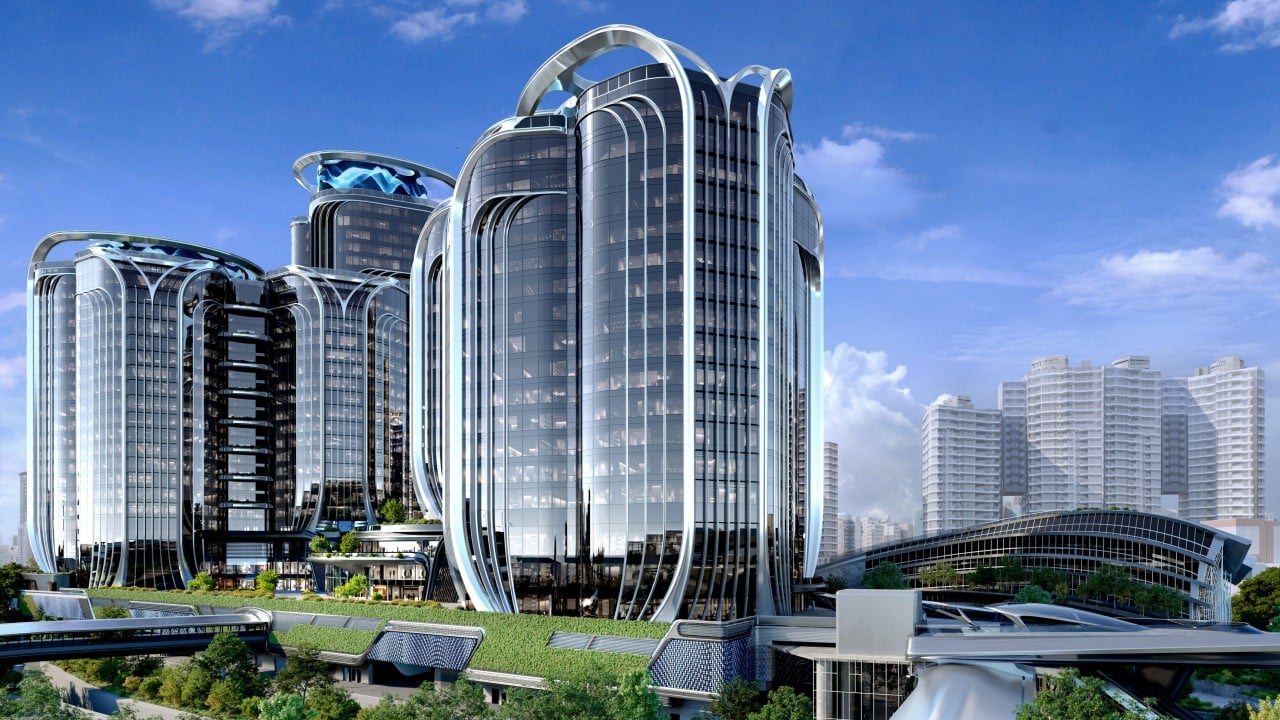
UBS is anchoring its entire Asia-Pacific wealth strategy to a massive new office complex atop the high-speed rail terminus in West Kowloon. This is not just a routine corporate relocation or a real estate cost-saving exercise. It is a calculated, high-stakes play to capture the massive flow of mainland Chinese wealth passing through Hong Kong. By shifting its footprint away from the traditional financial heart of Central, the Swiss banking giant is signaling where it believes the future of private banking lies.
For decades, Central has been the undisputed epicenter of Asian finance. To leave it was once unthinkable for a top-tier institution. Yet UBS is leasing 14 floors—approximately 460,000 square feet—in Sun Hung Kai Properties’ West Kowloon project. The move brings the bank’s wealth management, investment banking, and asset management divisions together under one roof. The geographical shift mirrors a deeper, structural transformation within the wealth management industry.
The traditional model of offshore private banking relied on high-net-worth individuals flying into Hong Kong, staying in luxury hotels in Central, and quietly meeting their bankers. The post-pandemic reality looks very different. Growth is driven by the Greater Bay Area initiative, a Beijing-backed plan to link Hong Kong with Macau and nine mainland cities, creating an economic powerhouse. West Kowloon is the physical gateway to this region.
The High Speed Rail Pipeline
Positioning a wealth management business directly above the Express Rail Link terminus fundamentally alters the logistics of client acquisition. A private banker can now welcome a billionaire client from Shenzhen or Guangzhou who just stepped off a 15-to-30-minute train ride. The client can conduct their business, sign trust documents, and return home for dinner without ever stepping foot in the congested streets of Hong Kong Island.
This efficiency matters because the profile of the Chinese wealth creator has evolved. The older generation, which accumulated wealth through manufacturing and traditional real estate, valued discretion and slow, relationship-driven banking. The new generation of tech entrepreneurs, biotech founders, and venture capitalists operates at a different tempo. They demand immediacy and integration.
The move also exposes the changing dynamics of Hong Kong commercial real estate. Central has become prohibitively expensive, and the premium for a Central address has degraded. With vacancy rates rising in traditional business districts, large occupiers hold the leverage. UBS negotiated its West Kowloon lease from a position of strength, securing a state-of-the-art, custom-built space that supports modern hybrid working models while cutting long-term operational overhead.
The Great Central Exodus
UBS is not alone in reassessing its footprint, but its move is the most aggressive. Traditionalists argue that moving away from Central isolates a bank from the ecosystem of law firms, accounting giants, and regulatory bodies that populate the district. The physical proximity of competitors in Central fosters an environment of spontaneous deal-making that Zoom calls cannot replicate.
However, the physical distance between Central and West Kowloon is minimal in terms of transit time, yet massive in terms of strategic positioning. The West Kowloon Cultural District, sitting adjacent to the new office tower, provides a sophisticated backdrop for client entertainment. Luxury art storage, world-class museums like M+, and high-end dining options offer a new venue for courting the ultra-wealthy. Art has become a major asset class for Asia's elite, and proximity to major cultural institutions is a deliberate branding alignment.
The risk lies in execution and geopolitical headwinds. The flow of wealth from mainland China into Hong Kong is subject to strict capital controls and shifting regulatory priorities in Beijing. If economic growth on the mainland slows further, or if regulatory crackdowns on private wealth intensify, the expected surge of new assets under management may fail to materialize. UBS is betting billions on the assumption that Hong Kong will remain the premier wealth hub for mainland China, despite increasing competition from Singapore.
Navigating the Singapore Counterweight
Singapore has successfully positioned itself as a safe haven for family offices, drawing significant capital from across Southeast Asia and mainland China. The city-state offers tax incentives and a stable political environment that appeals to risk-averse families. UBS must defend its dominant position in Asia by proving that Hong Kong remains the unmatched portal for direct access to Chinese capital markets.
The West Kowloon campus is the physical manifestation of that defense. It consolidates operations, reduces duplication, and projects an image of permanence and commitment to the Greater China market. The infrastructure advantage is real. Singapore cannot build a high-speed rail line to the heart of China’s tech hub.
The success of this relocation will not be measured by the architectural beauty of the new building or the sustainability certificates it achieves. It will be measured entirely by the net new money that flows through those doors from the high-speed rail platform below. If the Greater Bay Area integration delivers on its economic promise, UBS will have secured a generational advantage over rivals still paying premium rents for shrinking offices across the harbor. If the capital flows dry up, the empty desks in West Kowloon will serve as a monument to an over-engineered corporate gamble.


