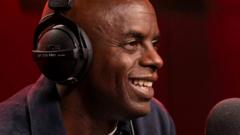
Trevor Nelson has been the undisputed voice of soul, R&B, and hip-hop in the UK for over three decades. When he suddenly vanishes from his regular BBC Radio 2 afternoon slot, people notice immediately. The 62-year-old broadcasting icon just confirmed the reason behind his recent absence, announcing a temporary break from all his radio commitments to address some unexpected health issues.
It started with a routine check-up. Doctors spotted something that required further medical tests, and instead of pushing through or ignoring the advice, Nelson decided to step away from the mic. He broke the news directly to his fans on Instagram, making it clear that he's prioritizing his recovery so he can get back to being 100% himself.
This move sent shockwaves through the UK music industry, triggering an outpouring of love from fellow presenters, massive recording artists, and millions of listeners who view him as a daily fixture in their lives. But beyond the immediate shock, his decision offers a profound lesson in self-care, a masterclass in handling public health scares without causing panic, and a stark reminder that absolutely nobody is immune to the realities of aging, no matter how cool or full of energy they seem.
The Announcement That Stopped the Music
Radio listeners are creatures of habit. You expect the same familiar voices to guide you through your workday or your drive home. When Trevor Nelson didn't turn up for his usual 2 to 4 pm weekday slot on Radio 2, the rumor mill could have easily spun out of control. Nelson chose to get out ahead of the speculation with a completely transparent, grounded social media post.
He addressed his followers, radio listeners, and what he affectionately calls his Soul Nation party-people. He explained that a standard medical check-up led directly to a doctor's recommendation for follow-up testing. Rather than downplaying it or trying to juggle complex clinical appointments with a demanding daily live broadcast schedule, he chose to step down temporarily.
His statement was remarkably poised. He specifically asked fans to deal with facts rather than jumping to wild conclusions, noting that speculation doesn't help anyone when dealing with medical matters. Right now, his singular focus is resting, undergoing those tests, and preparing for a full return to the airwaves and the DJ decks when he is genuinely ready.
Three Decades of Shaping British Music Culture
To understand why this health break has resonated so deeply across the country, you have to look at what Trevor Nelson represents to British broadcasting. He isn't just a guy who reads scripts and spins records. He's a cultural architect who fundamentally shifted the types of music that gained mainstream acceptance in the United Kingdom.
Starting out in the era of pirate radio, Nelson built a reputation for showcasing styles that mainstream stations largely ignored at the time. When he joined BBC Radio 1 in the mid-1990s to host his legendary Rhythm Nation show, he brought soul, contemporary R&B, and hip-hop to a national audience. He made artists like D'Angelo, Mary J. Blige, and a young Destiny's Child household names in Britain.
When the BBC launched Radio 1Xtra, Nelson was right there at the forefront, continuing to champion homegrown British talent alongside global superstars. His transition to Radio 2 allowed him to bring that deep musical knowledge to an even broader audience. His current schedule is relentless, holding down the daily afternoon slot on Radio 2 alongside a regular Sunday show on 1Xtra, while simultaneously touring the country with his massive Soul Nation club nights.
Just days before his health announcement, Nelson was seen out and about celebrating his long career. He attended the Television and Radio Industries Club Awards, widely known as the Tric Awards, where he accepted a special recognition trophy for his monumental contributions to the industry. Earlier in the year, he scooped up the prestigious judge's special recognition prize at the Arias. He was flying high, which makes the sudden pivot to medical testing feel even more abrupt for his audience.
The Critical Importance of the Routine Check-Up
We often treat medical appointments as an afterthought. You feel fine, so you assume everything is fine. Nelson's situation completely dismantles that logic. By his own admission, he didn't head to the doctor because he was experiencing a catastrophic medical emergency. He went in for a routine examination.
Routine screening is designed to catch underlying physiological shifts before they manifest as severe symptoms. For a 62-year-old man with a high-profile, high-stress career that involves late-night DJ gigs, constant travel, and the intense mental focus required for live daily radio, staying on top of these health metrics is a necessity.
By sharing that a routine visit triggered this break, Nelson is inadvertently doing massive public health advocacy work. He is showing his massive demographic, particularly men of a similar age who are statistically notorious for avoiding the doctor, that taking preventative health seriously is a sign of strength, not weakness. There's no bravery in working yourself into the ground while ignoring what your body is trying to tell you.
How the Entertainment World Rallied Behind a Legend
The response to Nelson's announcement was instantaneous and came from every corner of the British entertainment landscape. It shows just how deeply respected he is, not just as a broadcaster, but as a human being who has spent decades lifting others up.
On the radio itself, Vernon Kay took time during his mid-morning Radio 2 show to send love to his colleague. Kay mentioned that he had just played a round of golf with Nelson a couple of weeks back, noting that the DJ was in great spirits and full of life. Kay expressed total confidence that Nelson would face this medical hurdle head-on, reflecting the general sentiment of everyone working at Wogan House.
On social media, the comment section of Nelson's announcement looked like a directory of British music royalty. Global superstar Stormzy checked in to show support, alongside pop icons and presenters like Alesha Dixon and Fleur East. Singer Beverley Knight summed up the situation perfectly with a short, punchy comment stating that health comes first, always.
Fellow BBC radio star Lauren Laverne offered some incredibly grounded advice based on her own experiences with life's unexpected interruptions. She urged Nelson to take things one single step at a time and resist the urge to mentally jump ahead to worst-case scenarios before the tests are even completed. Lorna Clarke, the BBC’s director of music, issued an official statement making it clear that the corporation stands firmly behind him and that his microphone will be waiting for him whenever he feels ready to return.
The Show Goes On for Now
Even though Nelson is resting at home, his presence will still be felt across the weekend airwaves. Listeners will still be able to hear him host a major broadcast this Sunday night on Radio 2.
The station is airing The Music Is Black, a landmark concert recorded last month at the historic Hackney Empire. The event served as a massive celebration of the profound impact of black music across Britain, featuring performances from legendary vocalists like Alison Limerick, Omar, and saxophonist Courtney Pine.
Because the event was captured weeks ago, fans get a chance to hear Nelson doing what he does best, commanding a stage, sharing his encyclopedic musical knowledge, and celebrating the culture he helped build. It serves as a great bridge for fans who are going to miss his daily presence over the coming weeks.
Redefining the Culture of Overworking
The entertainment industry loves a grind story. We praise people who never take a day off, who perform through illnesses, and who sacrifice their personal well-being for the sake of the show. It's a toxic mindset that leads directly to severe physical and mental burnout.
Broadcasting is uniquely brutal in this regard. Live radio demands that you switch on an elevated, joyful, energetic persona the second the red light goes live, regardless of how you feel inside. Doing that five days a week, year after year, takes a hidden toll on the nervous system.
Nelson choosing to hit the pause button is part of a broader, highly necessary cultural shift. When someone at his level says that a job, even a dream job at the BBC, comes second to medical reality, it gives everyone else permission to pause too. It reminds us that we are all human beings first and workers second.
If you want to use this moment as a catalyst for your own life, the next steps are incredibly simple. Stop putting off that doctor's appointment you've been delaying for the last six months. Book that routine blood work. Listen to your body when it tells you it's tired.
We don't know the specifics of what Trevor Nelson is facing, and honestly, we don't need to. He asked for space and facts, not gossip. What we can do is take his lead. Take care of your own health with the same seriousness he's showing right now, and keep the radio dialed in for the moment those legendary soul tracks start rolling back out under his watch.