We need to stop talking about Lebanese students as if they are broken.
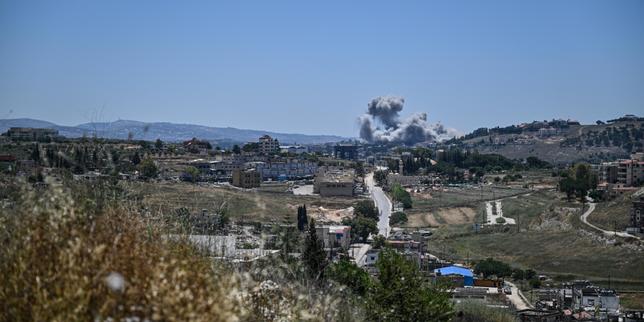
Every year, the same media narrative resurfaces like clockwork. A major crisis hits Lebanon—be it economic collapse, political paralysis, or border conflicts—and the international press rushes in to document the "shattered psyche" of the country's youth. The latest focus centers on end-of-year exams, framing them as a cruel, impossible burden for a generation allegedly suffering from collective, unyielding Post-Traumatic Stress Disorder (PTSD).
This narrative is not just lazy. It is actively harmful.
By pathologizing normal, healthy responses to a highly stressful environment, media commentators and well-meaning NGOs are doing something the failed state could never achieve on its own: they are stripping Lebanese youth of their agency. They are teaching a generation of naturally resilient overachievers to view themselves as victims before they even enter the global workforce.
The thesis driving the current hand-wringing is fundamentally flawed. Standardized testing during a crisis is not a form of institutional torture. For many, it is the only objective meritocracy left in a country built on sectarian nepotism.
The Misguided Pathologization of Daily Stress
Psychiatrists have a strict definition for PTSD. It requires exposure to actual or threatened death, serious injury, or sexual violence, followed by specific, chronic intrusive symptoms that impair functioning for months or years. What Lebanese students are experiencing is acute, ongoing, structural stress.
There is a massive difference. Confusing the two is a clinical error.
When you tell a 17-year-old that their exam anxiety is actually clinical trauma, you change their relationship with adversity. You shift their locus of control from internal—"This is a brutal situation, but I can study my way out of it"—to external—"I am psychologically damaged, so failure is inevitable."
I have spent over a decade analyzing educational frameworks in high-conflict zones. I have seen what happens when institutions buy into the trauma narrative. They lower standards. They cancel exams. They issue unearned passing grades to "protect" the children.
The result? The value of a Lebanese degree plummets on the international market. Foreign universities, which used to fight over graduates from Saint Joseph University (USJ) or the American University of Beirut (AUB), start looking at Lebanese credentials with skepticism. The soft bigotry of low expectations does far more damage to a student's long-term prospects than a few sleepless nights over a biology final.
Why Canceling Exams is a Classist Trap
The loudest voices calling for the cancellation or drastic modification of the Baccalauréat exams usually speak from a position of immense privilege. They are often wealthy parents or private school administrators who can afford to bypass the public system entirely.
Let us look at the brutal mechanics of how education actually works in a collapsing state:
| Student Demographics | Impact of Standardized Exams | Impact of Canceling Exams |
|---|---|---|
| Elite / Wealthy Private | An annoyance; their international portfolios and foreign passports secure their futures anyway. | Advantage. They rely on school reputation and family networks to secure elite foreign placements. |
| Middle Class / Public School | A grueling gauntlet, but a verifiable, objective metric to win international scholarships. | Disaster. Without a standardized score, they have no way to prove their worth to global universities. |
If you eliminate the standardized exam, you eliminate the only level playing field left.
Without the Bac, admissions committees revert to subjective criteria: school prestige, extracurricular activities, and letters of recommendation. In Lebanon, those metrics are highly correlated with wealth and sectarian connections. A poor student from South Lebanon or Akkar who aces a grueling centralized exam can get a ticket to a top-tier university in France or Canada. Strip away that exam under the guise of "mental health preservation," and you lock that student out of the global economy.
The Resilience Myth vs. Functional Adaptability
For years, the phrase "Lebanese resilience" was used by corrupt politicians as an excuse to do nothing. “Look how resilient the people are, they can survive without electricity!”
Understandably, young people are sick of being called resilient. It feels like an insult.
But the critics have overcorrected. In their rush to reject the weaponized myth of resilience, they have adopted an ideology of fragile vulnerability. They are throwing the baby out with the bathwater.
Humans are not fragile glass spheres that shatter upon impact; they are anti-fragile. Like muscles, cognitive and emotional systems grow stronger when subjected to stress and resistance, provided they are not completely crushed.
Facing an exam during a period of geopolitical instability is incredibly difficult. No one is denying that. But overcoming that hurdle builds a specific type of hyper-adaptability that cannot be taught in a peaceful, sterile classroom. Employers in London, Dubai, and New York do not hire people because they lived an easy life. They hire people who can deliver results when everything around them is going to hell.
The Lebanese students who manage to study by candlelight, navigate fuel shortages, and still pass their exams are not broken. They are formidable. Marketing them as psychological casualties does them a massive disservice.
Dismantling the Mental Health Industrial Complex
The influx of international aid money into Lebanon has created a booming industry of NGOs focused entirely on psychological first aid. While some of this work is vital, a significant portion of it operates on a model that requires a steady supply of victims to justify its own funding.
Consider how these common questions are framed, and how they should actually be answered:
Are students capable of learning during a crisis?
The prevailing narrative says no, claiming that the brain cannot retain information under high cortisol levels. The reality? Focused, disciplined work is one of the most effective coping mechanisms for external chaos. It provides structure, a sense of purpose, and a tangible goal in an environment where everything else is unpredictable.
Should the state lower passing thresholds to account for the crisis?
Absolutely not. Lowering the bar tells the world that a Lebanese degree is worth less than it was five years ago. It devalues the hard work of the students who actually put in the effort despite the conditions. If you change the metric, you destroy the currency.
A Strategy for Radical Intellectual Self-Defense
If you are a student in Lebanon reading the endless profiles about how stressed and traumatized your generation is, you need to change your strategy immediately.
Stop reading the profiles. Stop participating in the collective mourning rituals on social media.
Recognize that your anxiety is a completely rational reaction to a irrational situation, not a permanent psychiatric disorder. Treat your exam preparation as an act of defiance against the incompetent political class that tried to steal your future. Every formula you memorize and every essay you write is a brick in the wall of your own independence.
The world does not owe you a soft landing because you grew up in a crisis zone. The global economy is indifferent to your geographic misfortune. If you want out, or if you want to stay and build something better, your only currency is exceptional competence.
Demanding that the world lower its standards for you because you are stressed is a losing strategy. Demand instead the resources, the electricity, and the security to meet the highest standards. Anything less is a concession of defeat.



