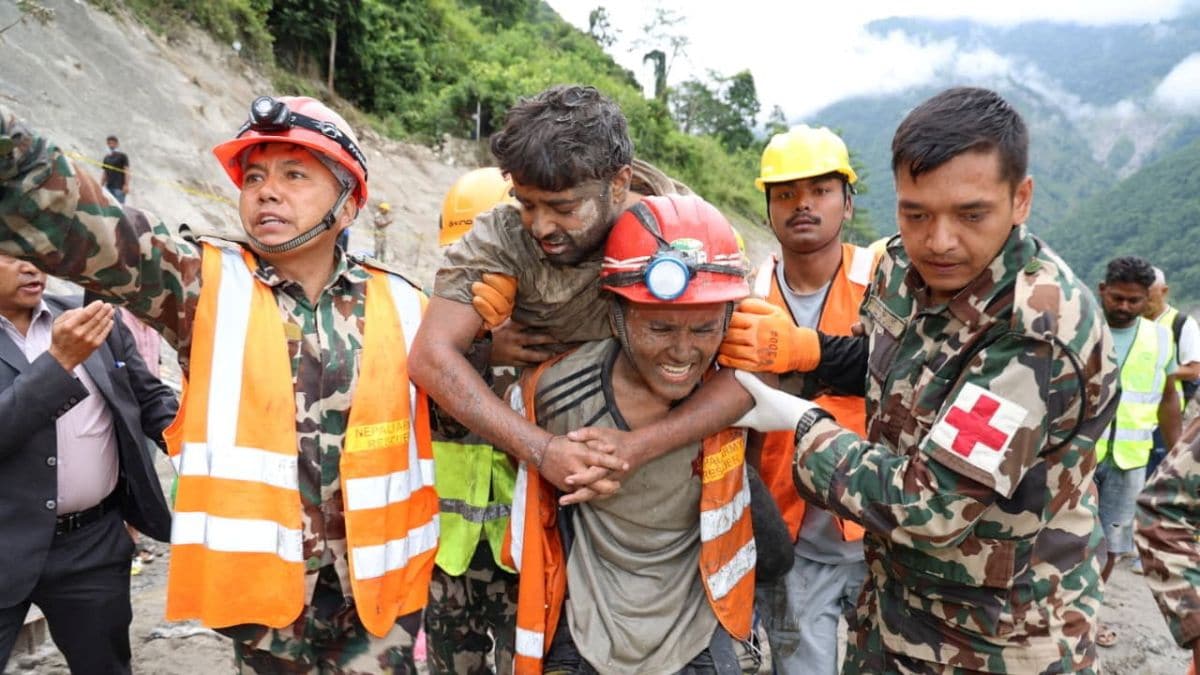
Flash floods do not care about megawatts. When the Trishuli 3A hydropower project was struck, two workers found themselves trapped inside an underground tunnel, staring at rising black water and calculating their final minutes. Their eventual survival made headlines, but the rescue operation obscured a more uncomfortable reality. Himalayan infrastructure projects are racing ahead of geological safety protocols, turning renewable energy ambitions into high-stakes gambles for the laborers working underground.
The incident at the 60-megawatt Trishuli 3A plant in Rasuwa and Nuwakot districts highlights a systemic vulnerability across the Himalayan region. Sudden surges, triggered by cloudbursts or glacial lake outburst floods, transform dry riverbeds and underground penstocks into lethal traps within minutes. When the wall of water hit, workers had mere seconds to react. The survival of those two men was less a testament to institutional emergency response and more a stroke of pure, unadulterated luck.
The Anatomy of a Himalayan Hydro Hazard
Building power stations in the world's youngest and most fragile mountain range requires an intimate understanding of tectonic instability. The terrain is a shifting puzzle of loose sediment, fractured rock, and steep river gradients. Yet, commercial pressures frequently override environmental science.
Hydroelectric facilities rely on diverting glacial and monsoon-fed rivers through long tunnels to drive turbines buried deep inside the mountain. During the monsoon season, rainfall rates can exceed drainage capacities exponentially.
- Geological Fragility: Mountain slopes are prone to sudden landslides that can dam rivers temporarily, creating artificial lakes that burst without warning.
- Sediment Overload: Heavy silt and debris accumulation reduce the reaction time of spillway gates, causing sudden overflows into intake tunnels.
- Communication Gaps: Underground worksites often lack real-time telemetry systems linked to upstream weather stations, leaving laborers blind to incoming surges.
Engineers know these risks exist. Feasibility studies routinely document seismic fault lines and historical flood markers. The failure occurs in the translation from paper to practice. Contractors facing strict deadlines and budget constraints often scale back early warning systems and evacuation chambers, betting that a catastrophic surge will not happen on their watch.
Inside the Underground Trap
An underground powerhouse is an intimidating workspace under the best conditions. Noise echoes off concrete and raw rock, heavy machinery kicks up blinding dust, and ventilation shafts hum constantly. Add a sudden influx of water, and the environment turns hostile instantaneously.
Water does not simply flood a tunnel; it displaces air, creating immense pressure pockets while stripping away visibility. Escape routes depend on continuous power for lighting and mechanical hoists. When a flash flood hits, the grid usually fails instantly. Workers are left scrambling through pitch-black corridors filled with debris, relying entirely on muscle memory and handheld cap lamps.
The two workers rescued at Trishuli 3A survived by finding an air pocket and holding out against hypothermia and panic until emergency crews could breach the blocked access points. Most are not so fortunate. Local disaster management databases reveal a steady trickle of construction fatalities that never make national news, written off as occupational hazards in a hazardous landscape.
The Cost of the Green Energy Rush
Nepal sits on an estimated 42,000 megawatts of economically viable hydroelectric potential. Neighboring markets like India and Bangladesh are hungry for clean electricity, positioning water resources as the country's primary economic export. International lenders and domestic conglomerates pump billions into these valleys, transforming roaring rivers into a series of stepped concrete reservoirs and underground labyrinths.
This rush to dam every major river system creates perverse incentives. Safety audits are frequently outsourced to firms with financial ties to the developers, leading to rubber-stamped compliance reports. Workers are recruited from marginalized rural communities with high unemployment rates, individuals who have little leverage to demand better safety gear, proper training, or hazard pay.
When a disaster strikes, the corporate playbook is predictable. Expressions of grief are issued, compensations are promised, and operations resume as quickly as possible. The systemic flaws remain untouched. No one asks why workers were inside a high-risk diversion tunnel during peak monsoon instability.
Reforming the Underground
Fixing the structural dangers of Himalayan hydropower requires an expensive, disruptive shift in priorities. It means installing redundant, hardened early-warning sensors miles upstream from any intake structure. It means constructing pressurized, flood-proof refuge chambers equipped with independent oxygen and communication lines inside every major tunnel network. Most importantly, it means giving workers the unpunished right to walk off the job when weather forecasts turn volatile.
None of these measures fit neatly into quarterly profit margins. They slow down excavation, inflate project budgets, and complicate project timelines. Yet the alternative is a continued acceptance of preventable casualties as the baseline cost of keeping the lights on downstream.
The waters of the Trishuli River continue to rush past the turbines, generating power for homes and industries hundreds of miles away. Down in the dark, the engineers and laborers keep working, listening closely to the rumble of the mountain, waiting for the next surge.