The arrest of Michael Cudmore in Mexico marks the closure of a critical operational gap in a multi-jurisdictional investigation into the targeted assassinations of Angelo Musitano and Mila Barberi. While media narratives often focus on the drama of the manhunt, a structural analysis reveals this event as the terminal phase of a systematic dismantling of a specific hit-and-run cell that operated with high tactical precision but low long-term strategic insulation. The apprehension of the final suspect underscores a shift in how Interpol and the Royal Canadian Mounted Police (RCMP) manage "The Mexican Pipeline," a geographic bypass often used by Ontario-based criminal elements to evade domestic prosecution.
The Triad of Tactical Failure
The 2017 murders of Angelo Musitano in Hamilton and Mila Barberi in Vaughan were not isolated incidents of street violence. They represented a calculated attempt to reorganize the power hierarchy within the Southern Ontario underworld. However, the execution of these hits suffered from three primary structural flaws that eventually led to the identification and capture of the perpetrators. Discover more on a similar issue: this related article.
- Surveillance Persistence: The cell underestimated the density of passive data collection in residential Hamilton and Vaughan. High-definition forensic video recovery allowed investigators to map the movement of the black Jeep Cherokee used in the Musitano hit with granular accuracy.
- Asset Traceability: Despite efforts to use "burned" or stolen vehicles, the logistics of acquiring and disposing of these assets left a digital and physical trail. In the Barberi case, the proximity of the shooter to the victim—who was not the intended target—indicated a failure in real-time intelligence, leading to "collateral" heat that traditional organized crime structures typically seek to avoid.
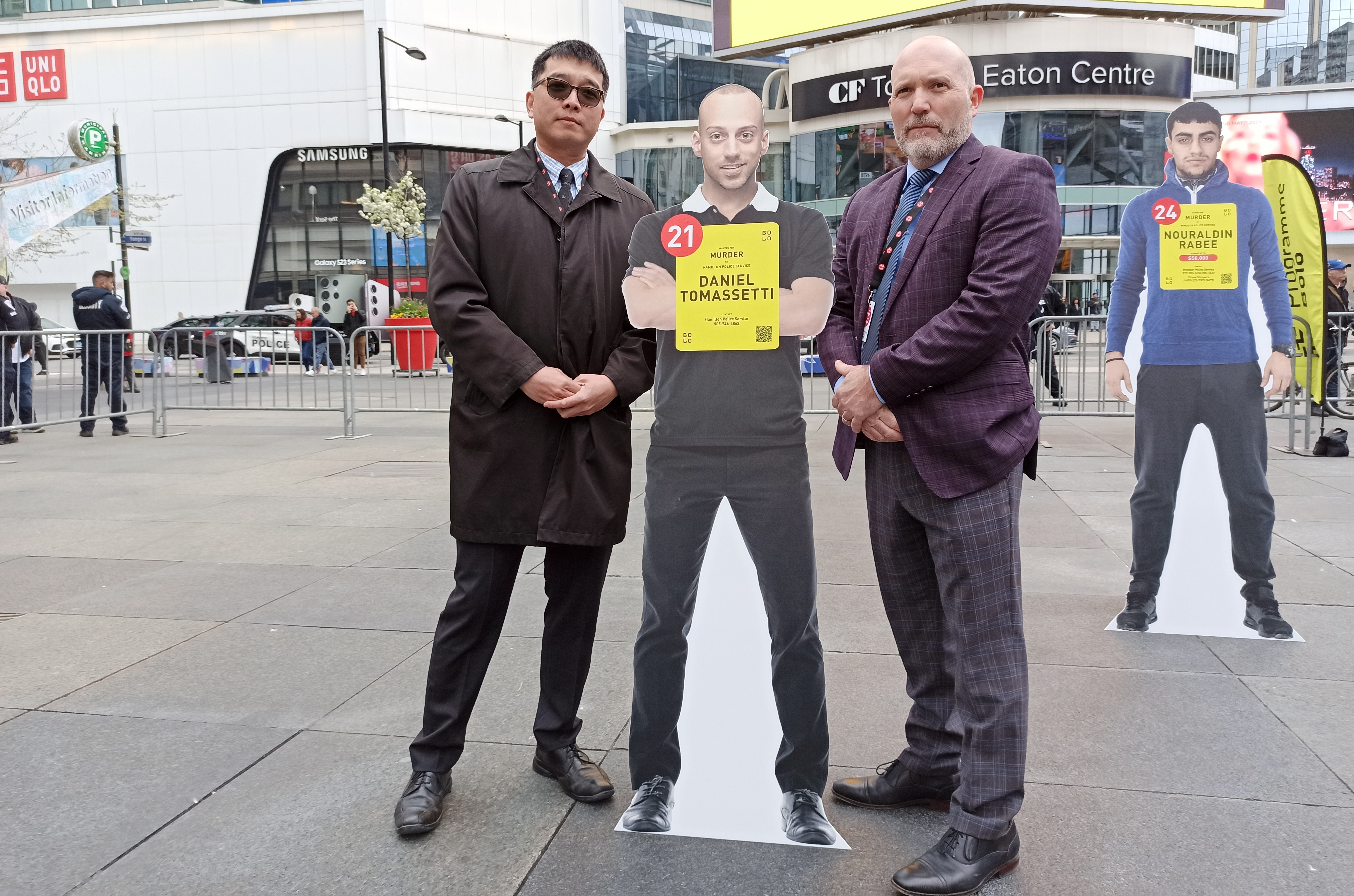
- The Fugitive Paradox: Fleeing to Mexico creates an immediate logistical dependency. Fugitives like Cudmore and his associates (Daniel Tomassetti and Jabril Abdalla) required a continuous influx of "dark capital" to maintain anonymity. Once the financial umbilical cord is strained or monitored, the fugitive’s location becomes a commodity that can be traded by local cartels or informants to law enforcement.
The Musitano Power Vacuum and Structural Vulnerability
To understand why these arrests are significant, one must quantify the decline of the Musitano family. For decades, the family operated as a "buffer state" between the Rizzuto-aligned elements in Montreal and the Ndrangheta-based cells in the Greater Toronto Area (GTA).
The assassination of Angelo Musitano was a decapitation strike aimed at the family’s operational management. Unlike his brother Pat, who represented the public face of the organization, Angelo managed the quieter, more technical aspects of the family’s remaining influence. His death signaled to the underworld that the Musitano "brand" no longer carried the protection of its former allies. Additional journalism by The New York Times delves into related views on the subject.
This created a cascading risk profile:
- Loss of Territorial Monopoly: As the Musitanos weakened, competing factions began a "hostile takeover" of traditional revenue streams, including construction racketeering and illicit gambling.
- Informant Escalation: When a criminal organization loses its ability to retaliate, the perceived cost of cooperating with the police drops. This likely provided the RCMP with the human intelligence (HUMINT) necessary to track the suspects across international borders.
The Mechanics of Transnational Interdiction
Cudmore’s arrest in Mexico was not a stroke of luck but the result of Operation_Jurisdiction_Overlap. Mexican authorities, specifically the Agencia de Investigación Criminal (AIC), have moved toward a model of "asymmetric cooperation" with Canadian and American agencies.
In this framework, the Mexican state prioritizes the removal of foreign fugitives who bring unwanted international scrutiny to local corridors. Cudmore was effectively "priced out" of his sanctuary. When the political or enforcement cost of harboring a foreign national exceeds the bribe or utility that national provides, the local infrastructure will inevitably surrender the individual.
The extradition process functions as a legal bottleneck. Canada must prove a "Dual Criminality" standard—showing that the acts committed would be crimes in both nations. Since first-degree murder is a universal felony, the legal friction is minimal. The real complexity lies in the "Life Imprisonment" caveat; Mexico often requires assurances that the death penalty will not be sought, a non-issue in the Canadian judicial context.
The Cost of Collateral Targeting
The death of Mila Barberi represents a significant deviation from professionalized hit-cell protocols. Analysis of the crime scene data suggests the shooter engaged the target (Saverio Serrano) but lacked the discipline to isolate the strike.
In high-level organized crime, "sloppy" hits generate a specific type of social and political pressure. While the murder of a known figure like Angelo Musitano is often categorized by the public as "occupational hazard," the killing of a civilian bystander like Barberi triggers an escalation in police resource allocation. The York Regional Police and Hamilton Police Service were forced into a high-intensity collaborative model that they might not have sustained for a standard underworld liquidation.
This creates a Resource Intensification Loop:
- Public Outrage: Increases political pressure on police boards.
- Funding Allocation: Special task forces are authorized with larger budgets for international surveillance.
- Technological Deployment: Facial recognition and cross-border signal intelligence (SIGINT) are prioritized.
The Strategic Forecast for the GTA Underworld
The arrest of the final suspect in the Musitano/Barberi case does not signal the end of violence in Southern Ontario, but rather the conclusion of the "Hamilton War" era. The Musitano family, as a cohesive entity, is functionally extinct. The remaining power players are no longer traditional "Families" but fluid, ethnically diverse syndicates that prioritize cyber-enabled fraud and fentanyl distribution over the legacy rackets of the 1990s.
The arrest of Michael Cudmore establishes a precedent for the "Long Arm" doctrine. Fugitives can no longer rely on the complexity of Mexican geography to provide permanent shielding. The integration of Interpol’s I-24/7 global communication system with local municipal police databases means that a "hit" on a passport at a checkpoint in Guadalajara is instantaneous.
The next phase of this conflict will likely manifest in the "Succession Phase." With the Musitano influence erased, the GTA is now a fragmented market. Law enforcement must now pivot from "Target-Centric Policing" (finding one killer) to "Systemic Disruption" (preventing the next power grab). The data suggests that when a dominant structure is removed, violence often spikes in the short term as lower-level "soldiers" compete for the vacated territory.
The strategic play for regional authorities is to utilize the metadata gathered from the Cudmore-Tomassetti-Abdalla cell to map the secondary support network. Every fugitive has a "sustenance layer"—lawyers, money movers, and family members who facilitated the flight. Targeting this layer is the only way to increase the "Friction Coefficient" of fleeing the country, making it harder for future suspects to view Mexico as a viable exit strategy.
Monitor the upcoming court proceedings for the "Inbound Intelligence" they will yield. The testimony regarding how the suspects were funded while abroad will provide the blueprint for freezing criminal assets before they can be converted into offshore flight capital. The trial is not just about the conviction of Michael Cudmore; it is a diagnostic tool for identifying the cracks in the Canadian border and financial systems that allowed a triple-murder suspect to remain at large for years.