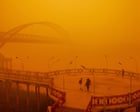
Dropping solid carbon dioxide from aircraft treats an atmospheric symptom while leaving the subterranean combustion engine intact. Standard reporting on Indonesia's dry-ice dispersion operations frames the effort as a novel chemical fix or an urgent diplomatic flashpoint. Operational reality demands a stricter lens: haze management is a coupled system of subterranean fuel thermodynamics, boundary-layer meteorology, agricultural incentive structures, and cross-border legal friction. This analysis deconstructs the core failure modes of reactive aerosol dispersion and maps the structural levers required to stop regional smoke episodes before they cross national borders.
Deconstructing the Competitor Narrative
Conventional coverage of dry-ice deployment in Sumatra and Kalimantan follows a predictable four-part arc: severe air pollution blankets Indonesian cities and regional capitals, authorities test aerial dry-ice seeding after exhausting water bombing and ground deployment, atmospheric scientists warn that winds and climate shifts limit relief, and neighboring states threaten legal or diplomatic escalation.
That narrative captures the surface sequence of events, yet it omits the underlying causal chain. Treating dry ice as a standalone intervention blurs three distinct operational layers:
- Source ignition and drainage: Drained tropical peatlands smolder slowly beneath the surface, turning minor land-clearing fires into multi-week smoke generators that surface water drops rarely extinguish.
- Atmospheric transport and dispersion: Prevailing winds move particulate plumes across provincial and national boundaries continuously, meaning localized visibility gains do not reduce aggregate regional emission mass.
- Institutional enforcement: Firefighting sorties address active combustion after damage occurs, whereas land-clearing economics drive ignition before suppression teams mobilize.
When coverage groups emergency cloud seeding, ground crews, and regional diplomacy into a single story line, readers miss why aerial interventions produce temporary breathing room rather than structural resolution.
Thermodynamics and Limits of Dry-Ice Dispersion
Dry ice—solid carbon dioxide—operates through rapid cooling and ice-nucleation dynamics rather than by chemically neutralizing smoke. When dispersed into supercooled cloud layers or moisture-bearing strata, extreme local temperature drops encourage ice crystal formation, which can grow and precipitate as rain if sufficient moisture and updrafts exist. In lower-level haze plumes lacking deep convective moisture, cooling alters local buoyancy and mixing, though atmospheric stability and wind shear dictate whether particles loft, mix, or settle back down.
The first operational constraint is moisture availability. Dry conditions that intensify wildfire seasons—such as El Niño dry spells—simultaneously deplete the atmospheric water vapor required to turn seeding into heavy, sustained rainfall over burning zones. Where seeding does coincide with rain or clearing, separating intervention effects from natural synoptic shifts remains a documented analytical challenge for meteorological agencies.
The second constraint is mass balance. A single sortie dispersing a few tonnes of dry ice or salt covers a narrow corridor for a limited window. Smoldering peat and active brush fires continuously inject fine particulate matter into the air column. Clearing or washing out a localized air mass does not halt ongoing combustion upwind; as prevailing winds blow across the archipelago, fresh smoke replaces cleared air.
The third constraint is operational risk and airspace exposure. Dropping solid materials from aircraft at low or mid altitudes over populated or mixed-use terrain carries physical hazard risks if sublimation is incomplete or release zones drift. Tightening flight release rules and coordinating closely with meteorological and aviation authorities becomes mandatory once aerial dispersion scales from isolated trials to multi-province sorties.
Why Subterranean Peat Fires Defeat Surface Suppression
Understanding why haze persists requires separating surface vegetation fires from deep peat combustion. Tropical peatlands consist of accumulated, partially decayed organic matter several meters deep, saturated with water in their natural state. When canals are dug to drain land for agriculture or timber, the upper peat layer dries out, exposing dense carbon fuel to oxygen and ignition.
Surface aerial water bombing and ground hoses cool flames on scrub and grass, yet water frequently runs off dry peat or evaporates before penetrating deep fissures. Underneath an apparently quiet surface, smoldering combustion can persist for weeks, releasing dense smoke with high concentrations of fine particulates and irritant gases that travel hundreds of kilometers.
A known fact in fire management is that extinguishing deep peat requires re-wetting the fuel bed and raising the water table rather than relying solely on surface wetting. An educated hypothesis for why aerial dispersion feels urgent during peak episodes is political and public-health pressure: visible smog in major cities creates immediate demand for rapid action, whereas canal blocking and hydrological restoration take months or years to yield measurable fire resistance.
The Cost Function of Land Clearing and Enforcement
Fire suppression is expensive, labor-intensive, and reactive; slash-and-burn land clearing remains cheap per hectare in the short term. This asymmetry defines the economic cost function driving recurrent haze seasons.
- Private clearance cost: Manual or mechanical clearing without fire requires heavy machinery, fuel, labor, and time, whereas controlled or negligent burning rapidly clears understory debris and weeds on drained plots.
- Externalized health and economic cost: Smoke plumes impose respiratory illness, school and flight disruptions, and lost productivity across domestic provinces and neighboring countries—costs borne by the public and regional economies rather than the actor lighting the fire.
- Detection and attribution lag: Linking a specific smoke plume or fire scar to a legal concession holder requires satellite hotspot correlation, ground verification, and corporate ownership tracing, creating friction when suspects number in the hundreds or span multiple corporate layers.
Police investigations and corporate probes signal state intent when authorities name suspects and scrutinize firms tied to burn scars. Yet enforcement faces a structural lag: prosecution follows environmental damage, while incentives to clear land cheaply recur every dry cycle unless land-use monitoring and financial penalties alter the calculation beforehand.
Transboundary Governance and Regional Exposure
Transboundary haze turns a domestic land-use and disaster-response challenge into a regional security and diplomacy issue. When winds carry smoke over densely populated hubs such as Singapore and Kuala Lumpur, air-quality spikes trigger public backlash, cross-border legal threats, and tense regional summits.
Neighboring states face a collective-action dilemma. Affected downstream countries experience acute health and economic impacts without direct jurisdiction over land management inside another sovereign state. Meanwhile, the emitting state shoulders primary suppression costs, domestic health burdens, and sovereignty sensitivities when external actors propose legal liability or unilateral oversight.
Existing regional frameworks struggle when dry weather and widespread fires overwhelm routine coordination. Shared satellite monitoring and data exchange help trace hotspots and corporate links, but durable de-escalation depends on pairing technical transparency with agreed operational triggers that do not stall in blame during peak pollution weeks.
Tactical Playbook for Haze Containment
Closing the gap between emergency air clearing and durable haze reduction requires sequencing interventions across four operational phases rather than treating aerial seeding as the centerpiece.
- Triage air corridors during acute spikes: Deploy aircraft seeding and targeted ground suppression strictly where meteorological profiles show viable cloud moisture or localized inversion relief, enforcing strict flight-safety and release corridors over populated zones.
- Pair suppression with peat hydrology: Direct ground and engineering teams to seal drainage canals and saturate peat perimeters around active hotspots so smoldering fronts cannot re-ignite once surface flames subside.
- Enforce rapid concession-to-hotspot attribution: Combine high-frequency satellite fire alerts with land-registry overlays to issue immediate stop-work orders, revoke or suspend non-compliant permits, and pursue rapid evidentiary audits against implicated operators.
- Institutionalize pre-dry-season readiness: Pre-position water pumps, canal-blocking materials, and joint meteorological-military flight plans before seasonal dryness peaks, and formalize shared hotspot data protocols with regional neighbors ahead of fire weather.
Limitations and Strategic Trade-Offs
No single intervention eliminates transboundary haze in a single season. Weather modification remains bounded by atmospheric physics; even skilled pilots and meteorologists cannot manufacture heavy rain out of bone-dry air.
Hydrological restoration and supply-chain enforcement also carry trade-offs. Blocking drainage canals on agricultural land can create friction with local smallholders or concession operators if alternative livelihood or land-management pathways are absent. Aggressive legal crackdowns can face evidentiary hurdles when fires are set clandestinely or blamed on competing actors. Finally, shifting climate patterns and prolonged dry anomalies raise baseline fire risk across wider geographies, meaning historical suppression budgets often under-estimate future demand.
The Strategic Play
Governments and regional planners should treat aerial dry-ice seeding strictly as a tactical visibility bridge—never as a primary fire-control strategy. The decisive strategic move is to reallocate marginal emergency funds from open-ended aerial dispersion into pre-dry-season peatland re-wetting combined with automated satellite-to-enforcement penalty systems tied directly to land concessions. Until raising the water table in drained peat and raising the financial cost of illegal burning outpace the speed of smoke dispersion, regional haze will remain a recurring seasonal shock rather than a solved engineering problem.