.jpeg?width=1200&auto=webp&trim=0%2C0%2C0%2C0)
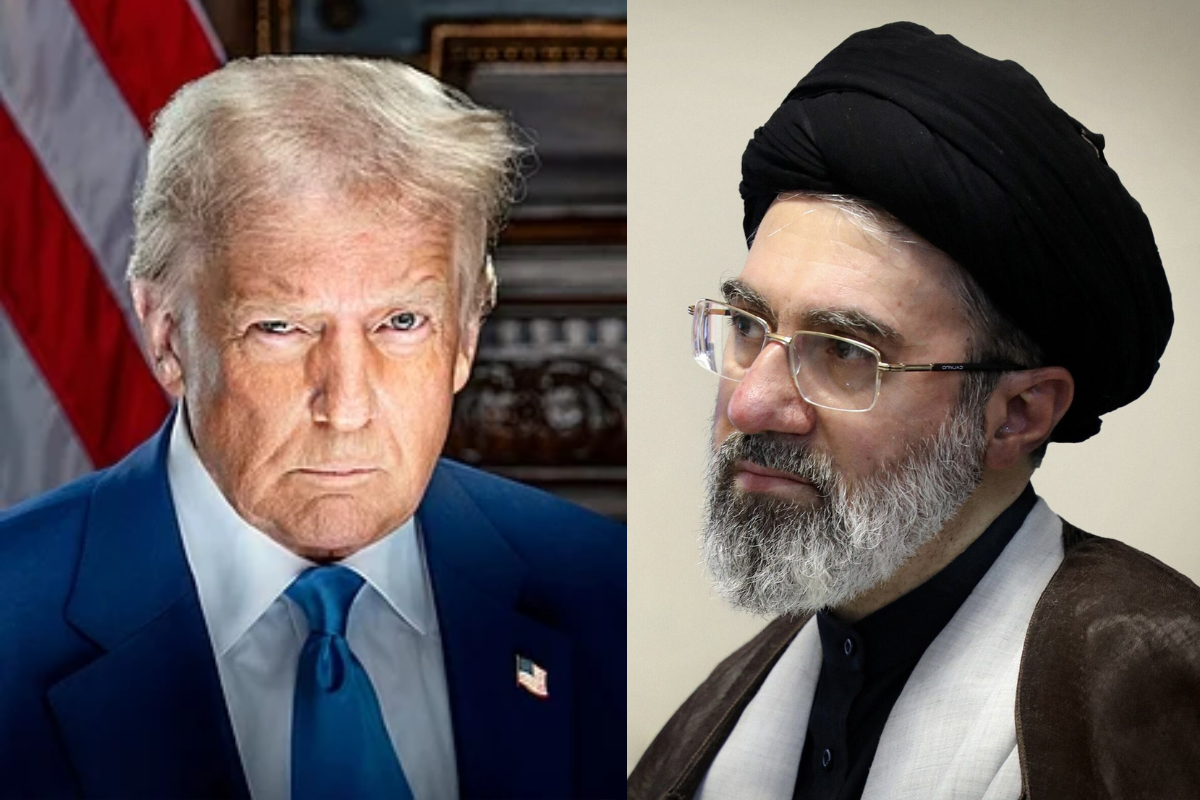
US President Donald Trump’s declaration that he will demand the release of imprisoned Hong Kong media tycoon Jimmy Lai during his May 14–15, 2026, bilateral summit with Chinese President Xi Jinping in Beijing sets up a high-stakes clash of political incentives. During an appearance on the Salem News Channel on May 4, 2026, Trump confirmed he would place the 78-year-old founder of the defunct Apple Daily back on the bilateral agenda. Yet, while Trump’s campaign-trail rhetoric framed the release of the pro-democracy activist as a simple, "100 percent" guaranteed transaction, the strategic reality of the May summit is governed by a far more complex set of structural constraints, overlapping diplomatic crises, and asymmetric cost functions.
A clinical dissection of the upcoming summit reveals that the Jimmy Lai case is no longer a isolated human rights concern. Instead, it has become a highly integrated variable in a broader geopolitical equation that spans the US-Iran proxy war, global energy sanctions, and the preservation of Hong Kong's remaining economic functions.
The Strategic Cost Function of the Jimmy Lai Case
To evaluate the probability of Lai’s release, one must analyze the domestic and international cost-benefit equations for both the American and Chinese heads of state. The issue cannot be resolved by personal rapport or appeals to humanitarian values; it will be decided by hard, calculated trade-offs.
       [U.S. Strategic Pressures]               [China's Domestic Hardline]
        - Secondary Energy Sanctions            - National Security Law (2020)
        - Hong Kong HKETO Act                   - Domestic Sovereignty Signal
                     \                                 /
                      \                               /
                    [U.S.-China May 2026 Beijing Summit]
                                      |
                       [The Diplomatic Friction Point]
                        - Jimmy Lai: 20-Year Sentence
                        - Iranian Oil Refiner Sanctions
1. The Chinese Cost of Concession
For President Xi Jinping, the domestic cost of releasing Jimmy Lai is exceptionally high. Lai’s February 2026 sentencing to 20 years in prison under the 2020 National Security Law represents the absolute peak of Beijing's legal and political integration of Hong Kong.
Three government-appointed judges convicted Lai of conspiring to lobby foreign powers for sanctions against China and Hong Kong. For the Chinese Communist Party (CCP) to reverse this decision under direct, public pressure from Washington would yield severe domestic costs:
- Sovereignty Dilution: Yielding to a foreign leader's direct demand on a national security conviction would signal to domestic factions that Beijing's legal boundaries in Hong Kong are negotiable.
- The "Bitterness" Factor: As Trump noted in his May 4 remarks, referring to their previous meeting in Busan, South Korea, in October 2025, there is deep-seated institutional and personal animosity toward Lai. The Chinese leadership views Lai not as a simple businessman, but as a primary agent of foreign subversion who directly challenged the party's authority during the 2019 Hong Kong protests.
- Precedent Risk: Releasing a high-profile figure convicted of "collusion with foreign forces" would undermine the deterrent effect of the National Security Law, which has successfully quieted political opposition in the territory.
2. The US Strategic Leverage Equation
For the Trump administration, the push to secure Lai's release is driven by a mix of domestic political pressure and legislative leverage. A bipartisan coalition in Congress, led by Senators Dick Durbin and Ted Cruz, introduced a formal resolution in April 2026 demanding that Trump prioritize the release of Lai and other political prisoners during his Beijing trip.
This domestic consensus gives the US executive branch specific, quantifiable leverage points that it can quietly present to Beijing:
- The Hong Kong Economic and Trade Office (HKETO) Certification Act: This pending US legislation threatens to strip Hong Kong's three US-based trade offices of their diplomatic privileges and force their closure. The Trump administration can use the threat of signing or enforcing this act as a bargaining chip.
- Targeted Magnitsky Sanctions: The US Congress has consistently pushed for expanded sanctions against the Hong Kong judges and prosecutors involved in National Security Law trials. Offering a pause or rollback of these judicial sanctions serves as a natural transactional counterweight.
The Intersection of the Iran Conflict and Sanctions Friction
The Beijing summit does not take place in a geopolitical vacuum. The primary complicating factor for the mid-May talks is the nine-week-old war in Iran, which has reshaped global trade flows and created a direct collision between US national security directives and Chinese commercial activities.
This conflict directly dilutes the focus on humanitarian issues like Lai's detention through a sequence of escalations:
The Sanctions Enforcement Bottleneck
In response to the hostilities in the Middle East, the US has aggressively scaled up secondary sanctions targeting independent Chinese refiners—often referred to as "teapots"—that purchase and process discounted Iranian crude oil.
The Chinese Counter-Directive
In a direct challenge to the US financial system, Beijing has officially instructed Chinese firms to ignore these unilateral American sanctions. This counter-directive creates a structural bottleneck in the international banking system, as Chinese state-linked banks must now choose between compliance with local mandates or maintaining access to the SWIFT clearing network.
The Trade-Off for the May Summit
With the global energy supply chain threatened by the US-Iran conflict and secondary sanctions testing the limits of US enforcement power, the summit's core agenda will inevitably be dominated by crisis management. Trump’s ability to spend political capital on Lai’s release is fundamentally limited by the urgent necessity of reaching a detente on these broader macroeconomic and security issues.
For Beijing, the Iran crisis provides a convenient shield: they can offer tactical concessions on oil purchases or diplomatic pressure on Tehran in exchange for Washington dropping its demands on Hong Kong and human rights issues.
The Structural Realities of a Post-2020 Hong Kong
Supporters of Jimmy Lai, including his son Sebastien Lai, have argued that releasing the 78-year-old publisher would carry no real downside for Beijing. Because Apple Daily has been dismantled and the pro-democracy opposition in Hong Kong has been entirely neutralised, Lai no longer poses an active political threat inside the territory.
While this assessment is functionally accurate on the ground, it misinterprets how Beijing calculates international prestige versus domestic control.
       [China's Dual-Track Dilemma]

          /-------------------\
         /                     \
[Global Market Integration]    [Absolute Domestic Control]
 - Attract foreign capital      - Zero tolerance for dissent
 - Stabilize Hong Kong hub      - Enforce National Security Law
 - Minimize US tariffs          - Rejection of external meddling
         \                     /
          \-------------------/
China is attempting to manage a delicate dual-track policy. On one hand, it seeks to reassure international investors that Hong Kong remains a stable, rule-of-law-based global financial hub. On the other hand, it refuses to allow any external interference in what it defines as its internal legal affairs.
Any release of Lai would have to be structured in a way that preserves this delicate balance. A direct pardon is highly unlikely because it would acknowledge a flaw in the National Security Law's judicial process.
Instead, any successful diplomatic resolution would require a non-public, face-saving mechanism. The most plausible avenue is a medical parole or humanitarian release, followed by immediate deportation to the United Kingdom—given Lai's British citizenship—or the United States. This format would allow Beijing to frame the action as an act of state clemency rather than a capitulation to American executive pressure.
The Strategic Path Forward
As the Trump administration prepares its final brief for the Beijing summit, relying on campaign-style bravado will not yield results. Securing Jimmy Lai's freedom requires moving past unilateral demands toward a structured, multi-lateral trade-off.
To achieve a diplomatic breakthrough in Beijing, the US negotiating team must implement a three-part transactional framework:
- De-escalate the Public Rhetoric: Beijing's institutional allergy to public pressure means that any visible "win" for Trump will result in a dead-end for Lai. The administration must transition the issue from public summit declarations to quiet, bilateral working-group channels, framing the release strictly as a humanitarian medical transfer rather than a political concession.
- Bundle Judicial Sanctions with Legislative Off-Ramps: The US should present a clear, conditional package. In exchange for the humanitarian release and deportation of Lai, the White House must offer to stall the progress of the HKETO Certification Act and suspend plans to expand Magnitsky sanctions against Hong Kong's judicial officers. This provides Beijing with a tangible economic return for its cooperation.
- Utilize G7 and UK Diplomatic Alignment: Because Lai holds British citizenship, the US must not treat this as a purely bilateral issue. Coordinated pressure that ties Lai's release to broader European Union and UK trade initiatives will show Beijing that the reputational cost of Lai dying in prison—evoking the tragic precedent of Nobel laureate Liu Xiaobo in 2017—will permanently impair its investment relations across the entire Western hemisphere, not just with Washington.