The phone call never actually happened in the way a movie director would shoot it, with red buttons glowing in dimly lit war rooms and generals sweating over maps, yet the weight of the threat hung over South Asia like monsoon clouds refusing to break.
Listen.
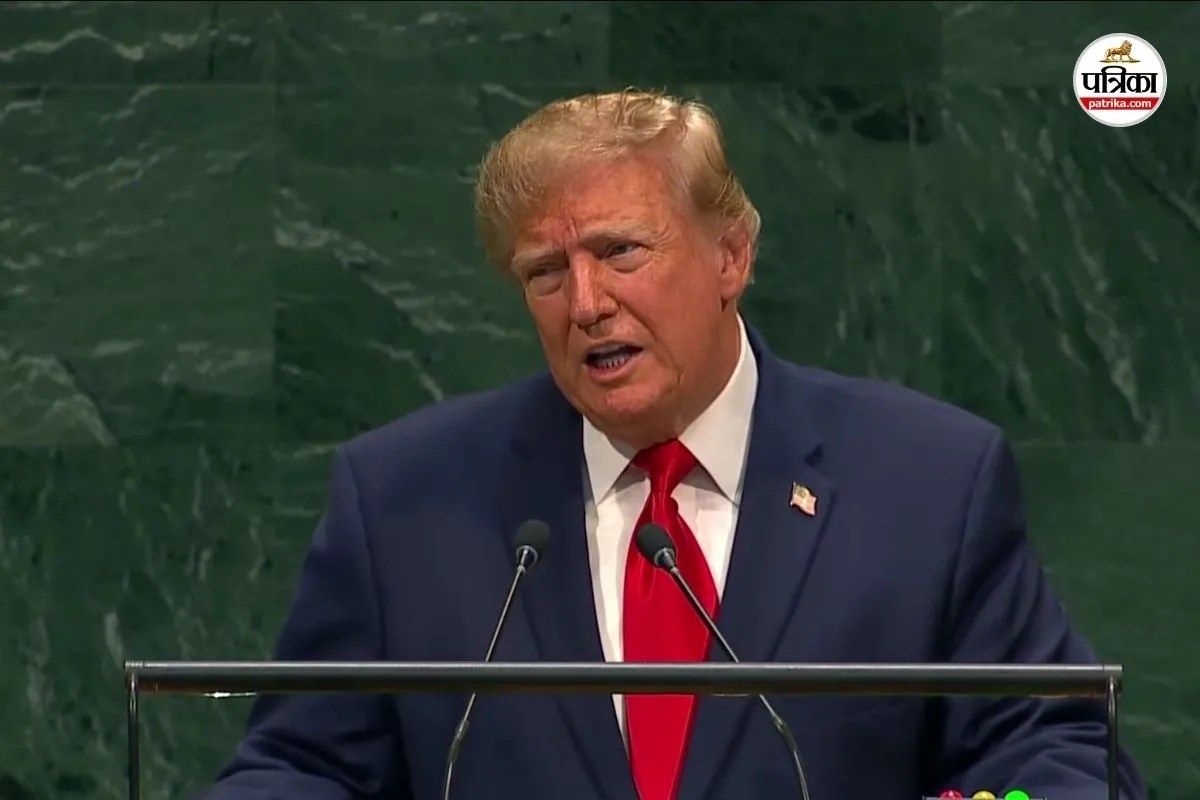
In the spring of 2019, and again in repeated campaign speeches and rallies stretching across years of political theater, Donald Trump stepped up to microphones and made an assertion that made diplomats in New Delhi and Islamabad spill their morning chai. He claimed that when India and Pakistan stood on the precipice of full-scale military conflict, he had picked up the phone, looked at the ledger books instead of the troop movements, and told both nations a simple, brutal truth. If you go to war, America stops doing business with you.
To understand why that single sentence—whether strictly accurate or heavily embellished—caused such a violent ripple across the subcontinent, you have to step away from the podiums in Washington and walk through the dusty, chaotic streets of a textile hub in Tiruppur or a surgical instrument workshop in Sialkot.
The Ledger Behind the Border
Consider a hypothetical character, let us call him Rajesh, who runs a mid-sized pharmaceutical packaging plant just outside Ahmedabad. Rajesh does not care about geopolitical posturing. He cares about container ships leaving Mundra Port on time, letter-of-credit approvals clearing through New York clearinghouses, and whether the American buyers who account for forty percent of his annual revenue will renew their contracts in October. Across the border, in Lahore, imagine another fictional composite—Tariq, an exporter of high-end leather goods whose margins are razor-thin and whose entire supply chain depends on dollar-denominated trade flows.
For men like Rajesh and Tariq, war is not an abstract exercise in national pride. War is an immediate, suffocating freeze on capital.
When Donald Trump repeatedly boasted that he halted an India-Pakistan conflict by threatening to sever trade ties, he was tapping into a visceral, terrifying reality that seasoned diplomats usually wrap in polite euphemisms. In February 2019, following the Pulwama terror attack that killed forty Indian paramilitary personnel, Indian fighter jets crossed the Line of Control to strike targets in Balakot. Pakistan retaliated the next day. An Indian MiG-21 was shot down, and Wing Commander Abhinandan Varthaman was captured. For forty-eight hours, two nuclear-armed neighbors stared directly into the abyss.
Then, abruptly, Pakistan announced the release of the captured pilot as a gesture of peace, and the fever broke.
Officially, New Delhi has always maintained a strict, non-negotiable doctrine regarding Kashmir and bilateral disputes with Pakistan. No third-party mediation. Ever. Indian officials pushed back hard against Trump's narrative, insisting that de-escalation happened through established military channels and intense behind-the-scenes diplomacy, not because an American president threatened tariffs or a trade embargo.
Yet the story refused to die because Trump kept telling it. He told it at rallies in 2020, he brought it up again during subsequent political cycles, and every time the Hindi and Urdu news channels picked up the clip, the debate roared back to life. Why? Because beneath the bluster lay a question nobody in South Asia wanted to answer out loud. What happens when economic survival becomes the ultimate deterrent?
The Anatomy of a Modern Threat
I have spent years watching how trade policy quietly dictates the pulse of daily life across emerging markets, and there is a specific kind of dread that sets in when tariffs stop being economic tools and become geopolitical cudgels. You feel it first in the currency markets—a sudden, sharp twitch in the rupee that makes imported raw materials more expensive by noon than they were at breakfast. You see it in the way factory owners quietly pause hiring, holding their breath while politicians trade barbs on television.
To grasp how a trade threat actually functions in modern statecraft, think of global commerce not as a series of isolated transactions, but as an oxygen tank shared by divers swimming dangerously deep. You do not need to shoot the diver to stop them from fighting; you simply reach over and pinch the hose.
In 2019, the United States was India's largest trading partner, with bilateral trade in goods and services hovering near $146 billion. For Pakistan, whose economy was already teetering on the edge of a balance-of-payments crisis and desperately seeking an International Monetary Fund bailout, the United States remained its single largest export destination, absorbing billions of dollars in textiles and apparel.
When Trump described his alleged intervention—claiming he told both leaders that they were doing tremendous business with the United States, and that he would cut every bit of it off if they did not walk back from the brink—he was stripping away centuries of diplomatic etiquette. Traditional statecraft relies on ambiguity, face-saving off-ramps, and carefully worded communiqués from the State Department. Trump’s version of statecraft operated like a corporate hostile takeover.
Honestly, it is unsettling to realize how fragile sovereign pride becomes when placed on a balance sheet. We like to believe nations make decisions about war and peace based on grand historical destinies, constitutional principles, or moral imperatives. Admitting that a threat to apparel exports or IT service contracts might carry as much weight as an aircraft carrier group feels almost cynical.
The History We Pretend to Forget
This was not the first time Washington used economic leverage to cool a South Asian crisis, though previous presidents preferred whispers to megaphones.
Look back at the Kargil War in the summer of 1999. Pakistani troops had infiltrated peaks on the Indian side of the Line of Control, sparking intense high-altitude combat. President Bill Clinton summoned Pakistani Prime Minister Nawaz Sharif to Blair House in Washington on the Fourth of July. Behind closed doors, without television cameras rolling, Clinton made it brutally clear that Pakistan faced total economic isolation—including the blocking of crucial IMF loans—unless its troops withdrew immediately. Sharif flew home and ordered the retreat.
Three years later, during the 2001–2002 standoff following the attack on the Indian Parliament, nearly a million troops mobilized along the border. Once again, the Bush administration did not just dispatch envoys; it issued stern travel advisories that threatened to gut India’s booming outsourcing sector. American tech executives began canceling trips to Bengaluru and Hyderabad. Suddenly, the cost of mobilization was no longer measured merely in artillery shells, but in lost Silicon Valley contracts.
The historical pattern is unmistakable. Every time India and Pakistan edge toward catastrophe, the invisible architecture of global finance quietly tightens around them. What made Trump’s repeated claims so jarring—and so politically explosive in India—was not the concept of economic pressure, but the public humiliation of saying the quiet part out loud.
For any Indian prime minister, appearing to bow to foreign pressure is political suicide. Sovereignty is the bedrock of New Delhi’s foreign policy identity. Therefore, when Trump boasted that he had forced a truce by dangling trade access like a carrot and a stick, Indian diplomats had to scramble to douse the flames, reiterating that bilateral issues remain strictly bilateral. Meanwhile, in Islamabad, politicians often welcomed the narrative of American intervention, hoping it would internationalize the Kashmir dispute—a goal Pakistan has pursued for decades.
Where Rhetoric Collides with Reality
Let us look closely at the mechanics of the claim itself, because separating political theater from diplomatic reality requires patience.
Did Donald Trump personally phone both Narendra Modi and Imran Khan in February 2019 and threaten an immediate trade freeze? Contemporaneous accounts from senior officials in Washington, including former Secretary of State Mike Pompeo, confirm that the administration worked frantically through the night to prevent nuclear escalation. Pompeo later wrote in his memoir about waking up in Hanoi during a summit with North Korea to urgent intelligence warnings that the India-Pakistan crisis could spiral out of control. Intense phone calls were made to both capitals.
However, diplomatic historians and former national security aides have noted that Trump frequently compressed complex, multi-layered negotiations into punchy, transactional anecdotes tailored for campaign crowds. In Trump’s storytelling universe, every geopolitical triumph boils down to personal rapport and the sheer force of American economic might. Whether the exact phrase "we will stop all trade" was uttered verbatim during those tense February hours matters less than the undeniable truth that trade leverage was already baked into the room.
Consider what happens next when a leader turns transactional diplomacy into a public catchphrase.
First, it creates a permanent shadow of doubt in the minds of investors. If global trade access can be switched off like a light bulb during a regional crisis, multinational corporations begin hedging their bets. Supply chains that took decades to build suddenly look vulnerable to a single late-night phone call.
Second, it forces regional leaders into rigid corners. When an external power publicly claims credit for stopping a fight, domestic hawks in both India and Pakistan feel compelled to prove they were not intimidated. Ironically, boasting about preventing a war can make the next crisis harder to resolve quietly, because nobody wants to look like they caved to a threat.
The Invisible Stakes on the Ground
Step back into the shoes of Rajesh in Ahmedabad and Tariq in Lahore.
When headlines flash across screens declaring that an American president stopped a war by threatening to kill trade, Rajesh does not analyze the diplomatic nuances of the Shimla Agreement or the United Nations Charter. He looks at his warehouse inventory. He thinks about the three hundred workers on his payroll who support extended families in nearby villages. If American ports close to Indian goods, those workers do not just lose overtime; they lose their livelihoods within six weeks.
Across the Wagah border, Tariq faces an even starker equation. Pakistan’s economy has spent years walking a tightrope over default, reliant on foreign exchange reserves that sometimes barely cover a few weeks of imports. A sudden suspension of trade with the United States would not merely cause a recession; it would trigger immediate, cascading shortages of fuel, medicine, and basic commodities.
This is the emotional core that cold geopolitical analyses miss. When pundits argue on television panels about whether Trump was exaggerating or telling the unvarnished truth, they treat trade as a scoreboard. One side wins, the other loses, and the referee blows the whistle.
In reality, trade is the fragile webbing that keeps hundreds of millions of ordinary people from falling into poverty. Weaponizing it—even with the stated goal of preventing a shooting war—reminds every factory worker, software engineer, and cotton farmer from Punjab to Gujarat that their daily bread is hostage to decisions made in rooms they will never enter.
The Trap of the Transactional World
We are living through an era where the old rules of international relations are dissolving in real time. For decades after World War II, the prevailing wisdom held that economic interdependence made war unthinkable; nations that traded together would never shoot at each other.
Trump’s repeated boasts about India and Pakistan turn that old optimism upside down. Interdependence did not make conflict unthinkable—it simply gave the largest economy on earth a massive lever to pull when things went sideways. Trade ceased to be a guarantee of harmony and became an instrument of coercion.
For India, which has spent the last decade positioning itself as a rising global power and an indispensable manufacturing alternative to China, the suggestion that its strategic autonomy could be curbed by a trade threat hits a raw nerve. New Delhi wants the economic benefits of deep integration with the West without sacrificing an ounce of its freedom to act in its own neighborhood. Balancing those two desires is like trying to sprint while tied to a parachute; the very thing keeping you aloft can suddenly yank you backward.
For Pakistan, caught between its historic security alignment with China and its persistent economic dependence on Western markets and financial institutions, the lesson is equally grim. Geopolitical maneuvering means very little when your export ledger is written in someone else’s currency.
And what about the rest of us watching from the sidelines? We are left staring at a world where peace is no longer negotiated through treaties signed on mahogany tables, but enforced through the silent, terrifying threat of empty shipping containers and frozen bank accounts.
Late at night in Mundra or Karachi, when the dockworkers finish loading the last crates onto massive steel vessels bound for the Atlantic, the cranes go quiet, the harbor lights shimmer on dark water, and nobody knows whether the next ship will be allowed to sail.


