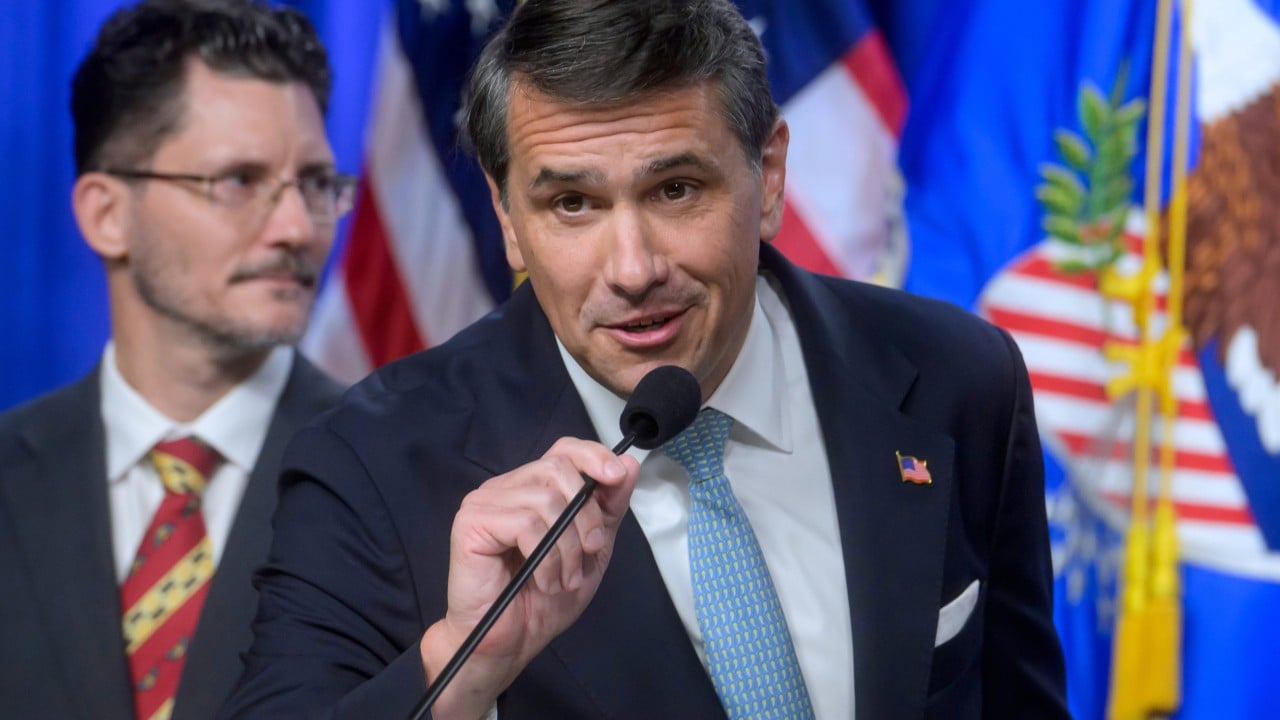
Donald Trump wanted a loyalist running the Department of Justice, and he almost crashed his own nominee's chances to get it. Acting Attorney General Todd Blanche just fought his way past a brutal Senate Judiciary Committee vote, securing a 12-10 advancement that unblocks his path to a full Senate confirmation.
If you've been tracking Washington politics lately, you know this nomination was hanging by a thread. The culprit wasn't just typical partisan bickering. It was a massive 1.8 billion dollar settlement tied to Trump's IRS lawsuit, a controversial proposed payout fund for political allies, and fierce questions about whether a former defense attorney can ever truly run an independent DOJ.
Let's look at what actually happened behind closed doors, why Republican holdouts caved, and what this confirmation means for the country.
The IRS Settlement That Derailed the Timeline
Everything nearly imploded because of a deal brokered earlier this spring to settle Trump's legal claims against the IRS. That settlement included provisions for a multi-billion-dollar fund aimed at compensating people who felt mistreated by the justice system, alongside sweeping tax audit immunities for Trump, his sons, and the Trump Organization.
Senators John Cornyn and Thom Tillis—two Republican panel members whose votes were mandatory for survival—drew a hard line. They refused to back Blanche unless he provided explicit, written guarantees that the controversial payout fund would be permanently scrapped.
For days, Blanche resisted. White House pressure mounted. Threats floated around Washington that Trump might pull the nomination entirely and resubmit it later. But facing imminent defeat in committee, Blanche blinked. He issued formal written statements late on a Sunday canceling the fund and clarifying that the tax audit protections only applied to open claims at the time of the settlement, shielding no future filings.
Cornyn called the fund dead and voted yes. It wasn't because Republicans loved the optics. It was because they wanted a permanent, stabilizing force at the top of an agency that has lacked a confirmed leader since Pam Bondi was ousted back in April.
Can a Defense Attorney Oversee the Justice Department?
The core argument against Blanche has never really been about his legal credentials. He is a capable lawyer. The friction comes from his resume. He spent critical months acting as Trump's criminal defense attorney, defending him in high-stakes trials before stepping smoothly into the deputy attorney general role and then taking the reins as acting head.
During his confirmation hearings, Democrats grilled him relentlessly. Senator Adam Schiff pointed out a telling moment when Blanche accidentally referred to Trump as his current client rather than a former one.
Critics argue you cannot separate the defense lawyer from the attorney general. They point to the hollowing out of agency ranks, the shifting focus toward investigating political opponents, and the department's handling of files related to Jeffrey Epstein as proof that the institutional independence built up since the Nixon era is actively fracturing.
Yet, the math in the Senate favors the White House. Even with defections from Republican moderates like Susan Collins and Lisa Murkowski, Louisiana Senator Bill Cassidy stepped up to lock in his support. Cassidy admitted Blanche isn't perfect, but framed the choice starkly: a confirmed insider backed by the president or an endless string of temporary acting heads.
What Happens Next on the Senate Floor
With the committee hurdle cleared, the political battle shifts immediately to the full Senate floor.
Democrats plan to make maximum noise over the weekend. They argue that Blanche's written order cancelling the payout fund is a superficial fix—that a new DOJ directive could resurrect the slush fund fifteen minutes after he is sworn in. They are pushing for statutory bans to block it permanently, though that strategy faces long odds in a Republican-controlled chamber.
Meanwhile, leadership wants this vote finished before lawmakers scatter for the August recess. With Cassidy's backing secured, the numbers are tightly mapped, and the white-knuckle ride is nearly over. Todd Blanche is poised to take total control of the nation's top law enforcement agency, cementing a massive structural victory for Trump's second-term legal strategy.
The Department of Justice is entering a different era. The guardrails are shifting, and the debate over executive power will define the next four years.