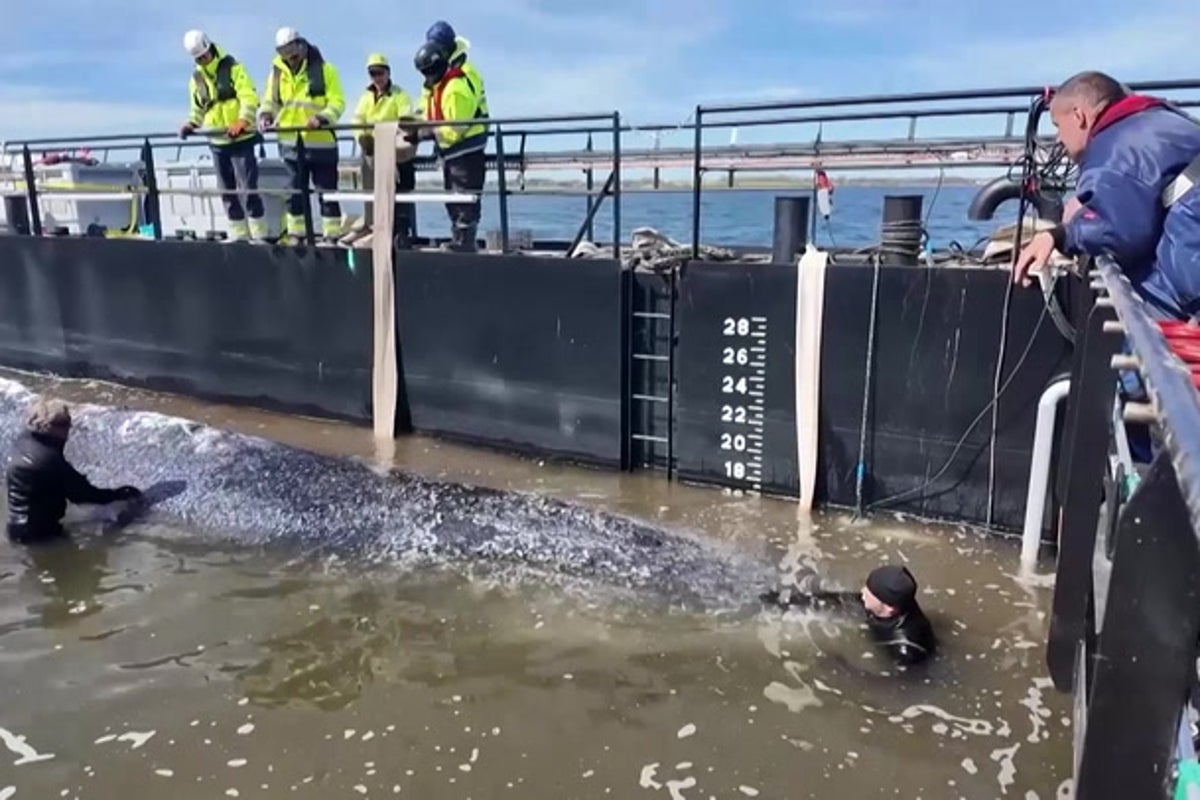
The sight of a 12-meter humpback whale swimming back into the North Sea after weeks of being trapped in the Baltic is the kind of image that makes everyone feel warm and fuzzy. You've probably seen the headlines about "Timmy" (or "Hope," depending on which news cycle you’re following) finally being released near Skagen, Denmark, after a massive, millionaire-funded transport operation. But if you think this is a simple "mission accomplished" moment, you’re missing the messy, controversial reality of what actually happened in Wismar Bay.
On the surface, it’s a win. A team of private rescuers, backed by equestrian mogul Karin Walter-Mommert and electronics giant Walter Gunz, managed to do what the German government said was impossible. They loaded a sick, 12-tonne animal onto a flooded barge, towed it hundreds of kilometers, and let it go. However, just because we can move a whale doesn't mean it was the right thing to do. Many top-tier marine biologists are calling the move "animal cruelty" wrapped in a PR bow.
The Baltic Trap and the Million-Dollar Move
Humpback whales don't belong in the Baltic Sea. It’s too shallow, too fresh, and lacks the fatty herring and krill these giants need to maintain their energy. When Timmy was first spotted on March 3, he was already in trouble. By the time he got stuck on a sandbank near Poel, he wasn't just lost; he was dying.
The official stance from the Oceanographic Museum in Stralsund was grim. Director Burkard Baschek argued that the whale was "severely compromised." Timmy was lethargic, covered in blisters, and had a fishing net snagged in his mouth. The government's plan was to let nature take its course—essentially, palliative care for a whale.
Then came the private money.
Walter-Mommert and Gunz didn't want to watch a whale die on a beach. They funded a specialized barge, hired divers, and even brought in "esoteric" advisors from as far as Peru who claimed they could heal the whale’s "aura." It sounds like a movie script, but the logistics were real. They dug a channel in the sand, used straps to guide the whale into a water-filled cargo hold, and began a slow trek toward the North Sea.
Science vs. Sentiment
The divide here is massive. On one side, you have the "Team Hope" crowd. They point to the fact that Timmy swam out of the barge under his own power on Saturday morning. They see the drone footage of him blowing through his blowhole as proof that he "wanted to live."
On the other side, scientists are rolling their eyes at the "Save Timmy" mania. Here’s why the experts are worried:
- Immune System Collapse: Whales in the Baltic suffer from skin lesions because the low salinity messes with their biology. Timmy’s "blister-like" blemishes weren't just surface wounds; they’re signs of a failing system.
- Stress of Transport: Moving a wild animal that large is incredibly traumatic. Even with a flooded barge, the noise, vibration, and confinement are enough to cause heart failure in a weakened mammal.
- The Hunger Factor: Timmy hasn't fed properly in months. Even if he’s in the North Sea now, he has to swim all the way up the Norwegian coast to reach his actual feeding grounds. He’s basically trying to run a marathon on an empty tank.
Honestly, it feels like we’re prioritizing our own need for a happy ending over the animal's actual welfare. We’d rather see a whale die "free" in the North Sea than on a beach in Germany, even if the "free" version involves significantly more suffering during the transport process.
What Happens Now
The rescue team attached a GPS tracker to Timmy before his release. This is the only way we’ll know if this gamble paid off. If he starts heading north toward the Atlantic, the millionaires will be hailed as heroes who defied the "cold" scientific establishment. If the signal stops moving or starts drifting toward a beach in Denmark, the critics will have been right—it was an expensive, stressful way to delay the inevitable.
If you’re following this story, don't just look at the videos of the whale swimming away. Look at the data. The next 72 hours are critical. He needs to move fast, dive deep, and find food. If he lingers near the surface or stays in shallow coastal waters, he’s still in the danger zone.
What You Can Actually Do
If this story bothers you, the best thing isn't to donate to "aura healers" or private barge missions. Focus on the root causes that lead whales into these traps in the first place:
- Support Ghost Net Removal: The fishing net in Timmy’s mouth is a common killer. Support organizations like Healthy Seas that actually pull this gear out of the water.
- Pressure for Better Stranding Protocols: We need clear, science-based laws that determine when a private citizen can take over a rescue mission from government experts.
- Track the Progress: Follow official marine biology accounts rather than just viral social media clips. The real story isn't the release; it’s the survival.
This isn't a Disney movie. It's a high-stakes biological experiment funded by private checks and public emotion. Timmy is back in the deep water, but he isn't home yet.