The headline is neat. Clean. Comforting.
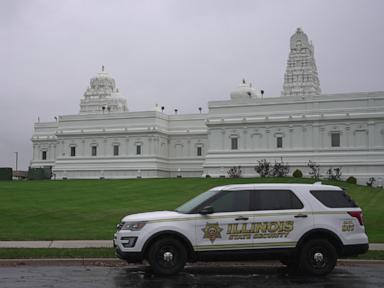
An Illinois man pleads not guilty over a thwarted mass shooting at a Hindu temple. The system caught the bad guy. The courtroom gears are turning. Everyone breathes a sigh of relief and scrolls to the next distraction.
That reaction is the exact problem.
When legacy news outlets reduce a prevented atrocity to a procedural courtroom update, they peddle a lazy consensus. They want you to believe that the threat of targeted religious violence is a tidy binary—either a catastrophe happens, or a hero cop stops it at the eleventh hour. You read the story, feel a fleeting spike of outrage, and walk away thinking the security apparatus works.
It doesn't. Not the way you think it does.
Having spent years dissecting threat assessments, physical security failures, and the legal mechanics of domestic terrorism prosecutions, I can tell you that a "thwarted" plot rarely means a threat was neutralized. More often, it means a massive systemic blind spot got lucky. And when the media treats a "not guilty" plea as a routine administrative beat rather than a spotlight on how vulnerable houses of worship remain, they leave communities dangerously exposed.
The Lie of the "Not Guilty" Procedural Headline
Let’s dismantle the first misconception right out of the gate. When the public sees "pleads not guilty" attached to a thwarted mass casualty plot, the immediate reaction is cynicism or shock. How can someone caught with weapons or manifestos claim innocence?
Because in the American legal system, a not guilty plea at arraignment is not a factual assertion of innocence. It is a procedural necessity. It is the starting gun that forces the state to meet its burden of proof, preserves the right to challenge search warrants, and opens the door to discovery.
Yet, standard news coverage frames this procedural step as the climax of the narrative. By focusing on the courtroom theater, reporters miss the actual mechanics of how these plots form, fester, and almost succeed.
What Legacy Media Ignores in Thwarted Plot Coverage
Standard reporting relies on a predictable, shallow formula:
- The Arrest: Law enforcement announces a bust, patting themselves on the back for proactive policing.
- The Charges: A recitation of statutory codes—attempted murder, weapons violations, hate crime enhancements.
- The Arraignment: The suspect enters a formal plea, and the story goes dormant for eighteen months until a plea deal is quietly signed.
Notice what is completely absent from that formula? The operational failure that allowed the suspect to get within striking distance of a Hindu temple in the first place.
When an individual reaches the stage of acquiring gear, conducting surveillance, or drafting plans to attack a specific religious community, intelligence and community reporting mechanisms have already failed multiple times. A thwarted attack is not a triumph of preventative strategy. It is a near-miss. Treating a near-miss like a victory is how organizations—and entire communities—sleepwalk into the next tragedy.
The Invisible Target Problem
Ask yourself a blunt question. When you hear the phrase "house of worship security," what image pops into your head?
For most policymakers, media pundits, and security consultants, the mental default is a church, a synagogue, or a mosque. For decades, federal grant frameworks, municipal police liaisons, and public awareness campaigns have revolved around Abrahamic institutions.
Hindu temples, Sikh gurdwaras, and Buddhist centers exist in a massive blind spot.
I have walked through dozens of religious facilities across North America to audit their physical vulnerabilities. The disparity is staggering. While many mainstream institutions have spent the last ten years hardening perimeters, installing ballistic glass, and establishing direct red-phone lines to local precincts, South Asian religious centers are routinely treated as afterthoughts.
Why Hindu Temples Face Unique Operational Risks
- Architectural Openness: Traditional Hindu temple architecture prioritizes radical hospitality and open access. Shoes are left at the door. Main prayer halls are vast, unobstructed spaces designed for fluid movement rather than compartmentalized lockdown. From a hospitality standpoint, it is magnificent. From a physical security standpoint, it is an unmitigated nightmare.
- The Cultural Blindness of Law Enforcement: Local police departments frequently lack basic cultural literacy regarding Hindu festivals, peak attendance hours, and community leadership structures. If a suspicious vehicle circles a temple during Navratri or Diwali, dispatchers and patrol officers often fail to recognize that the facility is packed to capacity with families, elderly congregants, and children.
- The "Model Minority" Security Trap: There is a pervasive, unspoken assumption among municipal authorities that Hindu communities are affluent, peaceful, and insulated from violent extremism. Consequently, threats against them are routinely downgraded—dismissed as petty vandalism, teen pranks, or isolated disputes rather than coordinated, ideologically motivated targeting.
When an Illinois suspect targets a Hindu temple, it is not a random fluke. It is the predictable result of an attacker identifying a high-value, soft target that mainstream security frameworks have ignored.
Stop Asking "How Did Police Catch Him?" (Ask This Instead)
If you look at search trends surrounding thwarted attacks, people always ask the same flawed questions: How did the FBI find out? What tipped off the police? How much prison time will he get?
You are asking the wrong questions.
The interrogation of a thwarted plot should never start with the arrest. It should start with the leakage—the behavioral breadcrumbs the suspect dropped for months before law enforcement ever opened a file.
Researchers who study targeted violence, including the teams behind the U.S. Secret Service National Threat Assessment Center (NTAC) and the FBI’s Behavioral Analysis Unit, have hammered this point home for twenty years: targeted violence is rarely impulsive. It is the end result of an observable, detectable pathway.
The Pathway to Violence Never Starts at the Temple Door
Attackers do not wake up on a Tuesday morning and decide to shoot up a temple. They move through distinct, measurable phases:
- Grievance: A personal, ideological, or perceived slight metastasizes into an obsession.
- Ideation: The individual decides that violence is the only acceptable solution to that grievance.
- Research and Planning: They pick the target. They look up temple hours on Google Maps. They check parking layouts.
- Preparation: They acquire weapons, tactical gear, or ammunition.
- Breach: They travel to the location to execute the plan.
By the time police arrest a suspect in the preparation or breach phase, the community has already survived four stages of escalating danger purely by chance.
Imagine a scenario where a suspect buys tactical gear online, posts coded anti-Hindu rhetoric on niche message boards, and drives past a suburban temple three weekends in a row. If the local police only catch him because a federal informant happened to be monitoring a specific chatroom, the system did not work. You just got lucky. Relying on federal luck is not a security strategy. It is a gamble with human lives.
The Multi-Million Dollar Illusion of "Hardening"
Whenever a story like the Illinois temple plot hits the news cycle, the security-industrial complex springs into action. Consultants descend on temple boards. Vendors pitch six-figure camera systems, facial recognition software, and armed off-duty police details.
I have watched religious boards blow hundreds of thousands of dollars on glossy hardware that does absolutely nothing to stop a determined attacker.
Let’s be brutally honest about physical security hardware: cameras do not stop bullets. A high-definition surveillance system simply records a tragedy in 4K resolution so prosecutors have better evidence at the trial. And hiring a single armed guard to stand at the front entrance creates a false sense of security while leaving three side doors, a community kitchen, and an unsecured parking lot wide open.
The Hard Truth About Threat Mitigation
If you want to actually protect a community—not just buy expensive peace of mind—you have to abandon the hardware obsession and build human intelligence capabilities from the inside out.
Here is what actually works, and why almost nobody wants to do it:
- Aggressive Behavioral Threat Assessment: Communities need trained internal teams who know how to spot pre-attack indicators without turning the temple into a paranoid police state. That means recognizing erratic behavior, unprovoked hostility, and unusual reconnaissance—and having a clear, documented protocol for escalating those observations to local law enforcement before a crime is committed.
- Access Control Over Fortress Mentality: You do not need armed guards at every door. You need controlled entry points during peak hours. Funneling foot traffic through one or two monitored entrances allows trained greeters—yes, ordinary community members trained in situational awareness—to make eye contact with every single person entering the building. Attackers hate eye contact. They hate being noticed. A simple, friendly, deliberate greeting disrupts an attacker's mental script faster than a security camera ever will.
- Direct Law Enforcement Integration: Temple leadership cannot wait until a threat emerges to meet the local police chief. Leadership must force municipal authorities to conduct physical walkthroughs of the facility, map out interior layouts for SWAT and patrol responses, and establish direct communication channels that bypass standard 911 bottlenecks.
The Downside Nobody Admits
Every contrarian strategy carries a price tag, and pretending otherwise destroys credibility. If a religious community adopts an aggressive, intelligence-driven security posture, it pays a steep cultural tax.
Hyper-vigilance breeds suspicion. When you train volunteers to look for threat indicators, you inevitably generate false positives. Innocent visitors—people struggling with mental health issues, newcomers unfamiliar with temple customs, or individuals simply having a bad day—get flagged, scrutinized, or quietly pushed away.
You risk eroding the very openness and spiritual sanctuary that makes a temple worth defending in the first place. Turn a house of worship into a bunker, and the extremists win without ever firing a shot.
That is the tightrope. Too little security invites catastrophe; too much security kills the soul of the institution.
The Real Verdict on the Illinois Case
As the Illinois case grinds through pre-trial motions, evidentiary hearings, and legal delays, the public will lose interest. The headlines will fade. Another suspect in another state will target another overlooked community, and the media will dust off the exact same template.
Do not let a "thwarted" label lull you into complacency. A prevented mass shooting is not proof that the walls are high enough. It is a siren warning you that the wolves already know where the doors are.
Stop reading courtroom updates for comfort. Audit your own blind spots, question the hardware vendors, demand cultural competence from local police, and build human awareness before the next plot reaches the front steps.