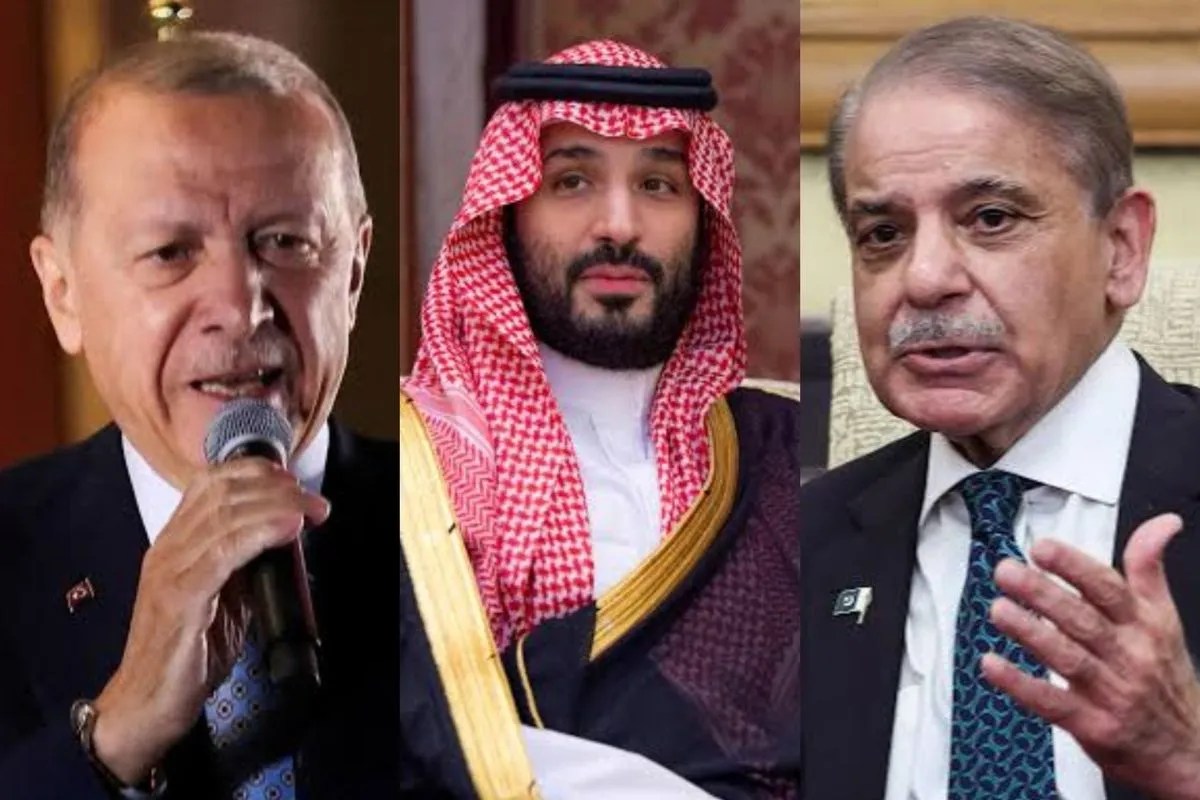
The Middle East doesn't need another spark to ignite a regional war. It has plenty. Yet, security dynamics shift fast when major geopolitical players decide collective defense is the only way forward.
Let's look at the reality on the ground. When whispers turn into official pacts that an attack on one nation triggers a response from all, the stakes change instantly. You aren't just looking at isolated border skirmishes anymore. You're looking at a redesigned deterrence architecture.
Why Regional Alliances Are Shifting Right Now
Geopolitics rarely operates in a vacuum. Escalating tensions involving Iran and external actors have forced regional capitals to rethink their security guarantees. For years, nations relied heavily on distant security umbrellas. That trust has frayed.
When smaller or mid-tier powers band together under mutual defense frameworks, they send a loud message. They are signaling that unilateral pressure or targeted strikes will no longer be absorbed quietly.
- Old deterrence models are failing.
- Proximity dictates modern threat perception.
- Economic stability depends entirely on stopping wider conflict.
If you study how modern military alliances form, you notice a pattern. They rarely start as offensive pacts. They emerge out of pure self-preservation. When neighboring states watch supply chains get choked, airspace violated, and proxy networks activated, they realize vulnerability is contagious.
The Mechanics of Collective Defense
What does a mutual defense pact actually mean in practice? It’s not just a handshake for the cameras. It involves shared intelligence, synchronized air defense networks, and immediate diplomatic alignment.
Think about how fast modern missiles fly. If a nation has to wait hours to consult allies before responding to an incoming threat, it's already too late. Real-time data sharing changes the equation.
Threat Detected -> Intelligence Shared -> Joint Response Activated
Governments signing these agreements know the cost of failure. They aren't trying to start World War III. They are trying to create a high enough cost for aggressors that nobody dares to cross the line.
What Most Analysts Miss About the Current Escalation
Most mainstream commentary treats the Iran conflict as a bilateral issue between Tehran and its primary adversaries. That misses the entire point. The ripple effects hit transit hubs, energy markets, and neighboring sovereign territories first.
When three distinct nations formally declare that an assault on one equals an assault on all, they widen the perimeter of defense.
- An attack on energy infrastructure now carries triple the geopolitical blowback.
- Diplomatic channels shift from bilateral talks to multi-party crisis management.
- Superpowers must recalculate their intervention calculus.
You can't just isolate a conflict zone anymore. The borders blur instantly when trade routes and shared water tables are at stake.
The Economic Fallout No One Wants to Talk About
Wars cost money. Regional wars bankrupt nations. The moment security pacts solidify, financial markets react. Insurance rates for cargo ships spike. Oil futures jump. Investors pull capital out of emerging markets in the region.
These Muslim nations aren't entering these agreements out of ideological warmth alone. They are doing strict math. The price of standing alone during a regional conflagration is far higher than the diplomatic friction of forming a bloc.
If you're running a business dependent on Middle Eastern logistics, you need to watch these defense pacts closely. They dictate whether shipping lanes stay open or close indefinitely.
Where This Leaves Global Diplomacy
Traditional peace brokers find themselves sidelined when local alliances take the wheel. Western powers love to manage Middle Eastern security architectures, but local powers are increasingly writing their own rules.
You see a clear push toward regional autonomy. Countries are tired of being proxy battlegrounds for distant capitals. By drawing a hard line—stating clearly that an attack on one is an attack on all—they are attempting to force a stalemate.
Stalemate beats total war every single time.
Keep an eye on how these joint declarations translate into joint military exercises over the coming months. Real pacts leave tracks in the form of shared drills, unified command centers, and synchronized foreign policies. If those pieces fall into place, the security map of the region is altered for a generation.