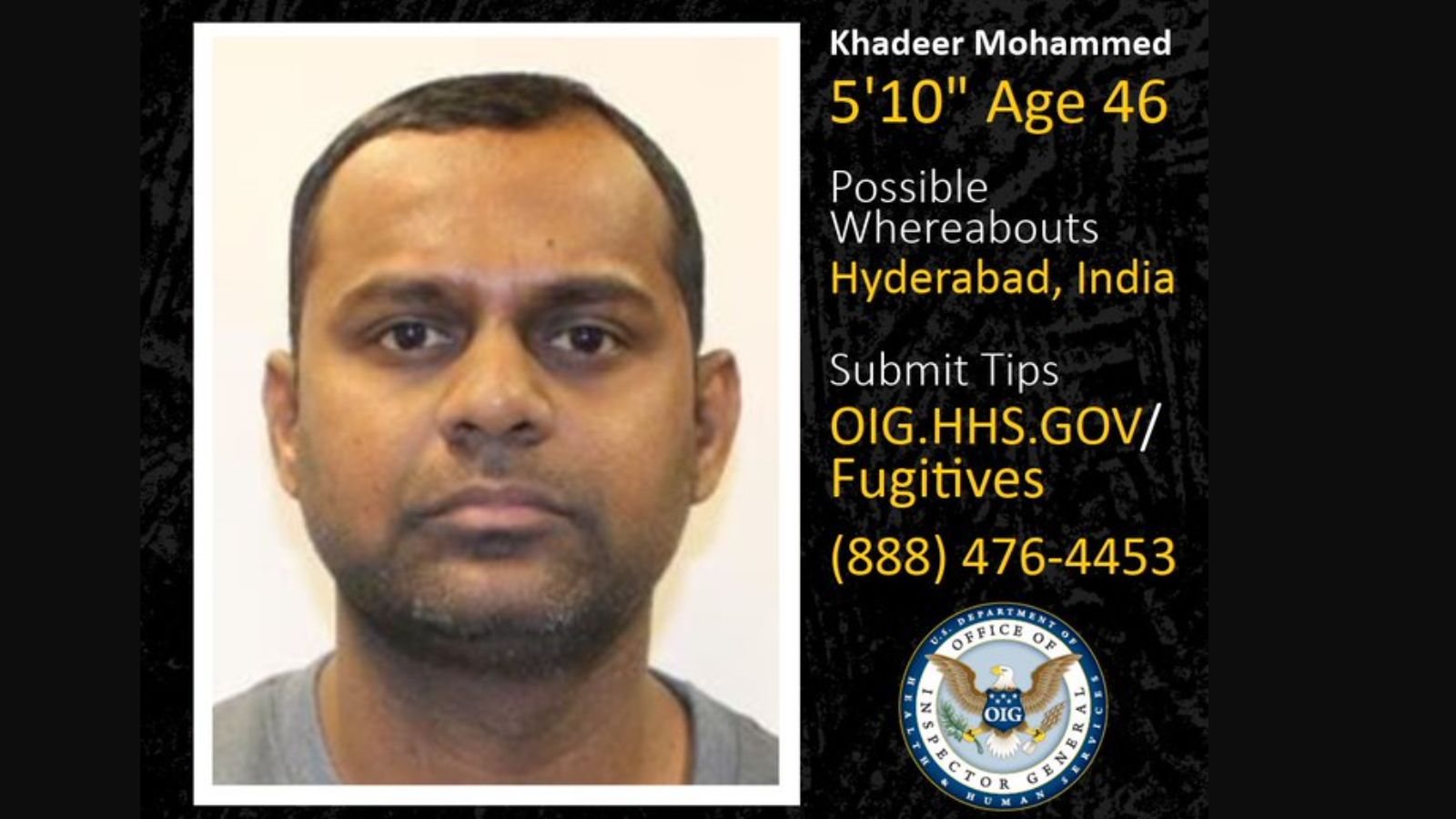
Healthcare fraud schemes usually follow a predictable playbook, but the sheer scale of the operation run out of a Texas laboratory still catches investigators off guard. Khadeer Khan Mohammed, a 46-year-old laboratory owner of Indian origin, finds himself at the center of an international federal manhunt. US authorities have officially declared him a fugitive after uncovering an alleged ninety-three-million-dollar Medicare fraud plot.
When federal agencies issue a fugitive profile, they don't do it lightly. The Department of Health and Human Services Office of Inspector General believes Mohammed may have fled to Hyderabad, India. Let's break down how this massive financial crime allegedly operated, why genetic testing billing is so vulnerable, and what happens next.
Inside American Premier Labs and the Billing Machine
Mohammed owned American Premier Labs LLC, based in Richardson, Texas. On paper, it was just another clinical testing facility. Behind closed doors, federal prosecutors claim it functioned as a high-volume billing engine designed to siphon money from government healthcare programs.
The core mechanism relied on genetic testing claims. Between August 2023 and October 2024, the lab allegedly submitted approximately ninety-three million dollars in claims to Medicare. Out of that staggering figure, Medicare programs actually paid out at least sixty-five million dollars.
The speed of the operation was alarming. Investigators noted that in a single ten-day stretch in 2023, Medicare shelled out roughly thirteen million dollars for these suspected fraudulent claims. Money moved fast, and government oversight simply couldn't keep pace until the damage reached tens of millions.
The Stolen Identities and Ghost Tests
How do you bill millions for tests nobody asked for? You fake the paperwork. According to federal indictments, the scheme heavily involved the unauthorized use of physicians' personal identifying information.
Doctors whose names were plastered across the lab forms had no idea their identities were being used. They never ordered the genetic tests, and patients never received them. More importantly, the test results played zero role in actual patient care. They were ghost tests created solely to generate lucrative billing codes.
Genetic testing is an attractive target for fraudsters because individual tests can carry high reimbursement rates. When bad actors automate the submission of these codes using stolen doctor credentials, the profits accumulate rapidly before automated fraud filters flag the anomaly.
The Financial Fallout and Asset Seizes
Crimes of this magnitude leave massive paper trails. US authorities moved quickly to freeze and seize illicit funds tied to the operation. Federal investigators successfully seized nearly six million dollars from bank accounts allegedly controlled by Mohammed.
Despite recovering a portion of the cash, the gap between the seized millions and the sixty-five million paid out highlights the ongoing challenge of asset recovery in international healthcare fraud cases. When suspects cross international borders—especially to cities like Hyderabad—extradition and asset repatriation turn into long, bureaucratic battles.
Why Healthcare Fraud Keeps Evolving
This case highlights deep vulnerabilities in the American medical payment structure. Private labs operate with a degree of autonomy that makes upfront verification difficult. If a claim looks compliant on the surface—matching a valid doctor's National Provider Identifier with an eligible diagnostic code—the system often pays out first and investigates later.
Fraudsters exploit this "pay and chase" model. By the time federal auditors spot irregular spikes in billing volume—such as millions flowing out over a ten-day window—the operators have often funneled the cash across multiple accounts or prepared exit strategies.
Federal agencies are stepping up data analytics to catch these anomalies sooner. Yet, as long as high-value services like specialized genetic panels offer massive payouts, individuals will find ways to game the system. Khadeer Khan Mohammed's case stands as a stark reminder that international borders won't stop investigators from hunting down multi-million dollar white-collar suspects.