The Map and the Butcher Knife
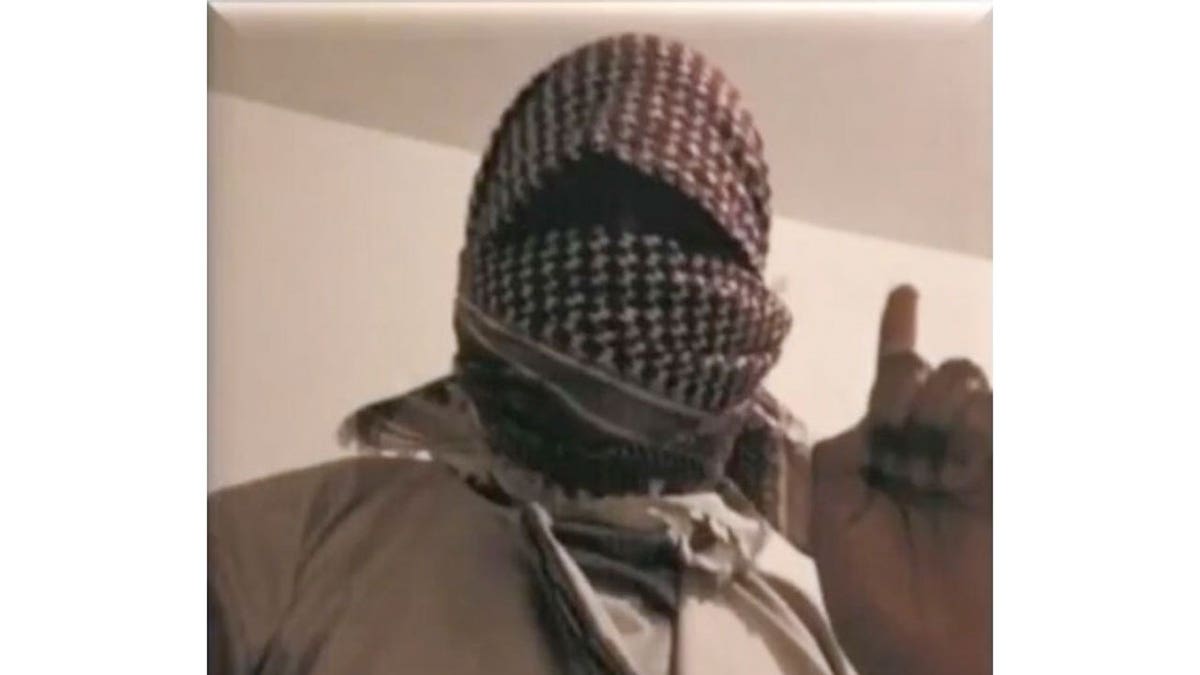
Muhammad Shahzeb Khan did not see a Jewish community center in Brooklyn as a place of prayer, or a sanctuary for the elderly, or a preschool where children learn their first songs in Hebrew. He saw a grid. He saw entry points. He saw a kill zone.
In the digital shadows of encrypted messaging apps, the 20-year-old Pakistani national—residing in Canada but obsessed with a city he had never stepped foot in—was busy engineering a nightmare. He wasn’t just dreaming of violence; he was calculating it. He was trading messages about high-capacity magazines and semi-automatic rifles. He was discussing the specific timing of the Jewish holidays, looking for the exact moment when the density of human life would be at its highest, and the vulnerability of the innocent at its peak. Also making waves in this space: The New Geopolitics of Necessity and the Reality Behind the US India Alliance.
Then, the floor fell out from under him.
On a quiet stretch of road in Quebec, as he attempted to cross the border into the United States, the weight of the FBI and the Royal Canadian Mounted Police descended. The man who had spent months plotting to fill a Brooklyn hallway with the sound of gunfire was suddenly met with the click of handcuffs. Further insights regarding the matter are detailed by Al Jazeera.
Recently, in a Manhattan federal court, Khan stood before a judge and admitted to the truth. He pleaded guilty to attempting to provide material support to a designated foreign terrorist organization—ISIS. The dry legal language of a plea deal often hides the visceral terror of what almost was. But to understand the stakes, we have to look past the court filings and into the quiet rooms he intended to shatter.
A Geography of Hate
Khan’s plan was not an isolated burst of madness. It was a cold, ideological pursuit.
Working from his base in Canada, he began communicating with undercover officers, believing they were fellow travelers in the cause of the Islamic State. He wasn't looking for a small-scale skirmish. He wanted a "real" attack, something that would resonate globally. He explicitly targeted New York because it holds the largest Jewish population in the world outside of Israel.
Imagine the logistical cruelty required for this level of planning. It involves staring at satellite maps of Brooklyn neighborhoods. It involves reading through religious calendars to find the dates of Yom Kippur and Rosh Hashanah. It involves the procurement of a human smuggler to slip across a porous border.
Khan wasn't just a lone wolf in the traditional sense; he was a remote-controlled radical. He had internalized the propaganda of a caliphate that no longer holds territory but still holds a grip on the minds of the alienated. He told undercover agents that he wanted to create a "media spectacle." He wanted the blood to be the message.
The irony of modern terrorism is its intimacy. Khan was a thousand miles away, yet he was intimately familiar with the layout of a building in a borough he had never visited. He was a ghost haunting a community that didn't even know he existed.
The Border and the Breach
The tension of this story lies in the "almost."
In the late summer of 2024, Khan took the final step. He moved toward the border. He believed he was in the company of allies. He thought he was about to fulfill a destiny written for him by extremist preachers in digital forums. He had already scouted the locations. He had already decided that a Jewish center was the "best place to target" because of the concentration of people.
The reality of counter-terrorism is a game of patience. For every headline about a captured plotter, there are months of silence. There are officers sitting in dark rooms, reading thousands of messages, waiting for the one slip-up that moves a "threat" into the category of a "crime."
When Khan was intercepted in Ormstown, Quebec, he was less than 20 miles from the U.S. border.
Consider the distance. Twenty miles. That is a twenty-minute drive on a clear day. That is the distance between a tragedy that defines a generation and a headline that disappears in a week. We live in the gap between those two outcomes. We exist in the space where law enforcement manages to outpace the speed of radicalization.
The Weight of the Plea
When a defendant pleads guilty in a case like this, the legal system breathes a sigh of relief. A trial is a long, painful process that forces victims—even "intended" victims—to relive the trauma of the threat. By admitting guilt, Khan has acknowledged the specific intent to kill in the name of ISIS.
But the plea doesn't answer the "why."
Why does a 20-year-old with his whole life ahead of him decide that his highest calling is the slaughter of strangers? There is a profound emptiness in the radicalized mind, a void that is filled by the black flag of extremism. It offers a sense of belonging to those who feel they belong nowhere. It offers a sense of power to those who feel insignificant.
Khan faced the judge and the reality of a decades-long prison sentence. The bravado of his encrypted messages—the talk of "slaughtering" and "cleansing"—was gone. In its place was a young man in a jumpsuit, realizing that the "spectacle" he sought had ended in a quiet courtroom with a court reporter typing out his confession.
The Invisible Stakes
We often talk about national security as a collection of drones, satellites, and hardened borders. But the real security of a city like New York is found in the trust between neighbors.
The intended victims of Khan’s plot were people going about their lives. They were parents dropping kids off at daycare. They were students studying the Torah. They were the people who make a city a home. When a plot like this is foiled, we don't just save lives; we save the ability of a community to breathe without fear.
If Khan had succeeded, the ripple effect would have been felt far beyond Brooklyn. Every synagogue in the world would have tightened its security. Every Jewish parent would have felt a sharper pang of anxiety at the school gate. The goal of terrorism is not just the body count; it is the psychological occupation of the survivor’s mind.
By stopping Khan at the border, the authorities didn't just prevent a shooting. They prevented the poisoning of the civic well. They kept the fear at bay for one more day.
The Echo in the Hallway
The legal process will continue. Khan will be sentenced. The news cycle will move on to the next crisis, the next election, the next tragedy.
But for the people who walk through the doors of that Jewish center in Brooklyn, the world looks slightly different now. There is a ghost in the hallway—the ghost of what might have been. They walk where a man intended to stand with a rifle. They laugh where he intended them to scream.
There is no "game-changer" here, only the steady, difficult work of staying vigilant. There is no "seamless" solution to the problem of hate. There is only the thin line between a plan and an action.
The most powerful part of this story isn't the arrest or the plea. It’s the silence. It’s the fact that on the holidays Khan targeted, the hallways remained peaceful. The children kept singing. The prayers were heard. The tragedy remained a draft on a digital screen, a map that was never followed, a butcher knife that never moved.
We are defined by the disasters we avoid. We are kept whole by the monsters who are caught before they can bite.
Muhammad Shahzeb Khan thought he was a warrior for a global cause. He ended up as a cautionary tale, a man who traded his freedom for a dream of blood, only to find himself sitting in a cell, listening to the echoing silence of his own failure.