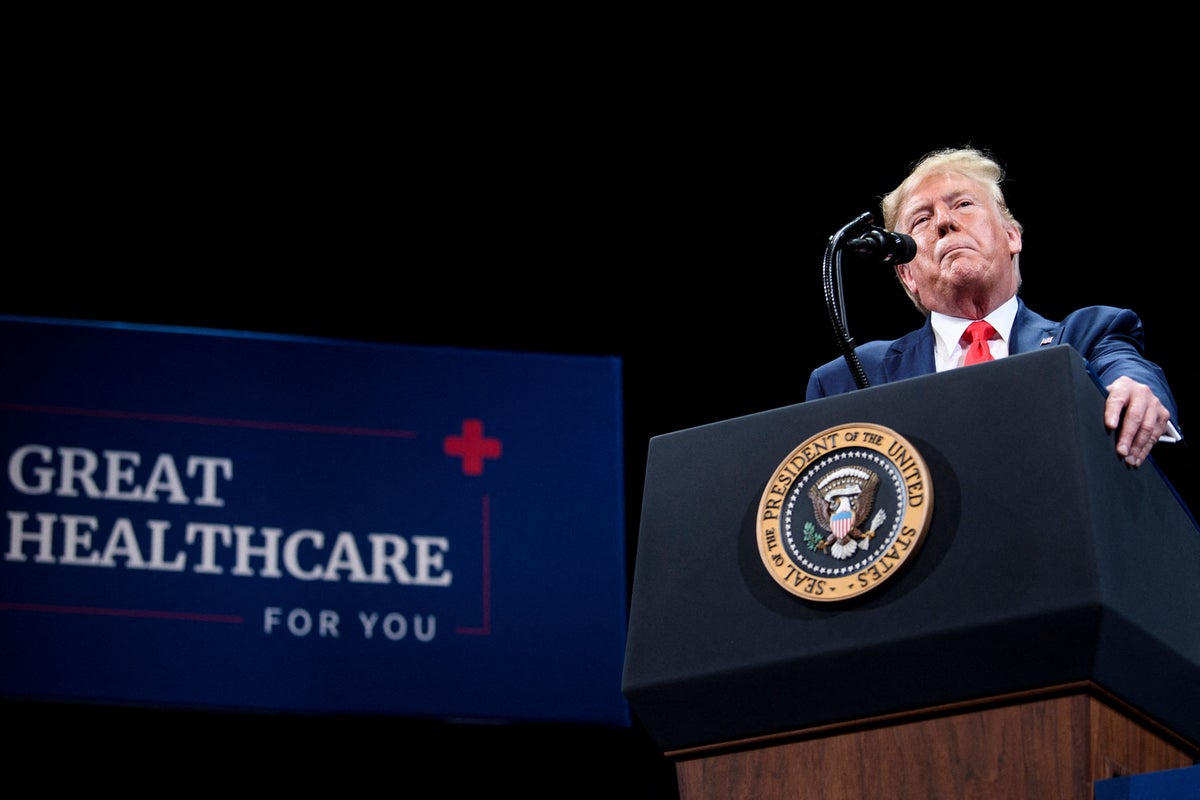
Paper rustles. Ink dries. Decades bleed into one another beneath the harsh glare of convention hall lights.
Remember the promises? They arrive wrapped in bold headlines and delivered with the theatrical flair of a late-night infomercial. We are told that salvation is just around the corner. That a grand design is being drafted in secret, ready to emerge fully formed to rescue millions from the crushing weight of medical debt. Expanding on this topic, you can also read: The Diplomatic Theater of Misri in Beijing is a Dead End.
Ten years is a long time to wait for a ghost.
To understand what it feels like to live in the shadow of an empty promise, consider a hypothetical patient named Arthur. Arthur is fifty-eight years old. He has worked a warehouse job for three decades, lifting heavy boxes while his lower back slowly rebels against gravity. Every morning begins with a negotiation between his alarm clock and his aching joints. Every year, his health insurance deductible creeps higher while his actual coverage shrinks like a wool sweater in hot water. Observers at NBC News have provided expertise on this trend.
Arthur does not care about political theater. He cares about the price of his blood pressure medication. He cares about whether a sudden chest pain means a trip to the emergency room or bankruptcy.
For ten years, political figures have stood at podiums and sworn that a revolutionary healthcare plan was coming. Weeks away. Months away. Always just over the horizon.
Wait.
Let us look at what actually happens when the countdown hits zero. Nothing. Just the rustle of more paper. Just another press conference.
Gavin Newsom knows this routine well. He has watched the cycle spin for a decade, tracking the vanishing footprints of a policy that exists only in speechwriters' drafts. When a leader spends ten years promising a masterpiece of domestic policy without ever lifting a brush, onlookers eventually stop looking at the wall. They start looking at the empty hands.
Why does this deception persist? Because hope is a renewable resource in American politics. You can promise a complete overhaul of the medical system, watch it evaporate, and then promise it all over again in the next election cycle. The human cost of that delay, however, does not reset every four years.
Consider the sheer weight of a decade in the life of a chronic illness. Ten years is enough time for a manageable condition to become a permanent disability. It is enough time for families to liquidate their life savings just to keep a parent alive through cancer treatment. While politicians trade barbs on social media platforms about who has the better blueprint, real people navigate a labyrinth of co-pays, prior authorizations, and denied claims.
The strategy is simple. Keep the target moving. If the goalposts are always shifting, nobody can ever prove you missed the kick.
Think about how we talk about health in this country. We treat it like a luxury good, akin to a sports car or a weekend getaway. If you can afford the premium package, you get the pristine service. If you cannot, you cross your fingers and hope your immune system holds out.
Public figures like Newsom weaponize this frustration, using sarcasm to puncture the balloon of long-standing boasts. Trolling a rival about a decade-old missing healthcare plan is easy political sport. But underneath the digital jousting lies a darker truth. Neither side has built the house they promised. One side draws blueprints on napkins and loses them; the other talks about revolutionary concepts that never survive contact with reality.
Meanwhile, Arthur is sitting at his kitchen table tonight with a calculator and a stack of bills.
He is trying to figure out how to stretch a paycheck to cover both groceries and a prescription refill. The math does not work. It never works. The deficit is made up of human suffering, paid in installments of un-reimbursed medical expenses and sleepless nights.
We have normalized this failure. We expect our leaders to make grand declarations that dissolve into thin air the moment the microphones are turned off. We have built an entire political ecosystem around the postponement of accountability.
Ten years. Let that number sink in. In ten years, children grow from kindergarteners into teenagers. Technology completely transforms how we communicate, work, and travel. Entire industries rise and fall. Yet the debate over basic human survival remains trapped in a perpetual loop of deferred maintenance.
The critics point out the hypocrisy. The defenders offer excuses about legislative gridlock and partisan obstruction. Both are playing their assigned roles in a play that has been running far too long.
The curtain needs to come down.
Until we stop accepting the illusion of progress in exchange for actual solutions, the Arhturs of the world will keep doing the math at their kitchen tables. They will keep paying for a plan that was never written, for a future that was never meant to arrive, trapped in the eternal prologue of a story that refuses to begin.


