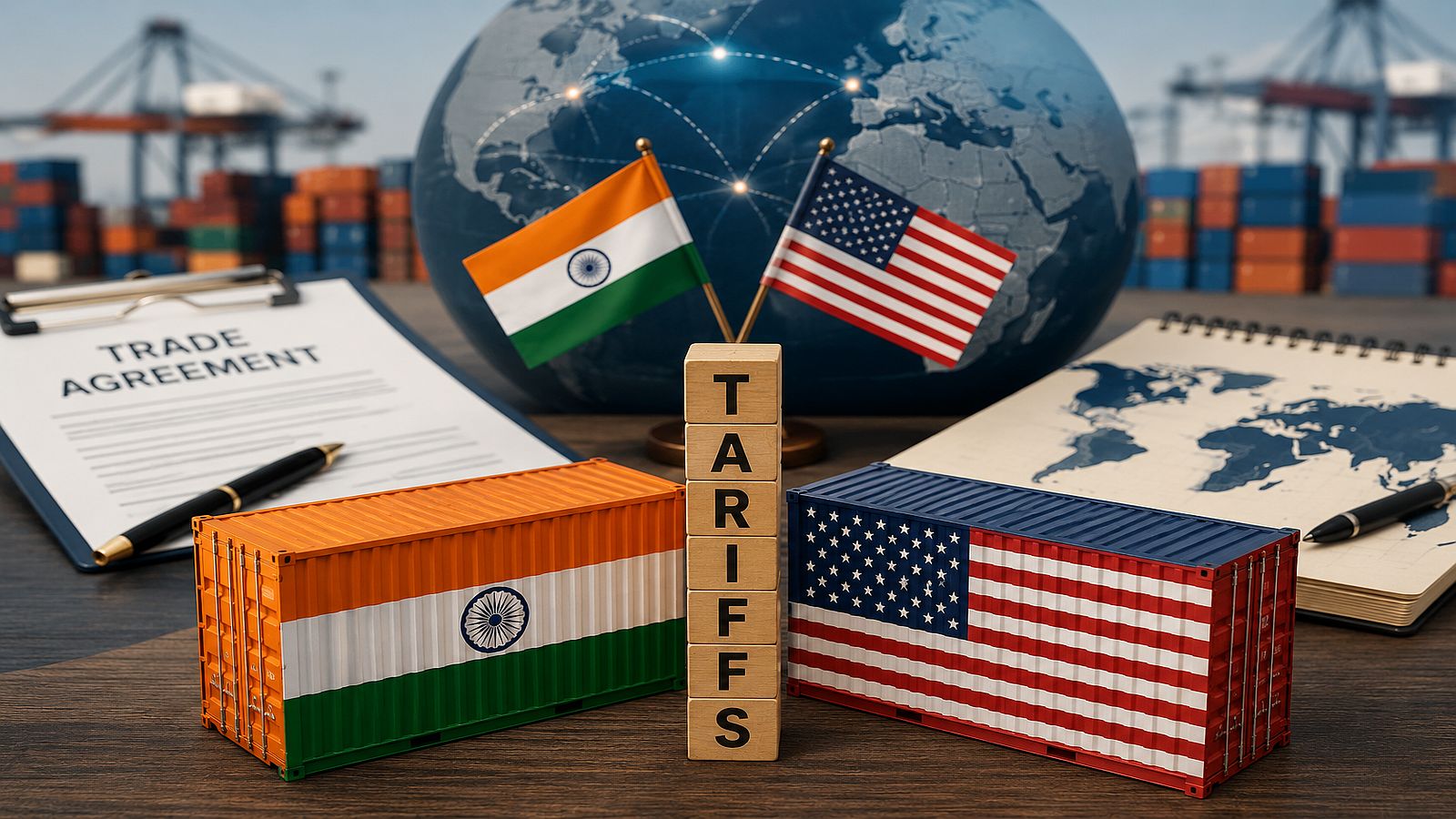
Everyone is losing their minds over a ten percent tariff. Corporate boards are hyperventilating. Supply chain consultants are billing clients triple-digit hourly rates to panic-manage spreadsheets. The mainstream narrative treats this policy as an economic extinction-level event for exporters shipping goods from India to the United States.
They are entirely wrong. You might also find this connected coverage useful: Why The Panic Over UK Gilt Yields Is Complete Nonsense.
I have spent the last fifteen years watching executives panic over every regulatory shift, and I have seen companies blow millions on reactionary re-routing strategies that achieve nothing except enriching logistics brokers. The lazy consensus says that a blanket border tax on suspected forced-labour supply chains will crush bilateral trade and kill margins overnight.
It will do no such thing. As highlighted in recent coverage by The Wall Street Journal, the results are widespread.
Let us look at the mechanics of what is actually happening. When a trade partner faces an extra fee, the knee-jerk reaction is to scream protectionism and forecast doom. But compliance is not a brick wall; it is a toll booth. Markets adapt because the underlying consumer demand does not care about administrative friction.
The Myth of the Margin Killer
Let us define terms precisely. A ten percent levy on specific import categories is not a wealth tax on the enterprise value; it is a cost-of-doing-business variable.
Companies whining about this fee usually operate with bloated administrative overhead anyway. If your business model collapses because of a ten percent adjustment at the port of entry, your pricing power was already non-existent. You do not have a trade crisis; you have a weak product.
Imagine a scenario where a mid-tier textile manufacturer in Gujarat ships garments to American retail buyers. Under the standard compliance framework, the exporter has to prove absolute supply chain transparency down to the raw cotton farmer. If documentation falls short, the border penalty hits.
The amateur move is to scream about unfair trade barriers and lobby trade representatives for exemptions. The professional move is to absorb the reality, price it into the B2B contracts, and weaponize transparency as a competitive moat.
"Compliance is not a constraint. It is a filter that weeds out lazy competitors."
Why the Critics Misread American Consumer Behavior
The conventional pundits keep asking: "How can American buyers absorb higher prices without destroying demand?"
This question is fundamentally flawed. It assumes every product competes purely on a race to the bottom for the cheapest price. It ignores the reality of brand equity and margin insulation.
American consumers are notoriously resilient when faced with marginal cost increases on manufactured goods. Retailers do not automatically pass the entire penalty straight to the end buyer on day one. They split the difference across massive inventory pools, squeeze their domestic distribution middlemen, and reallocate SKU priorities.
Furthermore, the bureaucratic friction surrounding forced-labour enforcement creates an uneven playing field. The lazy operators who refuse to audit their tier-three suppliers get hit with the penalty. The proactive operators who spent the last decade mapping their provenance networks sail through unhindered.
Suddenly, the ten percent penalty stops being a broad tax on a nation and becomes a targeted fine on operational laziness.
The Uncomfortable Truth About Global Supply Chains
Let us address the elephant in the room. Supply chains are messy. They are chaotic, opaque, and historically resistant to clean bureaucratic oversight.
When regulators demand proof that no forced labour touched a product, they are asking for a level of data granularity that most legacy enterprises treat as an afterthought.
I have watched procurement directors claim their supply chains are fully traceable, only to watch them disintegrate the moment an auditor asks to trace a specific batch of raw materials back to the source village.
The downside of my contrarian approach is that fixing this requires actual, unglamorous operational work. You cannot solve a provenance problem by hiring a PR firm or publishing a vague corporate social responsibility pledge on glossy paper. You have to digitize your tier-two and tier-three vendor contracts, implement ledger-based tracking, and be willing to cut ties with suppliers who cannot or will not open their books.
Most companies refuse to do this until a border agent forces their hand. That is why the tariff panic exists. It is not about the money. It is about the exposure of sloppy habits.
Stop Trying to Route Around the Rules
The absolute worst advice floating around executive boardrooms right now involves shell games. Consultants are pitching complex transshipment workarounds—routing goods through third-party nations to launder the country of origin before they hit U.S. ports.
This is amateur hour. Customs enforcement agencies are not run by fools. They track trade anomalies, monitor container weights, and aggressively audit secondary shipping hubs. Trying to outsmart modern trade enforcement with paper-mache corporate structures is a great way to get your entire import catalog seized and your executive team slapped with federal fraud investigations.
Instead of spending millions on fraudulent routing schemes, redirect that capital into vendor compliance software and direct supplier audits. Own the cost of doing business cleanly.
When you stop treating trade regulations as an obstacle to be bypassed and start treating them as the baseline rules of engagement, the panic evaporates. The ten percent tariff is not a roadblock to international commerce. It is an IQ test for modern enterprise management, and most of the industry is currently failing.
Clean up your data, audit your vendors, and stop whining about the cost of doing things right.