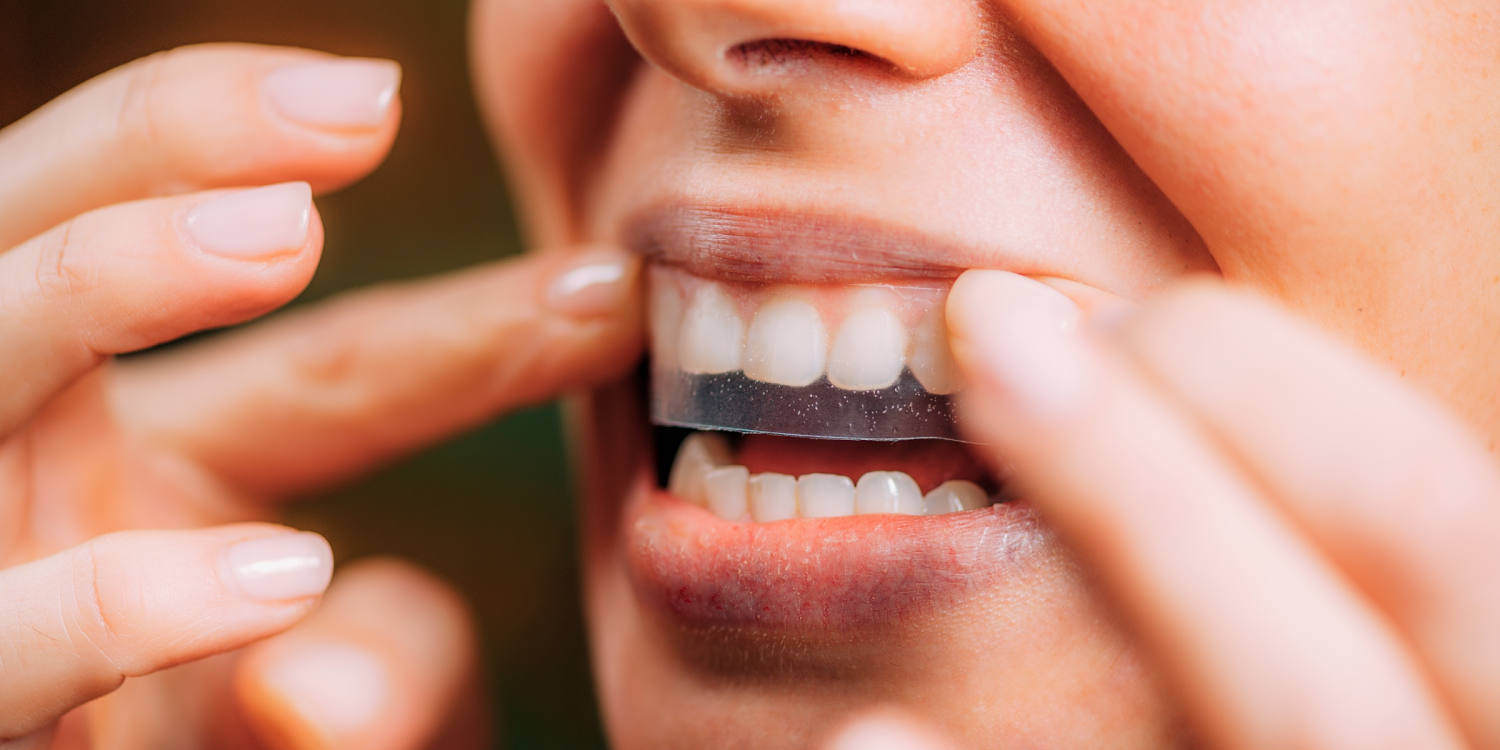
You buy a box of teeth whitening strips, slap them on your teeth for a week, and stare in the mirror waiting for a Hollywood smile. Nothing happens. Your teeth look pretty much the same, your gums are throbbing, and you are out forty bucks. It is frustrating.
Most people buy whitening strips based on pretty packaging or celebrity endorsements, completely ignoring how the active ingredients actually interact with enamel. If you want real results without destroying your gums, you need to understand what separates a clinically proven product from an expensive piece of plastic wrap. Also making news lately: The Fatal Price of Viral Gluttony Inside the Mukbang Machine.
The Chemistry Problem With Over-the-Counter Strips
Hydrogen peroxide is the gold standard for breaking down organic molecules that cause tooth discoloration. But getting that peroxide to stay on your teeth long enough to work is the real challenge. Saliva breaks down hydrogen peroxide rapidly. If a strip lacks an adhesive polymer that can withstand a wet oral environment, the active ingredient washes away in two minutes.
That is why cheap generic brands fail. They fall off immediately. Additional details on this are explored by Mayo Clinic.
When you look at clinical efficacy, concentration matters immensely. Strips typically range from 5 percent to 14 percent hydrogen peroxide, or use equivalent amounts of carbamide peroxide. Anything under 6 percent will barely move the needle on years of coffee stains. You need an adequate peroxide load combined with a dry-lock technology that prevents slipping.
Why Your Gums Burn Every Time You Try to Whiten
If your gums feel like they are on fire during a whitening session, the strip is poorly engineered. Generic strips are often cut too wide, meaning the gel oozes directly onto your soft tissue. Hydrogen peroxide burns gum tissue. It causes chemical irritation that leaves white patches and lingering soreness.
Effective strips feature tailored sizing or advanced sealing mechanisms that keep the gel strictly on the enamel surface. If you have sensitive teeth, look for formulas containing potassium nitrate or desensitizing agents like amorphous calcium phosphate. These ingredients block the microscopic tubules leading to the tooth nerve, stopping the sharp zings of pain before they start.
Crest Professional Effects Versus The Field
For years, Crest 3D White Professional Effects has dominated the market, and for good reason. They use a 10 percent hydrogen peroxide formulation paired with an Advanced Seal technology. They stick aggressively. You can drink water, talk, or run a mile, and they will not budge. They lift deep-set yellowing from years of espresso and red wine consumption.
The downside? They cost more. But cheap alternatives require three times the applications to achieve a fraction of the brightness, meaning you spend more money in the long run for inferior results.
The Problem With LED Light Accelerators
Every modern whitening kit now comes with a blue LED mouthpiece. Brands claim these lights accelerate the bleaching process using space-age technology.
Dentists roll their eyes at this.
Independent research shows that blue light provides very minimal acceleration for over-the-counter hydrogen peroxide gels. The heavy lifting is done entirely by the chemical gel itself. The light is mostly a marketing gimmick designed to justify a higher price tag. Save your money and skip the light kits unless you are sitting in a professional chair getting an in-office laser procedure with high-intensity thermal lamps.
How to Protect Your Enamel While Whitening
Enamel is your body's hardest substance, but it is not invincible. Piling on high-strength peroxide day after day strips microscopic layers of minerals, leaving teeth temporarily porous and prone to staining.
Follow these rules to protect your smile:
- Never brush your teeth immediately before whitening. This opens up your pores and guarantees severe sensitivity. Brush an hour before or use plain water.
- Stick strictly to the manufacturer timeline. Leaving strips on for an extra thirty minutes does not make your teeth whiter; it only burns your gums.
- Use a remineralizing toothpaste containing hydroxyapatite or fluoride for two weeks after your whitening cycle to rebuild enamel density.
- Avoid dark liquids like black tea, cola, and dark berries for at least 48 hours after your final strip. Your teeth are hyper-absorptive right after bleaching.
Finding Your Best Option
If you want the most effective over-the-counter route, stick to Crest Professional Effects or comparable medical-grade strips utilizing high-adhesion polymers and a safe 10 percent peroxide threshold. Avoid bargain-bin strips on online marketplaces that list unverified ingredient percentages or lack proper safety seals. Check the active ingredient list, verify the peroxide percentage, and invest in a formula designed to protect your gums from chemical burns. Consistency beats gimmicks every single time. Start with a standard two-week regimen, monitor your sensitivity levels, and give your enamel time to recover before your next round.