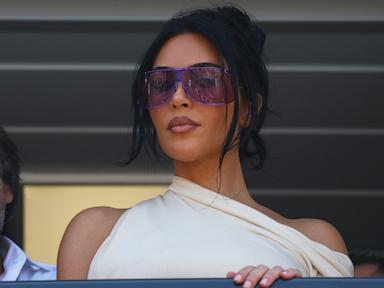
The convergence of global celebrity networks and tier-one motorsport events operates on a strict functional economy of visibility, cross-pollination of brand equity, and commercial leverage. When digital media reports that entrepreneur Kim Kardashian attended the Monaco Grand Prix to watch driver Lewis Hamilton secure a second-place finish for Scuderia Ferrari, standard commentary reduces the event to a romantic or social anecdote. This surface narrative obscures the real mechanism: the calculated integration of two distinct forms of attention capital.
Monaco represents the absolute peak of premium inventory within the Formula 1 commercial ecosystem. Analyzing this intersection requires stripping away the superficial lifestyle reporting to evaluate the operational dynamics, audience consolidation strategies, and brand valuation metrics that occur when a hyper-monetized digital personality integrates into the high-barrier, legacy environment of elite European motorsport.
The Tri-Pillar Model of Combined Attention Equity
The commercial utility of this high-profile integration relies on three independent operational vectors. Each vector represents a distinct exchange of demographic access, historical prestige, and modern digital distribution.
1. Demographic Arbitrage and Audience Cross-Pollination
Formula 1 historically commands a consumer base skewed heavily toward affluent male demographics, though recent media strategies have systematically expanded its reach into younger, more varied markets. Conversely, the audience infrastructure controlled by the Kardashian ecosystem is overwhelmingly female, highly online, and hyper-monetized through direct-to-consumer brands like Skims and Kylie Cosmetics.
[Kardashian Audience Architecture: Female, Digital-Native, DTC Consumers]
                      │
                      ▼
            [Monaco Paddock Nexus] <─── [Ferrari Legacy Ecosystem: High-Net-Worth, Premium Automotive]
                      ▲
                      │
[Hamilton Brand Matrix: Diverse, Culturally Intersected, High-Fashion]
When these two consumer forces collide within the physical boundaries of the Monaco paddock, an arbitrage opportunity occurs. Formula 1 gains direct, organic friction-free exposure to an audience segment that rarely interacts with traditional sports broadcasting. Concurrently, consumer brands gain access to the ultra-premium, high-net-worth network native to elite European motorsport.
2. Premium Validation and Paddock Capital
For modern digital influencers and corporate founders, legacy sporting events function as institutional validators. The Monaco Grand Prix cannot be bought through standard digital ad spend; access to the team garages, pit lanes, and high-tier viewing platforms is strictly rationed by the sport's governing bodies and automotive manufacturers. By occupying physical real estate inside the Ferrari garage, wearing team communication headsets, and participating in the pre-race grid walk, a digital personality converts raw social media volume into elite institutional capital.
3. The Structural Mechanics of Corporate Synergy
This visibility operates within a defined network of corporate entanglements. Hamilton’s modern professional profile exists at the absolute intersection of high fashion, premium lifestyle, and elite athletic performance. Kardashian's public appearance in custom apparel—such as the leather racing suits designed by corporate partners—directly services the commercial interests of high-fashion conglomerates that sponsor both the sport and individual athletes. The physical environment functions as a live-action, unscripted commercial asset optimized for algorithmic distribution across secondary media networks.
Technical Quantification of the Attention Loop
The economic value of this interaction is measured using Media Value (MV) and Earned Media Value (EMV) frameworks. Traditional sports sponsorships rely on static trackside signage, which yields measurable but predictable impressions based on broadcast television ratings. The introduction of an elite digital asset breaks this linear model.
$$MV_{\text{Total}} = MV_{\text{Broadcast}} + EMV_{\text{Organic}} + EMV_{\text{Algorithmic}}$$
The total media value generated during the Monaco race weekend expands via an exponential multi-channel loop:
- Linear Broadcast Placement: Traditional television cameras captured specific visual frames of the Ferrari garage during critical race segments, notably when Hamilton defended his position to secure second place. This structural placement guarantees millions of baseline impressions across global sport networks.
- Direct Algorithmic Distribution: Immediate social media updates from accounts with hundreds of millions of followers completely bypass traditional media gatekeepers. This distribution injects Formula 1 content directly into non-sport feeds, generating hyper-targeted, high-engagement consumer loops.
- Secondary Media Proliferation: Paparazzi photography, fashion analysis columns, and mainstream news reports create an echo effect. This process sustains the media loop for 72 to 96 hours post-event, long after the physical race has concluded.
This mechanism changes the cost-efficiency of standard sports marketing. A brand seeking equivalent reach through traditional programmatic ad buying would require an eight-figure capital expenditure. The organic integration of high-authority cultural figures achieves identical or superior brand resonance at zero net acquisition cost to the hosting team or the racing series.
Operational Friction and Grid-Walk Dynamics
Despite the clear financial incentives, the integration of distinct entertainment networks introduces significant operational friction. This friction is highly visible during the traditional pre-race grid walk—a highly restricted time window where broadcast media, athletic personnel, and invited VIPs share a confined, high-stress space.
The interaction between veteran Sky Sports broadcaster Martin Brundle and the Kardashian-Hamilton entourage highlights this structural tension. The grid walk operates on a strict unwritten rule: immediate accessibility for the sport's core broadcast audience. When non-endemic celebrities disrupt this access—either through silent refusals or via protective management layers—it creates an immediate negative feedback loop among legacy consumers.
This bottleneck exposes a fundamental divide in modern sports entertainment:
[Core Legacy F1 Consumers] ──> Demands technical focus, athletic purity, institutional respect
                                             vs.
[Modern Commercial Platform] ──> Demands maximal cultural reach, narrative drama, lifestyle integration
For the legacy core audience, the introduction of non-endemic entertainment figures threatens to dilute the athletic seriousness of the sport. For corporate stakeholders and league owners, however, this dilution is a necessary trade-off to future-proof the business model, diversify revenue streams, and inflate the underlying asset value of the franchises.
Strategic Asset Valuation of the Hamilton-Ferrari Shift
The specific athletic context of the Monaco event magnifies the underlying business strategy. Hamilton’s performance in securing a second-place finish occurs against the backdrop of his massive career transition to Scuderia Ferrari. This shift is not merely a sporting change; it is one of the largest re-alignments of commercial equity in modern sports history.
The Financial Architecture of Team Re-Branding
Ferrari represents the historical, conservative core of Formula 1 racing, characterized by corporate stiffness, strict brand guidelines, and a traditional European fan base. Hamilton brings an entirely different commercial matrix: American cultural integration, high-fashion collaborations, and a progressive digital footprint.
The strategic integration of modern digital royalty into the Ferrari paddock infrastructure serves as an immediate indicator of the cultural transformation occurring within Maranello. Ferrari is actively expanding its brand identity from an elite industrial car manufacturer into a holistic luxury lifestyle house.
Risk Vectors and Long-Term Limitations
While this attention strategy yields immediate, massive spikes in media valuation, it carries distinct operational risks:
- Brand Fatigue and Backlash: Over-saturation of lifestyle-centric narratives can alienate the core demographic responsible for the sport's baseline subscription and ticket revenue.
- Performance Incongruity: If high-profile social activations occur alongside poor on-track athletic results, the media narrative immediately shifts from "glamorous validation" to "commercial distraction."
- Dependency on Volatile Volatility: Unlike institutional sponsorships bound by multi-year legal contracts, celebrity network alignment is highly fluid, personal, and prone to rapid shifts based on non-sporting variables.
Future Alignment of the Sports Entertainment Complex
The events observed at the Monaco Grand Prix dictate a clear, irreversible path forward for the global sports entertainment complex. Elite sporting events are no longer evaluated solely on athletic output or linear television viewership metrics. They operate as foundational platforms for global lifestyle distribution.
The long-term play requires racing franchises and corporate brands to move away from passive hospitality models toward structured content co-production. Expect future team contracts to explicitly stipulate digital collaboration frameworks, fashion line integrations, and cross-platform entertainment access.
Organizations that fail to build the internal infrastructure required to manage these complex celebrity networks will lose ground to agile competitors who treat attention capital with the exact same mathematical rigor as aerodynamic development. The ultimate winners in this landscape will be those who successfully turn raw digital reach into long-term institutional value, utilizing high-barrier physical platforms like Monaco as the ultimate converting mechanism.