Every time two commercial widebodies nearly turn a tarmac into a crater, the public response follows a predictable script. Panic. Outrage. Calls for immediate inquiries into pilot error, air traffic control fatigue, and systemic institutional failure. Media outlets breathlessly recount the separation distance in feet, treating a near-miss like an isolated anomaly.
That lazy consensus is dangerous.
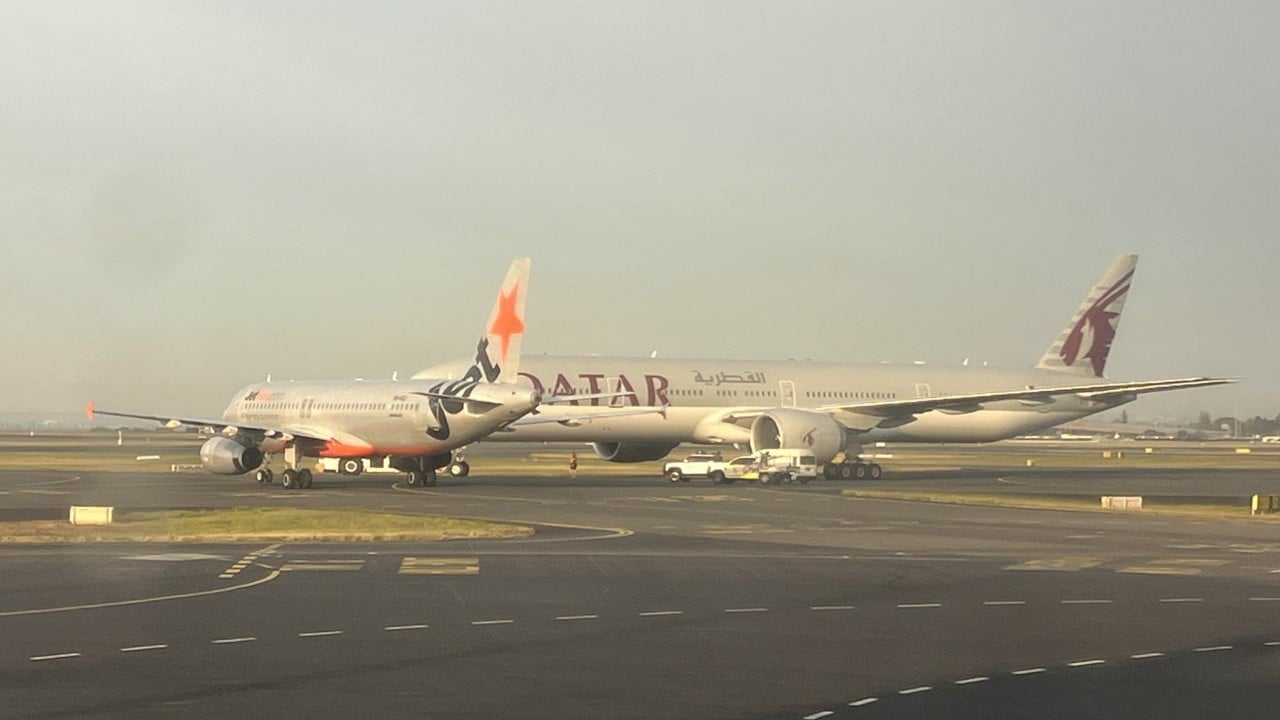
The near-collision between a Jetstar flight and a Qatar Airways aircraft at Sydney Airport is not a story about a rogue controller losing focus or a pilot misinterpreting a clearance. It is the predictable outcome of an aging, over-capacity infrastructure model straining against the laws of physics. We treat these events as moral failures of individuals when they are structural failures of a system built on optimism rather than math.
I have spent decades watching aviation executives pat themselves on the back over safety metrics while ignoring the degrading margins beneath their feet. We are running a high-frequency global transit network on a tarmac layout designed in the middle of the last century, masking structural decay with automation duct-tape and human heroics.
The Myth of the Controlled Environment
The narrative sold to passengers is that modern aviation is a deterministic machine. Every movement is locked down. Every separation is guaranteed by redundant layers of technology, procedure, and oversight.
It is a comforting illusion.
Aviation safety is probabilistic, not deterministic. It relies on a thin veneer of redundancy that works precisely until multiple variables align in the worst possible way. When a Jetstar aircraft and a Qatar Airways departure find themselves occupying the same slice of airspace geometry at Sydney, the public wants to point a finger at the last link in the chain.
Did the controller issue the wrong heading? Did the flight crew read back the instruction incorrectly?
Asking those questions misses the forest for the burning trees. When you squeeze maximum slot utilization out of a single-parallel runway configuration during peak banks, you reduce system slack to zero. When slack hits zero, human error stops being an anomaly and becomes a statistical certainty.
Imagine a highway designed for fifty cars an hour being forced to push five thousand vehicles through a single toll booth. Eventually, a fender bender happens. Blaming the driver who tapped the brakes is comforting because it lets the highway commissioner keep collecting tolls.
The Sydney Bottleneck Reality
Sydney Airport handles massive volume through a constrained footprint. Its parallel runways are close enough that simultaneous independent operations under certain weather and wind conditions create severe operational friction.
When winds shift or traffic banks bunch up due to delayed inbound slots from international hubs, air traffic control is forced to sequence heavy widebodies and nimble narrowbodies into the exact same arrival and departure pipelines.
The industry standard response is to tweak phraseology or introduce mandatory safety management systems training. This is administrative theater. You cannot solve a spatial geometry problem with a PowerPoint presentation.
Why Pilot and Controller Blame Is a Cop-Out
Blaming front-line operators shifts liability away from the architects of the system.
Air traffic controllers manage staggering cognitive loads. They process spatial orientation, verbal readbacks, radar blips, and weather vectors simultaneously while managing fatigue schedules that would get a long-haul trucker arrested. Pilots operate under commercial pressures to maintain turnaround times that turn every minute on the ground into a financial penalty.
When a near-miss occurs, the Australian Transport Safety Bureau launches a thorough investigation. Months later, they release a report detailing the exact sequence of radio transmissions and radar sweeps. They offer safety recommendations. The airport management nods solemnly. Everyone goes back to scheduling more flights in the same hour.
Nothing changes because the economic engine of aviation demands maximum slot turnover. Safety is prioritized until it costs money, at which point it becomes an acceptable risk tolerance matrix.
The Counter-Intuitive Solution Nobody Wants to Fund
If we actually want to stop near-misses at major airports, we have to stop pretending that procedural fixes are enough.
First, we need radical demand management. That means capping peak-hour movements, regardless of airline lobbying pressure or slot hoarding strategies. If an airport footprint cannot support safe separation margins during a storm or peak bank, flights must be canceled or delayed at the point of origin.
Second, we must decouple ground operations from air traffic voice loops. The reliance on VHF radio for critical runway crossings in the twenty-first century is an embarrassment. We possess the technology for automated datalink clearance verifications that require dual-system handshake confirmations before a rolling aircraft crosses a hold short line. Yet, adoption lags because infrastructure investment cuts into airline profit margins.
Third, we have to abandon the fiction that regulatory bodies like CASA hold teeth sharp enough to bite commercial interests. Regulators are perpetually underfunded and structurally incentivized to maintain industry harmony rather than disrupt operational flow.
Facing the Inconvenient Truth
Every time a near-miss makes the evening news, passengers feel a brief spike of terror, book a different carrier, and then forget about it by their next business trip.
The airlines know this. The airport operators know this.
They are banking on human resilience and statistical probability to keep the hulls intact while they squeeze every last drop of capacity out of constrained asphalt. They will continue to blame the individual on the headset or in the cockpit because it protects the business model.
Stop asking if the pilot was paying attention. Start asking why we are cramming more aluminum onto runways built for a different era. The next close call is already scheduled on the departures board.