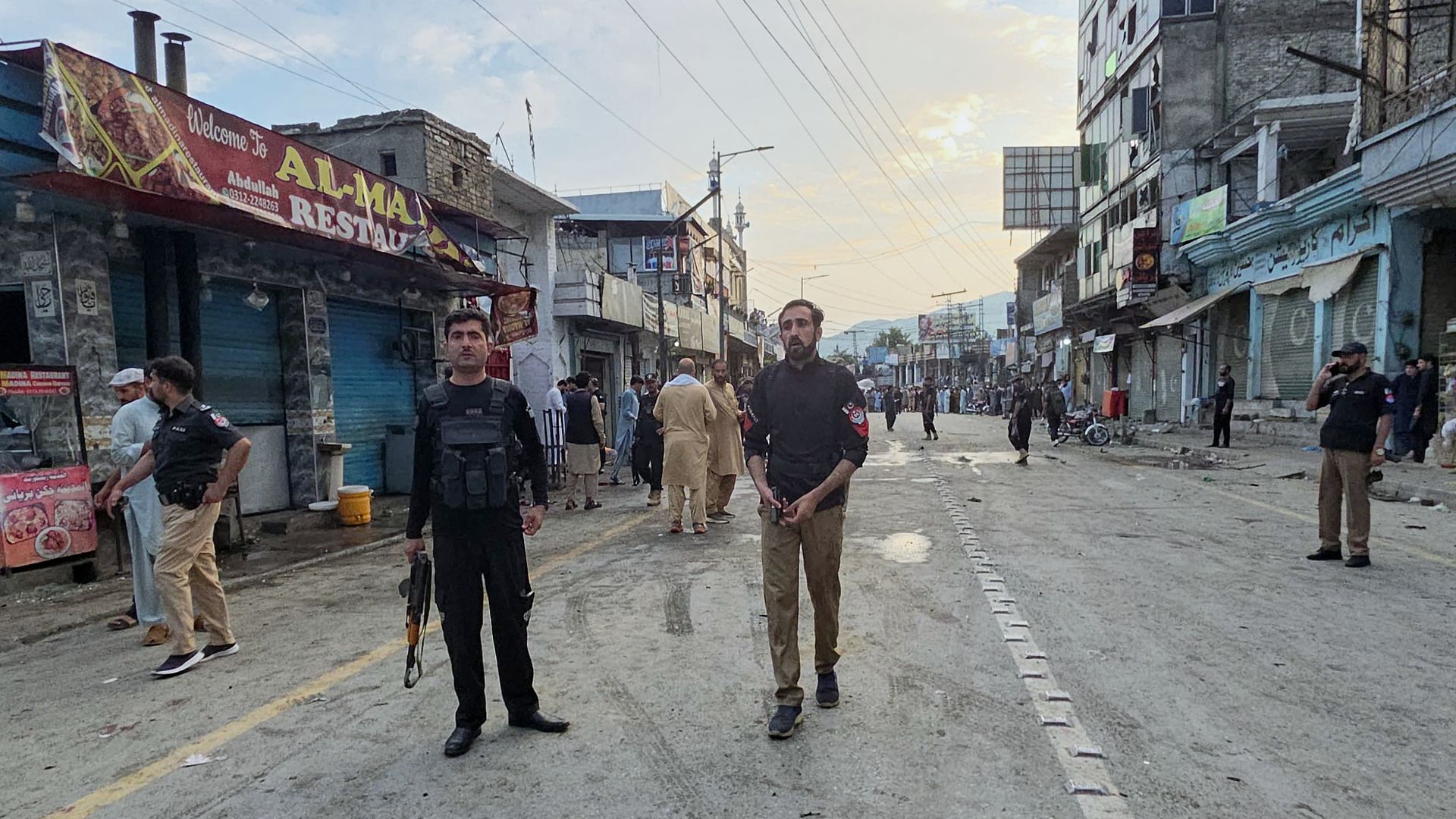
Ordinary citizens standing up against extremists usually face threats, but Sunday's suicide bombing in Pakistan's Swat Valley crossed a horrific new line. A public gathering demanding peace and security turned into a massacre when an attacker detonated explosives right in the middle of the crowd.
At least 14 people died. Nine were civilians and five were police officers. Over two dozen others suffered serious injuries. This wasn't just another routine security incident. It was a direct blow to the rising civilian courage that has tried to push back against a terrifying militant resurgence in northwestern Pakistan.
The Tragedy in Kabal
The violence erupted in Kabal, a town within the Swat district of Khyber Pakhtunkhwa province. Locals had gathered near a local police station to voice a simple demand: they wanted an end to the creeping return of militant groups and demanded absolute, lasting peace. Witnesses reported that speakers at the demonstration openly criticized local authorities for failing to crush extremist cells early on. They argued that security is a fundamental state duty.
Seconds later, the bomber struck.
Bilal Faizi, a spokesperson for the provincial emergency services, confirmed that the blast tore directly through the heart of the chanting crowd. District police chief Omar Khan verified the casualty breakdown, throwing the region into immediate shock and mourning.
Why the Swat Valley Matters
History is repeating itself in a brutal way. Back in 2007, the Swat Valley was a stronghold for Islamic extremists who enforced harsh rules before a massive military offensive drove them out. For years, residents tasted relative calm.
That calm is gone. Over recent months, militants have crept back into the valleys, sparking widespread panic and forcing locals to take matters into their own hands through public protests. When civilians start organizing mass rallies against armed extremists, they become prime targets. Sunday's attack proves that underground networks view civilian pushback as an existential threat to their survival.
Pointing Fingers Across Borders
No organization claimed responsibility immediately. Yet, suspicion points squarely at the Tehrik-e-Taliban Pakistan, commonly known as the TTP or the Pakistani Taliban. While distinct from the Afghan Taliban, the TTP shares close ideological ties.
Pakistan's leadership has grown increasingly vocal about cross-border safe havens. Military spokesperson Major General Ahmad Sharif Chaudhry recently noted a staggering surge in violence, citing 3,145 terrorism-related incidents across the country. According to military data, security forces have killed 2,084 militants, while 819 Pakistanis—including soldiers, police, and civilians—have lost their lives in the ongoing conflict. Islamabad continues to claim that cross-border operators backed by Afghan territory drive these suicide missions, an allegation that Kabul denies.
Top leaders, including President Asif Ali Zardari and Prime Minister Shehbaz Sharif, issued swift condemnations, pledging that counter-terrorism efforts will press forward until eradication is complete. Interior Minister Mohsin Naqvi also echoed those sentiments, promising medical support for the injured.
Words offer little comfort to families burying their dead in Kabal today. The real test is whether state security forces can protect ordinary people who refuse to stay silent.