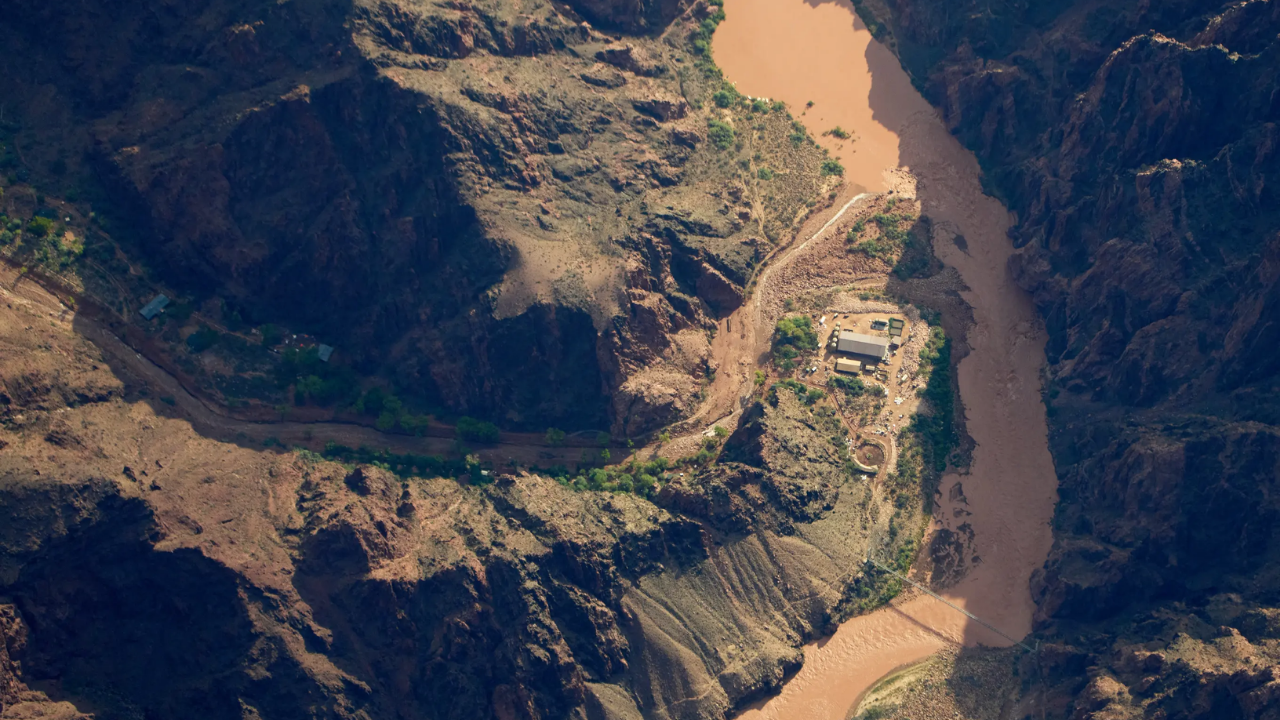
Survival in high-velocity hydrological anomalies is rarely a function of raw fortune. When three individuals survived a catastrophic Grand Canyon flash flood by securing a rock ledge for five consecutive hours, public discourse immediately defaulted to narratives of miraculous endurance. This perspective fundamentally misunderstands the physics of environmental hazard management. Human survival in extreme wilderness environments operates on a strict calculus of micro-decisions, thermodynamic conservation, and situational triage executed under acute cognitive load.
The incident provides a rare empirical baseline for analyzing decision-making under terminal stress. By examining the structural constraints of canyon topography, thermal degradation rates in sub-optimal aquatic environments, and the spatial logic of high-ground acquisition, we can deconstruct the mechanics of survival into repeatable operational frameworks.
The Mechanics of Hydraulic Surge and Topographical Trap Geometry
Canyon flash floods represent a specialized class of environmental hazards characterized by extreme time compression and hyper-localized energy concentration. Unlike coastal storm surges or riverine floods where rising water tables afford predictive lead times, a slot canyon or tributary system funnels precipitation from miles away into a narrow hydraulic bottleneck.
The kinetic energy of a debris-laden flash flood scales exponentially with volume and velocity. Water weighs roughly sixty-two pounds per cubic foot. When mixed with sediment, boulders, and organic debris, that density increases significantly, turning the fluid column into a moving battering ram. The three survivors faced a classic topographical trap: vertical walls restricting lateral egress, rising water velocity outpacing human sprint speeds on uneven terrain, and a complete absence of intermediate escape benches.
In these environments, traditional evacuation logic fails. Standard wilderness safety protocols prioritize horizontal distance from hazard vectors. In narrow canyon morphology, the hazard vector occupies the entire floor, forcing a binary tactical choice: vertical ascent or catastrophic downstream transport. The decision to scale or locate a viable rock ledge within seconds of impact dictates the entire subsequent survival arc.
The Temporal Cost Function of Thermal Loss
Once vertical refuge is secured, the optimization problem shifts instantly from kinematic avoidance to thermodynamic management. Water acts as a massive thermal sink. Human immersion or exposure to continuous spray accelerates hypothermia through conductive and convective heat loss at rates up to twenty-five times greater than air at the same temperature.
Maintaining position on an exposed rock ledge for five hours introduces severe physiological constraints. The body's homeostatic mechanisms initiate peripheral vasoconstriction to protect core organs, but sustained cold exposure degrades fine motor skills, cognitive processing speed, and muscular endurance.
Phase Transitions of Stress Physiology
- Acute Alarm Phase: Adrenaline surge and hyper-ventilation immediately following the impact event, causing rapid glycogen depletion and elevated heart rates.
- Resistive Plateaus: The prolonged holding phase where isometric muscle contraction is required to maintain position against cold winds, wet surfaces, and gravity.
- Decompensated Fatigue: The critical threshold where shivering ceases, core temperature drops below 35 degrees Celsius, and rational decision-making gives way to apathy.
The survivors did not merely cling to a rock; they successfully managed their metabolic output to prevent muscular failure during the plateau phase. Every shift of weight, every adjustment of grip strength, represented a calculated expenditure of dwindling caloric reserves against the constant drain of environmental cooling.
Information Asymmetry and the Cognitive Load of Isolation
Extended isolation in a disaster scenario introduces a severe cognitive distortion known as temporal dilation. Without external reference points or communication channels, the subjective experience of time stretches, degrading morale and increasing the probability of impulsive, fatal errors such as premature descent into receding yet still volatile waters.
Environmental hazard analysis often ignores the human software limitations during crisis events. Decision fatigue sets in rapidly when continuous risk assessment must be performed without feedback loops. The survivors lacked visibility into upstream weather patterns, dam releases if applicable, or the deployment status of search and rescue teams. Operating under complete information asymmetry requires a mental framework focused exclusively on localized, controllable variables: grip security, thermal shielding, and structural stability of the perch.
Resource Allocation Without Gear
Wilderness survival literature frequently fetishizes specialized gear kits. Real-world catastrophic events routinely occur when individuals are stripped of their equipment, transitioning the problem set from technical gear management to raw physiological improvisation.
When gear is absent, the human body becomes the sole operating asset. The friction of skin against rock, the structural integrity of fingers locked into crevices, and the capacity to utilize natural windbreaks form the entire defensive perimeter. This strips away false security metrics. Success relies entirely on primitive biomechanical efficiency.
The Operational Protocol for Flash Flood Survival
To translate this incident from an isolated anomaly into a replicable strategic blueprint, we must codify the behavioral sequence that separates successful navigation from systemic failure.
- Vector Recognition: Identify the auditory signature of an approaching surge, which often manifests as a deep, low-frequency roar distinct from normal ambient river noise, signaling heavy debris carriage.
- Immediate Vertical Commitment: Abandon all non-essential equipment instantly. Optimize entirely for vertical gain rather than horizontal distance, targeting stable bedrock rather than unstable alluvial benches subject to undercutting.
- Isometric Conservation: Once elevated, establish a multi-point anchor system using natural friction points to minimize the muscular energy required to resist slips.
- Thermal Isolation: Minimize direct contact with wet stone surfaces where possible by using clothing layers or packs as insulation barriers against conductive heat loss.
- Static Endurance: Resist all impulses to descend until the hydraulic energy of the main channel visibly subsides and secondary runoff chutes cease active flow.
Deploy sensor networks at key upper-watershed bottlenecks to feed real-time hydrological data directly into automated regional alert systems, shifting the burden of safety from individual reactive triage to predictive infrastructure.