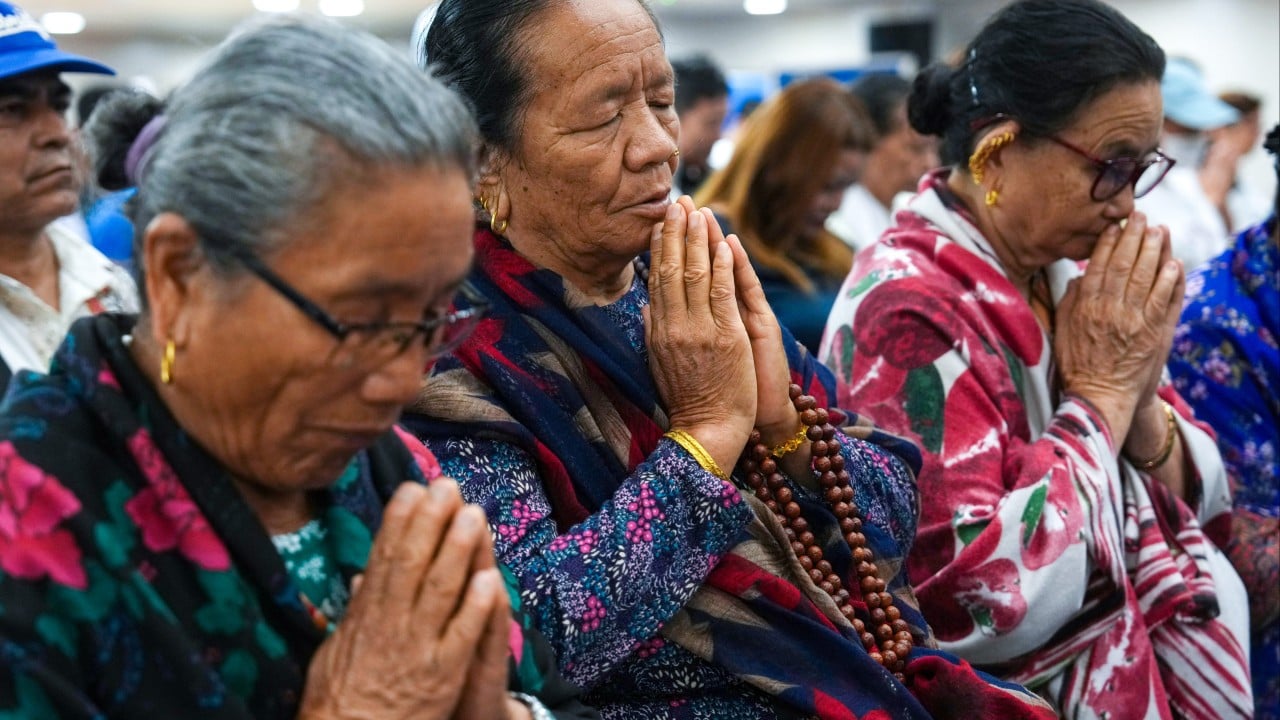
Diaspora communities operating outside their native institutional support structures face an immediate structural deficit when catastrophic loss occurs. When the Nepali community in Hong Kong gathers to observe traditional mourning rites—such as the thirteen-day post-mortem rituals known locally as Kajriya or general funerary timelines tied to Hindu and Buddhist traditions—the event is frequently categorized merely as a cultural gathering or a localized news item. This superficial classification obscures the complex socio-economic mechanisms, resource allocation networks, and psychological safety systems required to execute these rites thousands of miles from their origin.
Analyzing mass displacement mourning requires moving past sentimental narratives to examine the operational architecture of migrant ethnic enclaves. Displaced populations do not possess access to ancestral lands, communal family land plots, or state-backed bereavement support infrastructure. Consequently, the execution of standardized thirteen-day mourning practices exposes three distinct friction points within migrant community economics: resource pooling, labor redistribution, and institutional negotiation.
The Resource Allocation Function of Diaspora Funerary Rites
Mourning rituals in collectivist cultures function as high-cost, high-yield social insurance mechanisms. In a domestic setting, the economic burden of hosting extended family, performing continuous daily rituals for thirteen days, and managing final rites is distributed across a large, localized kinship network. Within a migrant context such as Hong Kong—characterized by high population density, high cost of living, and rigid working-hour constraints—this distribution mechanism breaks down.
The immediate cost function includes several quantifiable variables:
- Opportunity cost of lost wages for the primary wage earners participating in continuous daily rituals.
- Direct capital expenditure for ritual materials, venue rentals, or community hall usage in a dense urban environment.
- Transnational transaction costs if funds must be repatriated or if family members must travel across borders to participate.
To solve this liquidity crisis, the community relies on informal credit and mutual aid circles, structurally similar to rotating savings and credit associations. The mourning period acts as a stress test for the social capital accumulated by the deceased and their immediate family. Participation rates in the thirteen-day prayers serve as a reliable proxy for measuring the household's social equity within the broader diaspora network. Those with high historical participation in community welfare initiatives receive an influx of labor and financial support, while isolated households experience a sharp utility deficit, often leading to acute financial distress.
Spatial Constraints and Urban Friction
Executing traditional rituals in an urban environment like Hong Kong introduces severe spatial limitations. Ancestral rituals often require open spaces, access to running water for ritual cleansing, and the capacity to host large, fluctuating numbers of visitors across a multi-day timeline.
Urban density forces the diaspora to adapt ritual parameters to fit within constrained residential footprints or commercial spaces ill-equipped for religious observances. This adaptation creates a friction between orthodox religious requirements and municipal zoning laws. Community leaders must navigate informal negotiations with landlords, local district councils, and civic authorities to secure temporary spaces.
This dynamic reveals a broader vulnerability within migrant infrastructure: the lack of permanent cultural-religious real estate. Without dedicated community trusts or endowment-backed facilities, diaspora groups are perpetually exposed to real estate market volatility. When rental costs spike or urban renewal projects displace ethnic enclaves, the physical continuity of mourning rituals is directly threatened, fragmenting the communal safety net precisely when it is most needed.
The Psychological Mechanics of Displaced Closure
From a cognitive science perspective, rituals provide a standardized framework for processing grief, reducing the cognitive load associated with sudden loss by replacing chaotic emotional processing with prescribed physical actions. For migrants, this psychological function is compounded by the psychological toll of transnational displacement.
The thirteen-day mourning period acts as a structured transition phase, forcing a collective pause in an environment engineered for relentless economic productivity. Hong Kong's hyper-capitalist economic model leaves little institutional room for grief. By carving out protected time and space for communal mourning, the Nepali diaspora temporarily insulates its members from market pressures.
However, this insulation comes at a high operational cost. Unlike domestic populations who can seamlessly re-enter the labor force after standard bereavement leave, migrant workers often risk employment termination or loss of precarious hourly wages to fulfill religious obligations. The decision to participate in the full thirteen-day sequence is therefore an explicit economic trade-off, prioritizing long-term social cohesion and spiritual compliance over short-term financial stability.
Systemic Vulnerabilities in Transnational Support Networks
The reliance on informal community networks exposes systemic gaps in institutional safety nets. When migrant workers face catastrophic events—whether natural disasters affecting families back home or sudden deaths within the local diaspora—formal governmental and non-governmental organization support is typically reactive, bureaucratic, and culturally misaligned.
Ethnic enclaves fill this vacuum through self-organization, but these systems operate without financial buffers. A cluster of tragedies occurring within a short timeframe can exhaust the mutual aid reserves of an entire diaspora subgroup.
Future resilience depends on transitioning from ad-hoc, cash-based mutual aid to formalized cooperative structures. Diaspora leadership must prioritize the establishment of formalized benevolent funds, legal aid syndicates, and permanent communal spaces. Without structural formalization, the community remains perpetually vulnerable to economic shocks, ensuring that every major life event or loss triggers a localized crisis rather than a managed transition.