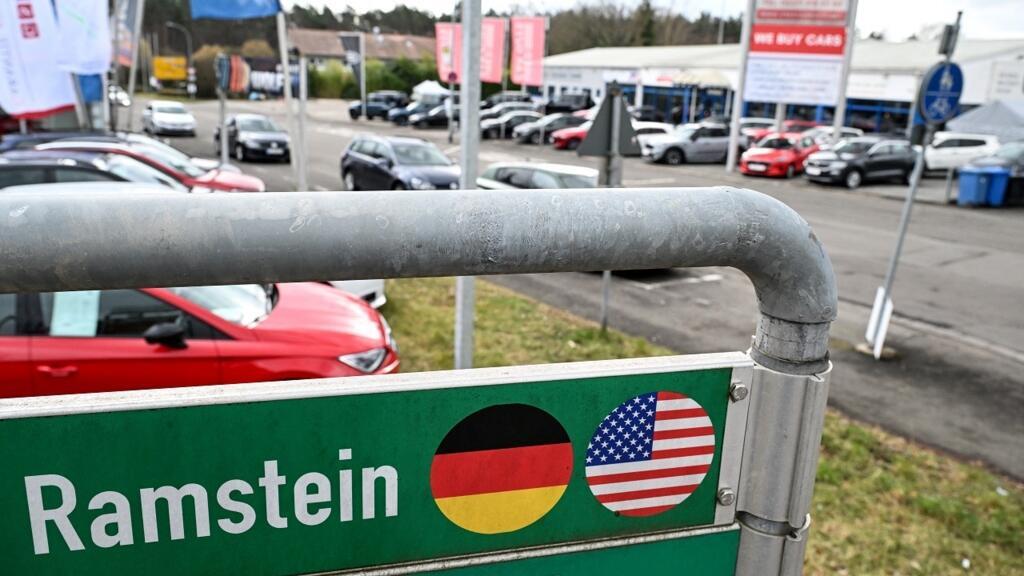
Strategic Calculus of Forward-Deployed Infrastructure
The optimization of United States force posture in Europe requires a shift away from ideological debates toward a rigorous examination of utility, financial friction, and operational drag. Decades of institutional momentum have preserved a footprint optimized for Cold War containment rather than contemporary multi-domain deterrence. When analysts argue for a reduction in European-based military installations, the core argument is rarely pacifist or isolationist. Instead, it rests on a structural assessment of return on investment, capability dispersion, and supply chain vulnerability.
Evaluating the utility of any military installation demands a clear formula: If you enjoyed this post, you should check out: this related article.
$$\text{Net Strategic Value} = \frac{\text{Deterrence Efficacy} \times \text{Operational Flexibility}}{\text{Fixed Operating Cost} + \text{Vulnerability Coefficient}}$$
When existing European bases are run through this equation, a significant portion of legacy infrastructure registers diminishing returns. Permanent garrisons tie up capital in real estate, local labor contracts, and force protection overhead that could otherwise fund mobile, high-readiness assets or technological modernization. For another look on this story, refer to the latest coverage from Al Jazeera.
To understand why a leaner physical posture can generate superior strategic outcomes, one must deconstruct the financial, operational, and political variables governing current deployments.
The Fixed Cost Function of Legacy Garrisons
Maintaining permanent installations across Western and Central Europe imposes a massive structural baseline. These expenditures are divided into three primary categories: stationing agreements, host-nation support offsets, and base operations support.
Stationing Overhead and Capital Lock-In
Permanent bases require heavy capital expenditure for civil engineering, housing, schools, healthcare facilities, and long-term environmental remediation. These fixed costs are inflexible. Whether geopolitical tension in a specific theater is low or high, the baseline maintenance cost of a major air base or army garrison remains constant. This creates an opportunity cost: capital allocated to maintaining physical infrastructure in stable rear-echelon areas is capital unavailable for procurement programs, munitions stockpiling, or research and development.
Host-Nation Subsidies Versus True Expenses
While host nations frequently cover a portion of stationing costs through direct financial contributions or shared infrastructure, these offsets rarely cover the total economic footprint. Furthermore, the reliance on local labor and regional utility grids introduces external dependencies. During periods of economic stress or political divergence between Washington and European capitals, these operational dependencies can transform into diplomatic friction points.
Force Protection Liability
Concentrating high-value assets and personnel in fixed geographic coordinates elevates the target profile for adversaries. In a security environment characterized by long-range precision-guided munitions, cyber warfare, and asymmetric sabotage, massive fixed bases function as high-value, stationary targets. Dispersing forces reduces the vulnerability coefficient by complicating an adversary targeting calculus.
Operational Friction and Mobility Constraints
A common misconception in defense analysis equates a physical presence on foreign soil with immediate readiness. In practice, large standing garrisons in Europe often suffer from institutional inertia and administrative drag.
The Heavy Footprint Paradox
Permanent infrastructure encourages a garrison mindset. Units stationed abroad for multi-year tours require extensive administrative support systems that mirror domestic military communities. This administrative overhead consumes personnel bandwidth that should be dedicated to tactical training and interoperability exercises.
Strategic Agility Versus Territorial Anchoring
Modern deterrence relies heavily on dynamic force employment, rotational forces, and strategic unpredictability. Heavy, stationary footprints signal predictability. When forces are tied to specific installations, adversaries can model response times, logistics nodes, and communication pathways with high accuracy.
A reduced permanent footprint coupled with an expanded posture of operational pre-positioning, enhanced rotational deployments, and long-range strike capabilities shifts the burden of complexity onto the adversary. Instead of defending fixed geographic nodes, posture planners can focus on rapid assembly and unpredictable maneuverability.
European Strategic Autonomy as a Force Multiplier
A reduction in United States forces in Europe is frequently framed as a transatlantic fracture. A deeper operational analysis reveals the opposite: it serves as an institutional catalyst for European burden-bearing.
The Incentive Structure of Dependability
As long as the United States maintains an oversized physical garrison network on the continent, European member states face a diminished economic incentive to fully resource their own territorial defense architectures. The presence of American enablers—ranging from command and control to heavy logistics—creates a moral hazard where European defense budgets remain suboptimal relative to aggregate gross domestic product.
Shifting from Consumer to Producer of Security
A phased reduction in permanent United States boots on the ground alters the security market incentives. European states are compelled to accelerate command, control, communications, computers, intelligence, surveillance, and reconnaissance integration, ammunition manufacturing capacity, and logistics synchronization. For Washington, this transition aligns with a broader grand strategy: pivoting high-end military resources toward the Indo-Pacific theater while retaining a strategic overwatch, naval, and air-dominance presence in Europe.
Resource Reallocation Dynamics
The fiscal savings derived from footprint rationalization are not theoretical; they represent direct budgetary inputs that can be redirected toward high-priority capabilities.
Munitions Depth and Industrial Capacity
Current European contingencies highlight a critical vulnerability: industrial depth. Western stockpiles of precision-guided munitions deplete rapidly during high-intensity conflict. Reallocating funds from maintaining Cold War-era real estate in Western Europe directly toward multi-year procurement contracts for advanced munitions and supply chain resilience yields a superior defense posture.
Technological Overmatch
The future of great power competition relies on artificial intelligence, autonomous systems, electronic warfare dominance, and integrated air and missile defense networks. Continuing to subsidize legacy physical infrastructure starves these emerging sectors of necessary capital. Every dollar spent on maintaining redundant garrison facilities is a dollar withheld from technological overmatch.
Strategic Reconstitution and Contingency Planning
Proponents of a large permanent footprint often argue that re-entering Europe during a crisis would be logistically prohibitive. This argument collapses under modern mobility analysis.
Strategic lift capabilities, pre-positioned equipment sets in critical nodes, and global command networks allow for rapid force projection without the peacetime liability of permanent garrisons. Maintaining heavy equipment sets in climate-controlled depots within key partner nations—while rotating personnel via agile, short-duration exercises—achieves the same deterrence threshold at a fraction of the fiscal and political cost.
The objective is not abandonment, but architectural modernization. By replacing brute-force physical presence with agile, networked, and technologically dominant capabilities, the United States can maintain deterrence across multiple theaters simultaneously without bankrupting its domestic defense industrial base.
Execute a phased, three-year transition plan that shifts United States European Command from permanent garrison reliance to a rotational, pre-positioned equipment model, reallocating 35 percent of baseline infrastructure savings directly into Indo-Pacific posture adjustments and domestic munitions industrial capacity expansion.