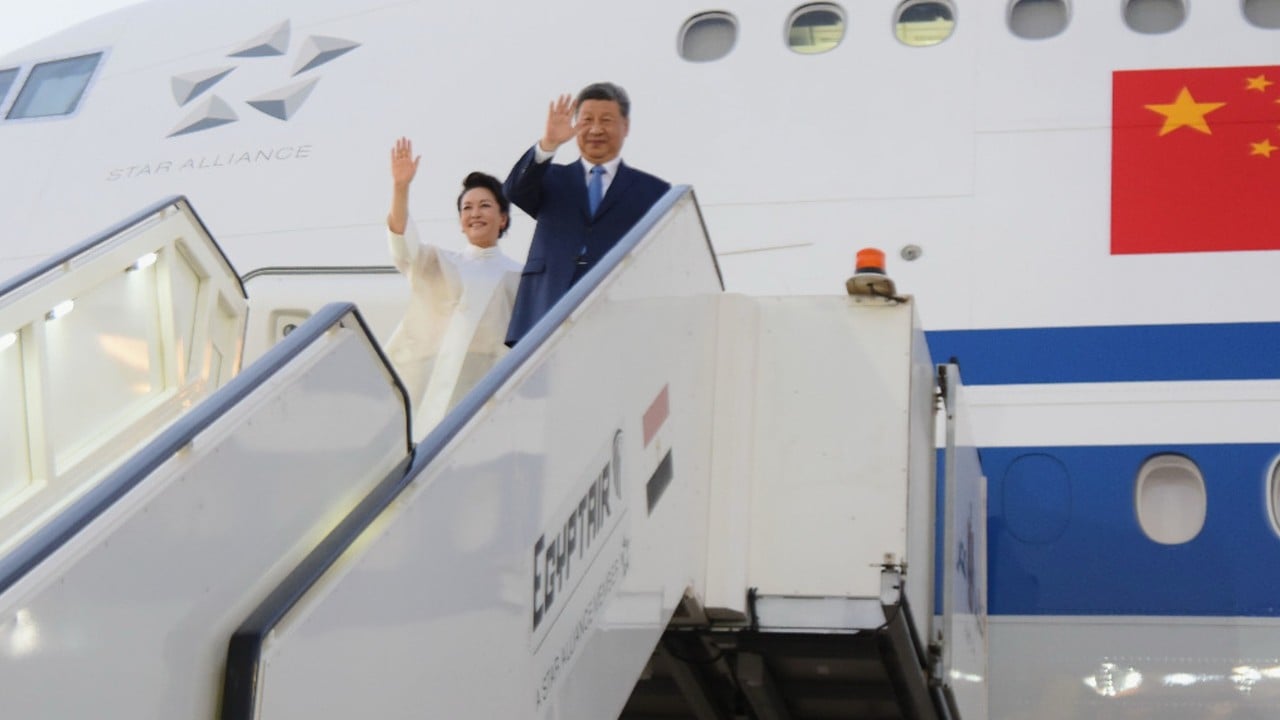
Geopolitical positioning operates on a simple transactional equilibrium: state actors maximize structural leverage by diversifying alliances before entering high-stakes bilateral negotiations. When sovereign states approach high-level summits under conditions of asymmetric pressure, the weaker or more reactive actor typically concedes baseline positioning. Beijing's pre-summit diplomatic blitz bypassed conventional reactive measures, establishing an offensive posture designed to alter the bargaining calculus of Washington. Analyzing this strategy requires dismantling standard media narratives about charm offensives and examining the underlying mechanics of institutional balancing, supply chain dominance, and multilateral coalition assembly.
The Three Vectors of Pre-Summit Positioning
Statecraft executed prior to major leadership summits functions as an exercise in pre-negotiation anchoring. Beijing deployed three distinct operational vectors to maximize its utility function ahead of talks with the United States:
- Multilateral Coalition Diversification: By rolling out high-level engagements for European, Asian, and Latin American officials concurrently, Beijing altered the opportunity cost for middle-power states considering alignment with Washington’s trade restrictions.
- Supply Chain Interlocking: Leveraging absolute dominance in critical material processing, particularly green technology supply chains, ensured that counterparties faced prohibitive substitution costs.
- Hemispheric Intrusion: Engaging regional actors within the Western Hemisphere created direct friction for United States foreign policy objectives, forcing Washington to divide its diplomatic bandwidth between domestic priorities and regional leakage.
These vectors operate not as isolated public relations efforts, but as structural hedges. Each bilateral agreement signed in the months preceding a summit raises the baseline floor of the host country's international standing, ensuring that negotiations proceed from a position of diversified risk rather than isolated dependency.
The Cost Function of Bilateral Confrontation
To understand why a diplomatic blitz yields measurable geopolitical returns, one must examine the cost function of modern great-power competition. Direct economic decoupling introduces systemic friction across financial markets, raw material acquisition, and technological development.
When transaction costs rise due to tariff escalation and export controls, both economies absorb structural damage, but the distribution of that pain varies according to domestic economic elasticity. Beijing utilized its pre-summit window to demonstrate that its export markets and diplomatic networks could absorb localized shocks by pivoting toward the Global South. This variable directly influences the risk assessment of opposing negotiators. If an adversary calculates that a breakdown in talks will trigger synchronized diplomatic pushback across multiple continents, their willingness to sustain aggressive trade postures diminishes.
The mechanism relies on asymmetric vulnerability. Washington’s strategy traditionally depends on maintaining a unified front among allied industrial democracies. By cultivating alternative diplomatic corridors and offering targeted economic access, Beijing systematically lowers the cohesion of that unified front, introducing arbitrage opportunities for third-party states.
Asymmetric Information and Signaling Protocols
High-level summits are fundamentally signaling environments. The public pageantry of state visits—state dinners, honor guards, and protocol displays—serves as a physical manifestation of relative political stability.
When domestic leadership faces internal economic restructuring or external pressure, external diplomatic validation acts as a signal to domestic and international markets. The timing of Beijing's diplomatic engagements projected absolute internal control at a moment when foreign media outlets speculated on vulnerability. This dynamic upends the traditional signaling model where the challenger state must prove its reliability; instead, the host state institutionalizes its centrality by positioning itself as the indispensable hub of international trade logistics.
Furthermore, the integration of third-party regional actors into bilateral friction points alters the bargaining set. When Latin American or European delegations transit through Beijing ahead of a superpower summit, they validate an alternative institutional architecture centered around multilateral trade frameworks managed outside Washington's direct oversight.
Strategic Execution and Counter-Measures
Evaluating the long-term utility of a diplomatic blitz requires tracking the conversion rate of ceremonial agreements into binding institutional commitments. Treaties signed during periods of high-intensity diplomatic activity often suffer from implementation drift. The true metric of success is not the volume of communiqués issued, but the degree to which competitor maneuver space is constrained during the subsequent bilateral summit.
Future strategic positioning for any state navigating this environment requires moving past reactive crisis management. Analysts and policy architects must map the precise elasticity of critical supply chains, identify middle-power states vulnerable to diplomatic arbitrage, and construct defensive economic architectures that insulate domestic markets from multi-vector coalition pressure before negotiations commence.


