Creative output is routinely miscategorized as an erratic function of innate genius, divorced from operational discipline. When analyzing high-yield creators, casual observers rely on romanticized narratives of sudden inspiration. This approach fails to explain sustained productivity. To understand how prolific writers generate mass output, one must analyze creative production through a structured framework of throughput capacity, cognitive resource allocation, and workflow standardization.
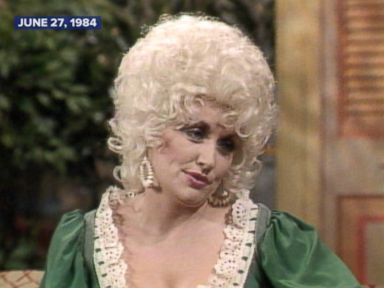
The mechanics of commercial songwriting, exemplified by historical production models such as those articulated by Dolly Parton during her mid-1980s career peak, reveal a rigorous industrial process hidden beneath a folksy persona. Creativity at scale operates not as a random atmospheric occurrence, but as a predictable response to strict behavioral inputs.
The Tripartite Framework of High-Yield Composition
A sustained creative output requires three distinct operational pillars: continuous raw material capture, strict temporal isolation, and low-friction translation mechanisms. Without this infrastructure, creative potential degrades through cognitive friction and the decay of fleeting ideas.
The Input Capture Pipeline
Professional creators do not wait for complete concepts to materialize; they capture discrete fragments of language, rhythm, and emotion in real time. This functions as an inventory management system.
- The Fragment Ledger: Capturing lines, linguistic quirks, and emotional triggers immediately prevents memory decay.
- The Environmental Trigger: Utilizing external stimuli—such as rhythmic physical movement or immediate surroundings—to anchor an abstract melody to a concrete baseline.
- The Storage Protocol: Depositing raw components into accessible repositories for later assembly, separating the collection phase from the editing phase.
Separating idea generation from structural assembly removes the paralysis of the blank page. When writers sit down to compose, they draw from a pre-compiled inventory rather than attempting to manufacture inspiration under pressure.
Temporal and Spatial Isolation
Productive output requires a low-latency environment free from operational interruptions. High-volume writers typically enforce strict isolation boundaries. For instance, early-morning isolation periods exploit pre-distraction cognitive windows before external administrative demands compromise focus.
The economics of attention dictate that context switching destroys creative momentum. By establishing a fixed operational zone, creators lower the energy activation threshold required to begin work. The workspace functions as a physical cue that triggers established behavioral patterns, reducing decision fatigue.
The Translation Mechanism
Ideas must move from conceptual abstractions to fixed media with minimal friction. Delays in translation introduce self-doubt and structural editing too early in the cycle.
When instruments or physical percussion substitutes—such as rhythmic tapping or localized vocal recording—are immediately available, the conversion rate from thought to prototype approaches efficiency. The primary constraint on creative output is rarely a lack of quality ideas; it is the friction inherent in preserving them before they dissipate.
The Economics of Creative Volatility
Creative industries often treat output variance as an uncontrollable variable. Economic analysis of high-performing artists, however, demonstrates that volume is a direct function of trial frequency.
[Raw Cognitive Input] --> [High-Frequency Capture] --> [Standardized Filtering] --> [Commercial Output]
The probability of producing a culturally resonant asset increases linearly with the total volume of attempts. Prolific creators accept a high failure rate as a necessary overhead cost. Amateur creators stall because they subject every raw component to premature quality control, effectively starving the pipeline before volume can work in their favor.
The Cost Function of Over-Editing
When creators adhere strictly to rigid external templates—such as mandated verse-chorus-verse structures dictated by commercial gatekeepers—they often compromise narrative integrity.
- Structural Bottlenecks: Forcing complex narrative arcs into compressed formatting creates logical gaps in storytelling.
- Creative Alienation: Conforming to external stylistic demands increases psychological friction, leading to burnout and reduced output frequency.
- The Custom Metric: Sustainable longevity requires matching the structural form of the work to its internal logic rather than market averages.
By bypassing conventional formulas in favor of long-form narrative framing, prolific writers maintain high throughput because the form serves the content rather than restricting it.
Operationalizing the Creative Process
To replicate high-volume creative output in any professional domain, organizations and individuals must transition away from inspirational dependence toward procedural routines.
First, establish mandatory capture habits. Treat unrecorded thoughts as lost capital. Second, decouple generation from curation. Allow raw output to accumulate without immediate judgment. Third, optimize the transition speed between conceptualization and prototyping.
The disparity between average performers and elite producers is not found in an elusive spark of genius. It is located in the systematic elimination of friction across the entire production lifecycle. By treating creativity as an operational pipeline rather than an emotional state, output ceases to be a gamble and becomes a predictable asset of sustained performance.
To maximize output efficiency, conduct a daily audit of your own friction points: identify where ideas are lost between conception and capture, eliminate early-stage critical filtering, and institutionalize isolated focus blocks as non-negotiable overhead.


