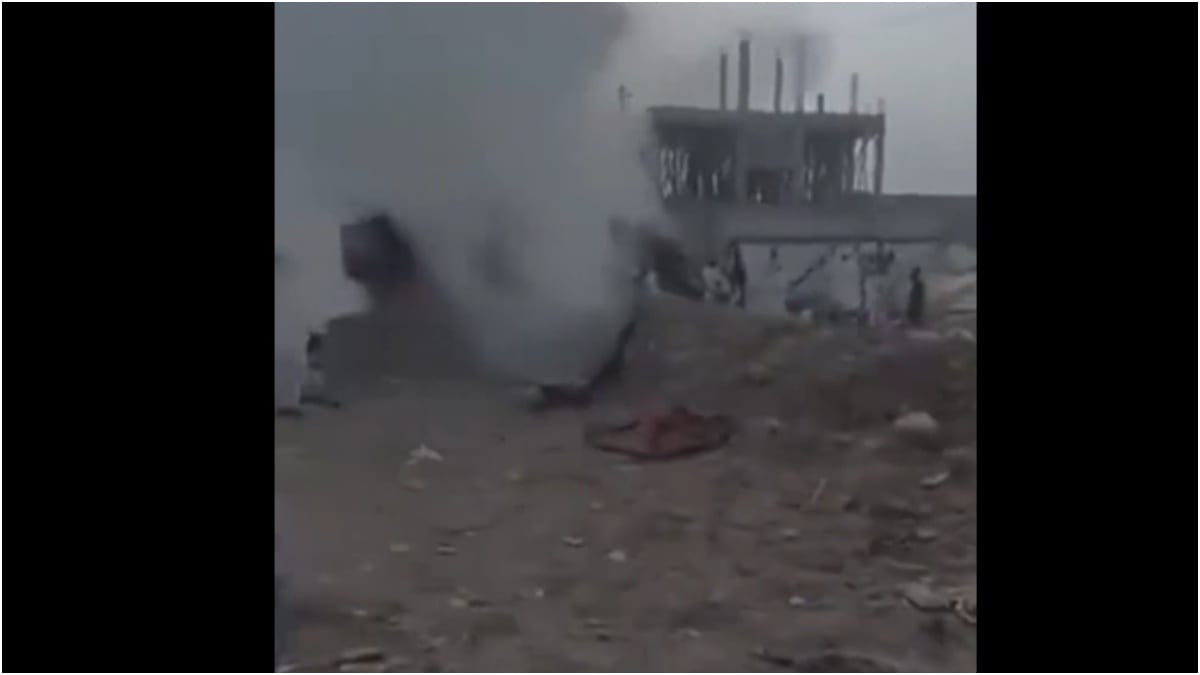
The detonation of an improvised explosive device resulting in thirteen fatalities in northwest Pakistan represents a recurring systemic failure in regional security architecture. Conventional reporting treats such incidents as isolated security anomalies or temporary breakdowns in law and order. This framing obscures the underlying tactical patterns, structural vulnerabilities, and strategic incentives that drive sustained insurgent violence in the border regions. Deconstructing the mechanics of this attack requires an examination of the operational environment, the cost-benefit calculus of non-state armed groups, and the structural limitations of state counter-terrorism frameworks.
The Operational Environment of the Border Zone
Northwest Pakistan, specifically the districts adjacent to the Afghan border, presents a distinct geographic and administrative landscape that conditions security outcomes. The terrain is characterized by rugged topography, porous borders, and dispersed settlements. These physical realities create structural advantages for insurgent networks and severe friction for state security forces.
+-------------------------------------------------------+
|             Geographic & Administrative               |
|      (Rugged Topography + Porous Border + Enclaves)   |
+-------------------------------------------------------+
                           |
                           v
+-------------------------------------------------------+
|                 Operational Friction                  |
|   (High Surveillance Costs + Slow Response Times)     |
+-------------------------------------------------------+
                           |
                           v
+-------------------------------------------------------+
|             Insurgent Exploit Vector                  |
|     (Asymmetric Mobility + Safe Haven Access)         |
+-------------------------------------------------------+
The logistical challenge of projecting state power into remote districts limits the density of permanent security infrastructure. Intelligence collection in these environments relies heavily on human networks that face high attrition rates due to intimidation and targeted assassinations by militant factions. Consequently, state forces frequently operate from a reactive posture, relying on kinetic interventions rather than continuous, preemptive deterrence.
This spatial friction allows non-state actors to maintain sanctuaries, manage supply lines, and execute asymmetric operations with minimal risk of immediate conventional retaliation. The thirteen casualties resulting from the recent blast highlight the vulnerability of civilian and law enforcement nodes situated within these contested corridors.
The Economic and Tactical Calculus of Improvised Explosive Devices
From a resource-allocation perspective, the deployment of an improvised explosive device remains a highly cost-effective instrument for insurgent groups seeking to achieve strategic disruption. Understanding why this tactic persists requires analyzing the inputs and outputs associated with bomb-making networks.
- Low Capital Threshold: Unlike conventional armaments, which require complex procurement channels and state-level supply chains, IED components rely on dual-use materials such as commercial fertilizers, readily available chemical precursors, and repurposed electronics.
- Asymmetric Force Multiplier: A single explosive device requires minimal personnel to deploy yet generates disproportionate psychological, economic, and political impact. It forces the state to expend vast resources on hardening infrastructure, conducting forensic investigations, and managing casualties.
- Denial of Intelligence: By utilizing remote-detonation mechanisms or suicide delivery methods, perpetrators minimize their exposure time at the target site, reducing the likelihood of immediate capture or tactical intelligence exploitation by responding forces.
The attack mechanics in northwest Pakistan typically involve local cells receiving logistical support or ideological direction from regional commands. These cells exploit civilian density in markets, checkpoints, or transit nodes to maximize casualties, thereby generating maximum media visibility and undermining public confidence in state protection mechanisms.
The Strategic Intent: Signaling and State Attrition
Violence of this magnitude is rarely tactical in isolation; it functions as a signaling mechanism directed at multiple audiences: the state apparatus, local populations, and rival factions.
The primary objective is the systematic erosion of state legitimacy. When security forces prove unable to preempt high-casualty attacks within populated zones, the social contract between the citizen and the state fractures. Local populations, recognizing the state's inability to guarantee physical security, frequently adopt survival strategies that involve accommodation with local power brokers or insurgent elements. This behavioral shift compounds the intelligence deficit faced by state authorities, as civilian informants become increasingly reluctant to cooperate.
Simultaneously, these operations serve an organizational function for fragmented militant networks. High-profile attacks facilitate recruitment, demonstrate operational viability to external financiers or ideological allies, and disrupt ongoing counter-insurgency operations by forcing regional commanders to redeploy forces from offensive sweeps to defensive posture patrols.
Structural Bottlenecks in Counter-Terrorism Operations
Efforts to mitigate insurgent violence in northwest Pakistan face persistent structural bottlenecks that limit the efficacy of state interventions.
First, intelligence-to-action cycles often suffer from jurisdictional friction between federal intelligence agencies, provincial police forces, and military units. Effective counter-terrorism requires real-time information sharing and seamless inter-agency coordination. When bureaucratic silos or doctrinal differences impede the fusion of tactical intelligence with rapid kinetic response, windows of opportunity to disrupt active plots close.
Second, kinetic operations alone cannot alter the underlying conditions that sustain insurgent recruitment. While military operations clear contested territories, the failure to establish durable governance, judicial infrastructure, and economic opportunity creates a vacuum. Historically, areas cleared by security forces experience insurgent re-infiltration once conventional units rotate out to address crises in other sectors.
Third, border management remains an ongoing technical and administrative challenge. Despite the fencing and biometric monitoring systems implemented along portions of the international boundary, transnational movement of personnel and material continues through rugged mountain passes and corruptible transit points. Closing these gaps requires sophisticated surveillance integration and bilateral cooperation that remains vulnerable to geopolitical friction between neighboring states.
Strategic Outlook and Long-Term Trajectory
Mitigating the frequency and lethality of attacks in northwest Pakistan requires moving beyond episodic security crackdowns toward an integrated operational framework.
State authorities must prioritize the professionalization and resourcing of provincial law enforcement to serve as the primary permanent security presence, allowing elite military units to focus on high-value targeting and border interdiction. Intelligence architectures must transition from retrospective forensic analysis to predictive threat modeling, leveraging signals intelligence and community-level source networks protected by robust witness security protocols.
Without structural reforms that address local governance deficits and enhance the friction coefficients for insurgent logistics, asymmetric violence will remain a persistent baseline characteristic of the regional security environment. The thirteen casualties are symptomatic of an ongoing structural contest where the cost of defense structurally exceeds the cost of disruption.