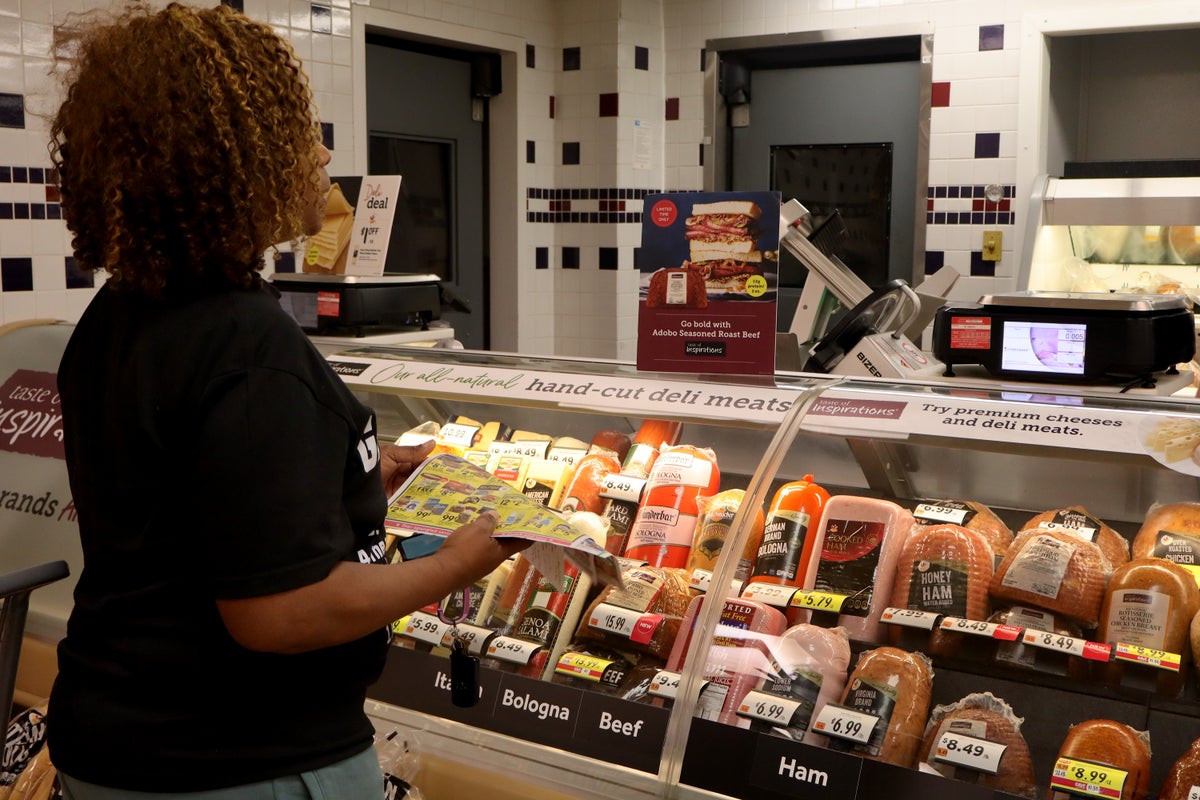
When structural input costs cascade through domestic supply chains, consumer behavior shifts from discretionary optimization to defensive resource allocation. The fifty-year high in grocery price acceleration forces a fundamental restructuring of household expenditure functions. Households do not merely spend less; they re-engineer acquisition channels, unit economics, and inventory holding strategies to absorb sustained margin pressure from upstream producers and retailers.
The Tripartite Framework of Consumer Adaptation
Households experiencing acute grocery price inflation deploy three distinct operational mechanisms to protect purchasing power. Each mechanism targets a different layer of the retail cost structure.
Channel Migration and Arbitrage
The primary vector of adjustment involves moving volume away from high-overhead convenience formats toward low-cost distribution channels. Consumers trade convenience for unit cost reduction by shifting purchases from neighborhood grocers to deep discounters, club stores, and digital direct-to-consumer models. This transition exploits structural differences in retail operating margins. Deep discounters maintain lower stock-keeping unit counts and higher inventory turnover, passing those operational efficiencies downstream.
Arbitrage extends beyond store formats to temporal and spatial dimensions. Shoppers increase search frequency across multiple retail banners, utilizing digital aggregation tools to identify promotional anomalies. This behavior breaks the traditional store loyalty loop, turning the weekly grocery trip into a multi-stop logistical exercise. The time cost invested in multi-channel shopping represents an implicit labor substitution, where the consumer trades personal time to capture retail margin differentials.
Compositional Downshifting
When channel arbitrage proves insufficient to neutralize inflationary velocity, households alter the composition of their purchasing baskets. Compositional downshifting manifests through substitution patterns across three tiers:
- Brand Substitution: Migration from national brands to private label or store-brand equivalents. Retailers capture higher margins on private labels, allowing them to price these items more aggressively during inflationary cycles.
- Protein Downshifting: Substitution among protein sources based on relative cost per gram of usable macronutrient. High-cost inputs such as beef experience volume contractions as consumers substitute toward poultry, pork, or plant-based proteins.
- Processing Level Reduction: Moving from convenience-oriented, highly processed goods to raw ingredients. Highly processed foods embed labor, packaging, and energy costs that amplify raw commodity price shocks. Purchasing whole commodities shifts the processing labor back to the household.
Inventory Holding and Bulk Rationalization
The secondary effect of price volatility is the alteration of household inventory holding patterns. Households with available liquid capital engage in strategic stockpiling of non-perishable staples during promotional cycles. This behavior mirrors corporate working capital management, hedging against future price increases by accelerating cash outflows today. Conversely, liquidity-constrained households reduce batch sizes to match immediate cash flow availability, abandoning bulk economies of scale because the absolute price hurdle of larger units exceeds available working capital.
The Retailer Response Loop
Retail pricing mechanics respond to consumer adaptation through dynamic margin management. Grocers protect profitability by shifting price increases across categories based on consumer price elasticity.
Elastic categories, such as snack foods and non-essential beverages, absorb the brunt of nominal price hikes because consumers easily abandon them. Inelastic categories, such as basic dairy, staples, and foundational produce, absorb smaller percentage increases relative to wholesale cost spikes to prevent catastrophic basket abandonment. Retailers subsidize staple margins by extracting higher margins on discretionary items.
Private label penetration rates serve as a direct indicator of margin compression severity. As national brand manufacturers pass raw material and labor cost increases onto retailers, retail buyers compress manufacturer margins or expand their own private label offerings. This dynamic restructures shelf space allocation permanently. Once a household identifies a private label alternative that meets quality thresholds, the probability of returning to the national brand post-inflation drops significantly, permanently altering manufacturer market share.
The Cost Function of Household Procurement
To model the true impact of grocery inflation, economists must look beyond the Consumer Price Index for food at home. The true cost function of household procurement incorporates transaction costs, transportation expenditure, and cognitive load.
$$\text{Total Procurement Cost} = \text{Nominal Basket Price} + \text{Transportation Overhead} + \text{Search Labor} + \text{Spoilage Risk}$$
When nominal prices spike, households increase search labor and transportation overhead by visiting multiple stores. If the marginal savings from multi-stop shopping are smaller than the incremental fuel cost and value of time, the adaptation strategy becomes economically inefficient. Rational actors optimize within this constraint by leveraging digital inventory checking before physical transit, minimizing wasted search expenditure.
Spoilage risk introduces another friction. Bulk purchasing strategies designed to beat unit price inflation increase inventory holding periods at home. If improper storage leads to food waste, the economic gain of the initial discount evaporates, shifting the net cost per consumed unit upward.
Operationalizing Household Resilience
Navigating sustained grocery price inflation requires a systematic operational audit of household consumption. The objective is to decouple nutritional intake from raw retail price volatility through systematic substitution and inventory discipline.
Procurement Redesign
- Audit the previous three months of grocery receipts to isolate inelastic baseline consumption from discretionary impulse purchases.
- Establish a direct relationship with localized distribution alternatives, including farmers' markets, ethnic grocers, and wholesale clubs, bypassing conventional supermarket markups.
- Monitor unit pricing metrics (cost per ounce, cost per gram of protein) rather than absolute package prices to eliminate manufacturer down-sizing deception, commonly known as shrinkflation.
Inventory Control
- Transition from reactive, event-driven shopping to perpetual inventory management based on consumption velocity.
- Execute forward-buying protocols exclusively on shelf-stable commodities that show historical price floors during seasonal promotional cycles.
- Institute rigorous meal planning aligned with active retail circular rotations, synchronizing weekly menus with active promotional loss leaders.
Strategic Forecast
Consumer adaptation to structural grocery inflation will permanently institutionalize hybrid procurement models. The erosion of brand loyalty will force consumer packaged goods manufacturers to compress margins and increase promotional depth to maintain volume velocity. Retailers will continue to expand private label architecture, transforming supermarkets from distribution nodes for third-party brands into vertically integrated brand ecosystems. Households that successfully systematize cross-channel arbitrage and composition downshifting will structurally permanently lower their baseline cost of living, while those relying on legacy shopping habits will face ongoing margin erosion.