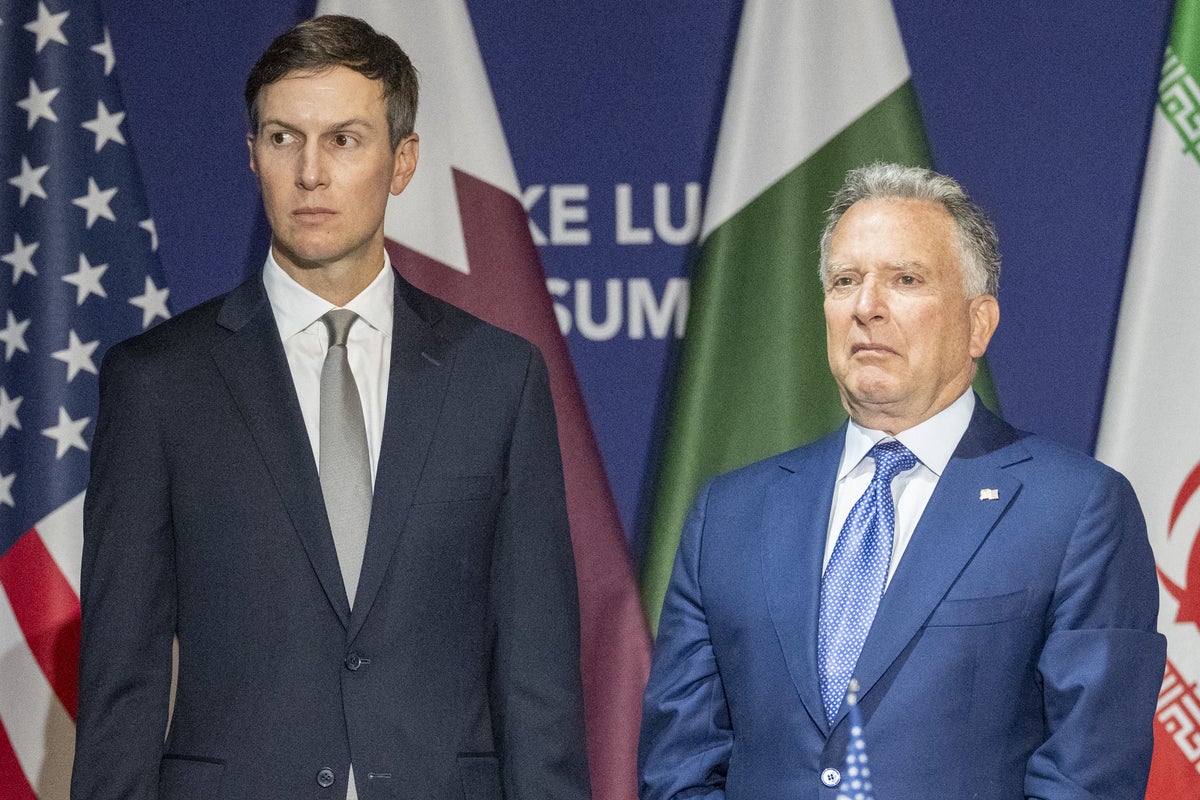
Diplomatic friction between Washington and Moscow rarely resolves through sudden convergence; instead, it operates through managed friction, signaling thresholds, and strategic positioning. When Kremlin officials issue direct warnings to the incoming or current American administration regarding bilateral peace architecture, the underlying mechanics involve a calculus of deterrence, asymmetric escalation dominance, and domestic political signalling. US envoys engaging direct channels in Moscow are not merely negotiating territory or ceasefires; they are testing the elasticity of red lines defined by materiel supply chains, economic resilience, and elite cohesion.
Understanding this dynamic requires abandoning conventional media narratives that reduce geopolitical friction to personal posturing or isolated diplomatic gaffes. By deconstructing the structural variables governing the current negotiation posture, we can map the exact friction points between US diplomatic initiatives and Russian strategic objectives. If you enjoyed this post, you might want to look at: this related article.
The Dual-Track Dilemma of US Diplomatic Engagement
The deployment of American diplomatic personnel to Moscow introduces an immediate structural paradox: direct bilateral communication signals intent to de-escalate or explore settlement terms, yet it simultaneously threatens to marginalize allied coalition cohesion, specifically among European partners whose security architecture is directly impacted. This dual-track reality creates distinct operational consequences.
First, bilateral talks elevate the perception of a great-power condominium, where Washington and Moscow negotiate parameters above the heads of regional actors. This generates acute anxiety in frontline European capitals, forcing diplomatic countermeasures that can inadvertently complicate the US negotiating envelope. For another perspective on this event, see the recent coverage from NPR.
Second, the divergence between public rhetoric and private diplomatic messaging creates a high-entropy environment. Kremlin officials issue public warnings not necessarily to foreclose dialogue, but to anchor the negotiation baseline as far to their advantage as possible. In bargaining theory, this is known as establishing an extreme anchor point to narrow the eventual convergence zone toward the maximum possible extraction of concessions.
The mechanics of this signaling rely on three core variables:
- Materiel Depletion Rates: The rate at which frontline equipment is consumed relative to industrial replenishment capacity.
- Fiscal Runway: The sustainability of state budgets under ongoing sanctions and wartime expenditure multipliers.
- Escalation Thresholds: The explicit and implicit boundaries governing weapon systems, targeting parameters, and economic warfare.
When US envoys enter this matrix, their primary analytical objective is to determine whether the adversary’s stated red lines are absolute constraints or flexible pricing thresholds.
The Cost Function of Protracted Attrition
To evaluate why negotiations stall or accelerate, one must examine the underlying cost functions driving both state actors. War of attrition is fundamentally an economic and demographic equation where political will acts as a multiplier.
The Russian federal budget has undergone a structural pivot toward defense industrial output. This mobilization generates short-term GDP stabilization through state-directed capital injection, but it exacts a severe long-term toll on civilian productivity, technological modernization, and demographic stability. The marginal cost of capturing additional territory increases non-linearly, driven by defensive fortification density and the expenditure required to suppress modern counter-battery and drone-saturated combat zones.
Conversely, the Western coalition supporting Ukraine faces a different cost function: fiscal fatigue, legislative friction regarding multi-year appropriations, and the gradual depletion of specialized stockpiles such as air defense interceptors and precision artillery shells. The political cost for Western leaders is tied to inflation, energy price volatility, and opportunity costs associated with domestic spending priorities.
When these two cost functions intersect, the pressure to initiate diplomatic channels peaks. However, the timing of these channels reveals strategic intent. If one party perceives that the other's cost function is nearing an inflection point of critical failure, the incentive to negotiate drops precipitously in favor of pursuing absolute military advantage. Conversely, if both sides face unsustainable marginal costs, the negotiation space opens, characterized by intense posturing to establish favorable terms for a protracted freeze or settlement.
Asymmetric Signaling and Diplomatic Positioning
Public warnings directed at high-ranking foreign officials serve distinct operational functions within authoritarian or highly centralized decision-making structures. They bypass normal diplomatic channels to deliver a direct deterrent message to the opponent's domestic political constituency.
When a senior Putin administration official issues a warning regarding US peace proposals, the statement is calibrated to achieve three specific structural outcomes:
- Undermining Coalition Cohesion: By framing US proposals as unviable or dangerous, Moscow attempts to drive a wedge between Washington's stated goals and European security fears.
- Pre-empting Pre-conditions: Establishing non-negotiable baselines regarding territorial control, demilitarization parameters, or sanctions relief before formal bargaining tables are constructed.
- Signaling Resolve to Domestic Audiences: Reinforcing the narrative of an existential struggle against external coercion, thereby hardening domestic tolerance for prolonged economic and human sacrifice.
The efficacy of these signals depends entirely on credibility. Credibility, in turn, is a function of demonstrated resolve and resource capacity. If Western sanctions enforcement leaks or military production targets fall short, the credibility of Western negotiating posture degrades, forcing diplomatic envoys to offer greater concessions to secure engagement.
Strategic Operational Trajectory
The ongoing diplomatic maneuvers between Washington and Moscow do not signal an immediate cessation of hostilities. Instead, they represent the preliminary probing phase of a protracted structural contest.
The immediate operational play for any state actor or enterprise navigating this volatile macro environment is to decouple planning from optimistic diplomatic timelines. Organizations must price in prolonged structural instability, persistent sanctions friction, and elevated commodity volatility. The trajectory points away from a clean, legally binding peace treaty and toward a heavily contested, militarized demarcation line accompanied by enduring economic fragmentation. Strategic resilience requires treating this baseline not as a temporary disruption, but as the operating system of the current geopolitical era.


