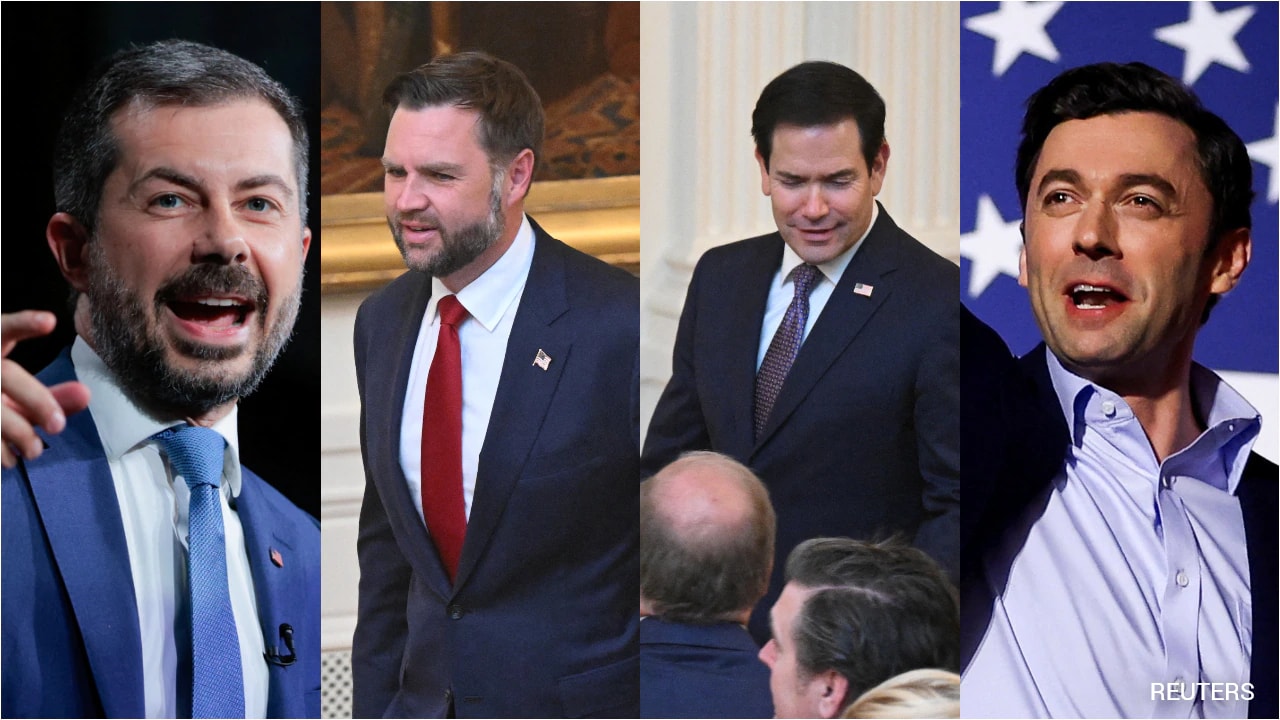
Early presidential handicapping operates as an exercise in measuring political capital before the rules of engagement are even fixed. With the midterms concluded, the architecture of the 2028 primary cycle is taking shape across both major parties, governed less by platform orthodoxy and more by structural positioning, resource access, and institutional friction. Evaluating potential contenders requires stripping away speculative media narratives and examining the core variables that determine nomination viability.
The Incumbent Party Equation: Managing the Suture
For the governing party, primary dynamics are dictated by the challenge of continuity versus course correction. Vice President J.D. Vance enters the early 2028 landscape positioned as the baseline standard-bearer for the existing nationalist-populist framework, backed by primary electorate affinity. However, the cost function of holding this lane involves absorbing retrospective evaluations of executive performance over the preceding four years.
Contenders operating outside the direct orbit of the current administration, such as Secretary of State Marco Rubio or governors navigating distinct legislative victories, must solve a different strategic puzzle. They must capture the energy of the base without triggering a direct factional rupture. Rubio's national security portfolio provides a distinct institutional platform, but executive positioning requires a domestic economic narrative that addresses voter cost-of-living pressures—a variable that consistently outweighs foreign policy alignment in primary decision-making.
The primary battleground within the governing coalition hinges on ideological purity versus electoral pragmatism. Candidates attempting to bridge these factions face diminishing returns if they fail to project decisive leadership on domestic supply chains, immigration enforcement, and fiscal discipline.
The Opposition Field: Fragmentation and the Search for a Unified Alternative
The opposition party faces an inverse structural constraint: an overcrowded field with distinct regional and ideological lanes, creating high risks of vote-splitting. The early polling indicators highlight several distinct archetypes vying for dominance.
Legislative figures such as Senator Jon Ossoff of Georgia and Representative Alexandria Ocasio-Cortez represent contrasting poles of generational appeal and ideological mobilization. Ossoff occupies a southern moderate-to-pragmatic lane, drawing frequent comparisons to past coalition builders through his ability to mobilize suburban and diverse demographics in a swing state context. His primary constraint is legislative tenure and the absence of statewide executive administrative experience—a traditional resume prerequisite for executive office. Conversely, Ocasio-Cortez anchors the progressive apparatus, wielding high national visibility and a dedicated donor network, though carrying the structural headwind of party skepticism regarding general election viability across suburban battlegrounds.
Executive experience serves as the primary currency for governors like Andy Beshear of Kentucky and Gavin Newsom of California. Beshear demonstrates viability in cross-pressured environments by decoupling executive competency from national partisan polarization. Newsom commands a massive media ecosystem and a progressive legislative laboratory, yet he must navigate the vulnerabilities associated with high-tax, high-regulation state governance metrics when appealing to rustbelt and sunbelt swing voters.
Resource Allocation and Primary Calendar Mechanics
The operational reality of the 2028 nomination cycle will be dictated by early-state logistics and debate formats. With structured primary debates scheduled to begin well in advance of the traditional calendar, candidate survival functions depend on three immediate metrics:
- Liquidity Velocity: The rate at which a campaign can convert small-dollar digital networks and major donor PAC commitments into paid media infrastructure before the first official contests.
- Organizational Depth: The early establishment of precinct-level ground operations in non-traditional primary states that have gained calendar prominence.
- Media Friction Management: The ability to bypass traditional gatekeepers through targeted digital ecosystems while avoiding narrative traps set by opposing factional PACs.
Strategic Forecast
The 2028 primary will not be decided by ideological consensus, but by institutional adaptability. Candidates who rely purely on legacy national name recognition without an updated economic populist message will experience high structural decay. The nominee in both parties will be the operational actor who successfully weaponizes institutional friction—converting systemic voter dissatisfaction into a disciplined, state-by-state organizational advantage.