Criminal defense strategy in high-profile violent crime cases operates under severe information asymmetry, resource constraints, and procedural rigidity. When an attorney announces an initial plea of not guilty following a homicide at a California public park, the public narrative typically focuses on moral outrage or speculative motives. However, a rigorous structural analysis reveals that this procedural milestone marks the beginning of an evidence-processing pipeline governed by strict evidentiary rules, statutory timelines, and forensic validation protocols. Deconstructing this event requires an examination of the legal mechanics, investigative variables, and systemic pressures that dictate the trajectory of a homicide defense.
The Evidentiary Bottleneck of Public Venue Incidents
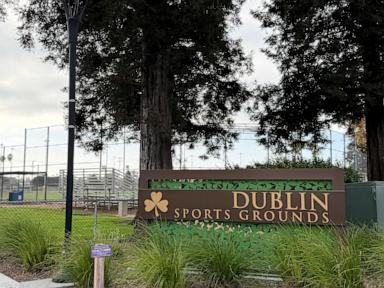
Crimes occurring in public parks present a distinct evidentiary profile compared to private residences. The absence of controlled access points and the presence of environmental variables create severe data collection challenges for both prosecution and defense.
The primary investigative vectors in a public park homicide include:
- Closed-circuit television (CCTV) or municipal surveillance footage with varying resolution and focal coverage.
- Transient witness testimony, which degrades in reliability proportional to the elapsed time between the event and the interview.
- Environmental DNA and latent fingerprint recovery, heavily subject to degradation by weather, foot traffic, and public sanitation.
When defense counsel enters a not-guilty plea at the arraignment phase, it is rarely an assertion of absolute factual innocence at that exact moment. Rather, it is a structural necessity
Legal Strategy Under Pressure Analyzing The Mechanics Of Criminal Defense Plea Architecture
news
Criminal defense strategy during high-stakes arraignment phases operates under a strict set of procedural and psychological constraints. When an individual faces homicide charges, particularly within complex domestic or situational contexts, the immediate deployment of a not-guilty plea functions as a foundational legal baseline rather than a definitive assertion of innocence. This mechanical maneuver preserves constitutional protections, initiates the formal discovery process, and establishes negotiating leverage for subsequent pre-trial motions.
The primary objective in early-stage criminal defense is the stabilization of the evidentiary record. In high-profile violent incidents occurring in public or semi-public venues such as municipal parks, initial public perception is frequently shaped by fragmented witness accounts and rapid police summaries. Legal representation must counteract this early narrative asymmetry by securing control over physical evidence, electronic communications, and independent forensic reviews before memories degrade or digital footprints are overwritten.
The Mechanics of Initial Pleas and Discovery Architecture
Entering a plea of not guilty at an arraignment is a mandatory procedural step. It does not foreclose future case resolutions, including negotiated pleas or affirmative defenses, but it immediately activates the prosecution's legal obligation under discovery rules to disclose all exculpatory and inculpatory evidence.
The structural components of this phase involve three distinct operational tracks:
- Evidentiary Preservation: Securing video footage from municipal cameras, park surveillance systems, and civilian mobile devices. In park-related incidents, spatial layouts often dictate line-of-sight arguments, making topographical surveys critical.
- Witness Credibility Mapping: Identifying civilian bystanders whose baseline biases, vantage points, and temporal accuracy must be cross-referenced against initial police interview transcripts.
- Forensic Trajectory Analysis: Evaluating physical evidence, ballistics, or close-quarters struggle dynamics through independent experts to establish objective constraints on competing narratives.
When a defendant is an older family member involved in a lethal altercation with a younger relative, the narrative typically shifts toward dynamics of perceived threat, physical disparity, or sudden escalation. The legal defense cannot rely solely on the subjective emotional state of the defendant; it must anchor itself in objective physical parameters.
Evaluating Proportionality and Self-Defense Frameworks
Under statutory self-defense doctrines, the justification for lethal force relies on the presence of an imminent threat of death or great bodily harm. In cases involving family disputes within public spaces, the analysis requires a strict breakdown of operational variables:
- Capability: The physical capacity of the aggressor versus the defender, factoring in age differentials, health status, and physical sizing.
- Opportunity: The immediate proximity of the aggressor and their ability to inflict severe harm without intervening barriers.
- Jeopardy: The overt act or verifiable manifestation of intent that transforms a verbal argument into a lethal physical confrontation.
The defense must construct a timeline that demonstrates how these three variables converged within a compressed timeframe. Juries and prosecutors often struggle to evaluate the physiological effects of acute stress response, tunnel vision, and auditory exclusion during violent encounters. Expert testimony regarding human performance under duress is frequently deployed to bridge this cognitive gap.
Strategic Discovery Demands and Prosecution Burden
The prosecution carries the ultimate burden of proof beyond a reasonable doubt. However, the early defense strategy focuses heavily on testing the integrity of the state's investigation. Defense counsel typically files specific discovery motions targeting:
- Complete initial dispatch logs and audio recordings of emergency calls to establish the chronological sequence of reporting.
- Raw forensic laboratory notes rather than finalized summary reports, allowing defense experts to identify methodological errors or contamination risks.
- Complete background and disciplinary records of responding law enforcement personnel where procedural adherence is in question.
This rigorous auditing of the state's case file creates the pressure points necessary for effective legal maneuvering. Whether the ultimate resolution involves a trial centering on justification defenses or a mitigated charge negotiation, the leverage is entirely a function of how thoroughly the defense deconstructs the state's initial evidentiary assumptions.
The immediate legal response to severe criminal charges is a calculated exercise in friction. By locking down the procedural baseline, preserving perishable physical data, and refusing to concede narrative ground during the emotional aftermath of an incident, defense counsel establishes the operational framework required to navigate the subsequent phases of litigation.