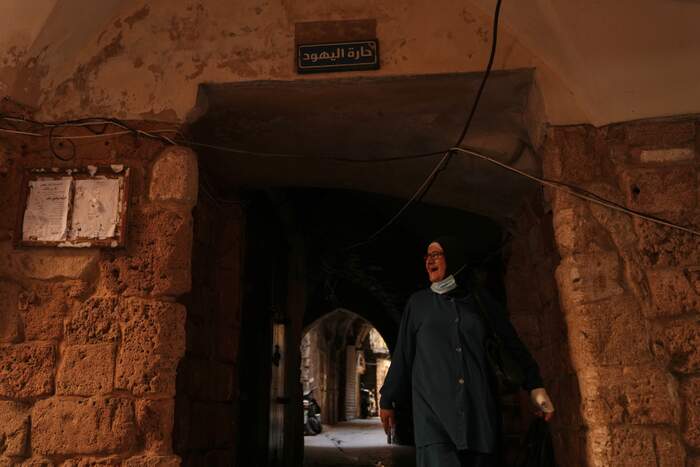
Geopolitical realignment rarely occurs in isolation from the demographic residues it uncovers. When formal diplomatic agreements alter administrative borders or security frameworks between sovereign states, they frequently act as diagnostic tools for long-dormant population dynamics. The intersection of modern statecraft and historical migration patterns reveals a consistent structural phenomenon: minority communities caught in the crossfire of regional conflict either undergo forced homogenization or persist as isolated enclaves sustained by specific socioeconomic survival strategies. Deconstructing the mechanics of how these communities endure requires analyzing the institutional pressures, transmission vectors of cultural memory, and economic dependencies that allow micro-populations to survive generations of displacement.
The Cost Function of Preservation
Survival for a localized minority group inside a dominant host culture is governed by a strict economic and social cost function. When state infrastructure collapses or shifts during geopolitical crises, minority populations face an immediate friction vector defined by resource allocation, physical security, and legal recognition.
The primary variable in this equation is institutional insulation. Communities that maintain distinct religious, linguistic, or cultural practices without a sovereign home-state sponsor must internalize the cost of preservation. This is achieved through localized economic specialization. By embedding themselves into niche sectors of the regional economy—such as artisanal trade, specialized financial intermediaries, or medical professions—minority groups create transaction-specific dependencies with the broader majority population. This functional utility raises the cost of expulsion or systemic erasure for the host majority.
Conversely, when these economic linkages fray due to conflict or mass migration, the cost function spikes. The community faces a binary outcome: assimilation or structural migration. The historical record of Levantine minority groups demonstrates that physical displacement often fractures the community into a transnational diaspora, where the preservation mechanism shifts from physical proximity to institutionalized remembrance, maintained via religious organizations, family networks, and archival preservation.
Transmission Vectors of Cultural Memory
When physical enclaves dissolve, cultural continuity relies on specialized transmission vectors. Without a territorial base, identity ceases to be reinforced by daily environmental interactions and instead depends on deliberate, ritualized maintenance.
- Domestic Archiving: The domestic sphere transforms into a primary repository for heritage. Material culture—such as culinary traditions, linguistic dialects, and sacred texts—is preserved through intergenerational repetition within the family unit.
- Institutional Standardization: Informal communal memory is eventually codified by religious or secular organizations abroad. These institutions serve as centralized clearinghouses for historical records, oral histories, and genealogical mapping, transforming fragmented memories into structured archives.
- Geographic Anchoring: Even after a population disperses, physical sites of historical significance function as ideological anchors. These locations retain symbolic utility, serving as focal points for diaspora tourism, financial remittances, and political lobbying.
The efficiency of these transmission vectors dictates whether a community achieves long-term survival or undergoes cultural drift within three generations. The primary failure point in cultural transmission is the loss of linguistic competence. Once the native dialect ceases to be the primary medium of household communication, assimilation accelerates exponentially, regardless of institutional preservation efforts.
The Geopolitical Catalyst
Diplomatic treaties and bilateral accords between hostile or rival states inadvertently alter the equilibrium of these micro-populations. When borders harden or diplomatic channels open, administrative oversight changes. This shift exposes previously obscured demographic realities.
For example, infrastructure projects or security arrangements negotiated at the state level often require demographic surveys, property restitution claims, or heritage site management protocols. These bureaucratic mechanisms force state actors to acknowledge populations that existed beneath the threshold of official state reporting.
The mechanism works through administrative visibility. A state engaged in international normalization agreements faces pressure from global bodies, diaspora organizations, and human rights frameworks to account for historical minority property and cultural heritage. This external gaze converts forgotten enclaves into diplomatic leverage points.
Strategic Resource Allocation for Heritage Maintenance
The long-term viability of displaced or marginal communities depends on how effectively they allocate finite resources toward institutional continuity. Organizations operating within these spaces must optimize across three distinct operational constraints:
- Capital Deployment: Prioritizing physical infrastructure (such as places of worship and community centers) over transient cultural programming yields higher long-term retention rates by providing permanent physical nodes for the diaspora.
- Information Architecture: Migrating oral histories and genealogical records into digital repositories ensures accessibility across geographically fragmented populations, bypassing the limitations of centralized physical archives.
- Cross-Border Coalition Building: Establishing formal alliances with larger international NGOs, academic institutions, and human rights networks provides legal and financial buffering against local state overreach.
The persistence of historical communities in the wake of geopolitical restructuring is neither accidental nor purely sentimental. It is the result of disciplined, multi-generational optimization against systemic erasure. The durability of a diaspora is directly proportional to its ability to institutionalize its memory, secure its economic utility, and leverage international administrative frameworks for protection. Future regional realignments will continue to unearth these hidden populations, testing the resilience of their preservation structures against the pressures of modern state consolidation.


