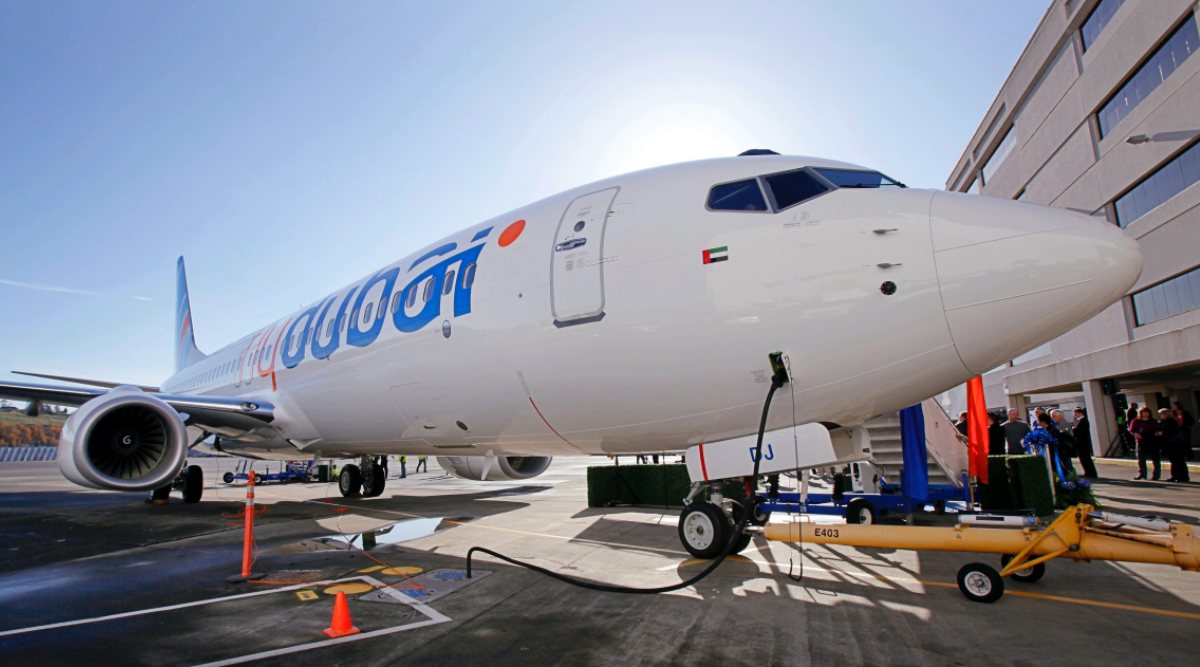
The Economics of High Frequency Route Density
Network density on commercial air corridors is rarely governed by mere passenger demand; it represents a complex equilibrium between slot allocation economics, aircraft asset utilization, and bilateral air service agreements. When an operator establishes high-frequency connectivity—such as scaling operations to ten daily rotations on a short-to-medium-haul corridor—the underlying commercial strategy shifts from simple point-to-point passenger transport to aggressive capacity pre-emption and hub feeder optimization.
Deconstructing a route like Dubai to Tel Aviv requires examining the structural levers that make multi-daily frequencies viable. High-frequency scheduling provides business travelers with schedule optionality, which commands higher yields and offsets the higher unit costs of smaller or medium-body aircraft deployed multiple times daily rather than a single widebody rotation. This operational architecture forces competing carriers to either match frequency or risk losing corporate accounts that depend on same-day return capability.
Slot Constraints and Bilateral Frameworks
The viability of maintaining ten daily flights between two specific airports depends heavily on regulatory and physical infrastructure. Airport slot availability at primary hub airports is a zero-sum game. Securing and maintaining multiple slots across morning, afternoon, and evening banks requires either grandfathered rights, secondary trading, or favorable bilateral aviation treaties that liberalize frequencies.
[Bilateral Open Skies / Treaty]
       │
       ▼
[Slot Availability & Hub Scheduling Banks]
       │
       ▼
[Fleet Rotation & Asset Utilization]
       │
       ▼
[Corporate Yield Capture via Schedule Optionality]
When an airline floods a corridor with capacity, it creates a strategic barrier to entry. Potential competitors face immediate hurdles:
- Slot Saturation: Desirable departure times (e.g., 07:00 and 18:00 windows) are locked down by incumbent scheduling blocks.
- Marginal Cost Reductions: High utilization of single-aisle aircraft amortizes fixed station costs across more departures.
- Connection Matrices: Multiple daily flights feed inbound and outbound long-haul networks, transforming a regional point-to-point route into a multi-directional revenue engine.
Yield Management Versus Load Factor Trade-Offs
A common analytical error in aviation reporting is treating high load factors as the sole indicator of route profitability. In high-frequency environments, yield management supersedes simple load factor maximization. Operating ten daily flights inherently risks demand dilution if pricing algorithms fail to segment corporate passengers from leisure travelers.
The cost function of operating ten daily rotations involves a sharp rise in fuel exposure, navigation fees, and crew costs relative to a widebody alternative. To maintain margin integrity, airlines must utilize dynamic pricing tiers that charge premium rates for late-booking business travelers while filling remaining seats with lower-yield point-to-point traffic. If frequency outpaces demand elasticity, the resulting price wars compress yields across the entire corridor, turning volume into a liability.
Fleet Assignment Strategy and Turnaround Efficiency
Achieving ten daily rotations demands ruthless asset utilization. Ground time must be minimized to ensure the aircraft spends maximum hours airborne. Narrowbody workhorses deployed on these sectors typically operate with turnaround windows under forty-five minutes.
┌─────────────────┐     ┌──────────────┐     ┌─────────────────┐
│ Inbound Landing │ ──> │ 45m Turnaround│ ──> │ Outbound Takeoff│
└─────────────────┘     └──────────────┘     └─────────────────┘
The operational dependencies of this cadence are fragile. A single air traffic control delay or weather disruption early in the morning banking schedule cascades through all subsequent rotations of that specific tail number, necessitating robust reserve aircraft strategies or schedule padding that erodes profitability.
Strategic Trajectory
High-frequency regional corridors serve as stress tests for airline operational efficiency and balance sheet resilience. Operators that succeed in maintaining dense flight schedules do so not through volume alone, but by leveraging tight turnaround discipline, sophisticated yield segmentation, and aggressive network integration. Future capacity adjustments on high-density routes will be dictated strictly by marginal yield performance rather than gross passenger volume growth.