National energy grids operate on a strict equilibrium between instantaneous supply and dynamic demand. When primary fuel inputs fail, systemic shocks cascade rapidly through industrial production, commercial retail, and municipal stability. Bangladesh currently exemplifies this vulnerability. A structural deficit of natural gas, compounded by localized marine infrastructure failures and external geopolitical friction in the Middle East, has forced the state to impose strict demand-side rationing, including mandatory 8 PM commercial closures and daily load-shedding stretching up to twelve hours.
Deconstructing this crisis requires analyzing the core variables driving the collapse: the supply-side deficit, structural import exposure, and the mechanics of demand-side compression. You might also find this similar article interesting: Inside the Giddar Bombing Controversy and the Battle for Truth in Balochistan.
The Supply Deficit Equation
The primary driver of the current grid instability is an acute volumetric shortage of natural gas, which serves as the foundational feedstock for domestic electricity generation. Total daily demand hovers near 3,800 million cubic feet per day (mmcfd). Actual aggregated supply, however, has plummeted to approximately 2,100 mmcfd, leaving a deficit of 1,700 mmcfd.
This shortfall stems from two distinct vectors: As reported in recent reports by USA Today, the results are notable.
- Depleting Domestic Reserves: Local gas fields yield roughly 1,630 mmcfd. Mature fields suffer from natural pressure depletion and inadequate upstream investment, preventing production scaling to match baseline economic growth.
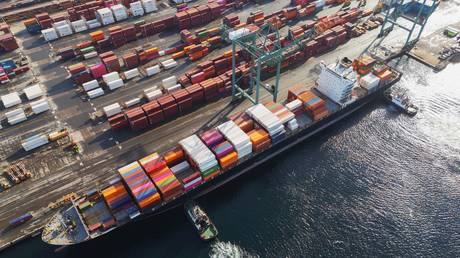
- Compromised Import Channels: The remaining supply relies on liquefied natural gas (LNG) imports processed through floating storage and regasification units (FSRUs), contributing up to 410 mmcfd under optimal conditions. This channel experienced severe bottlenecks following an operational accident at the Excelerate Energy terminal and subsequent weather-related unloading disruptions at the Summit-operated terminal.
When regasification capacity drops concurrently with domestic field decline, gas-fired power plants cannot operate at base load. The national grid recorded an average power deficit of 2,745 megawatts during peak evening hours, directly triggering extensive load-shedding.
The Geopolitical Transmission Mechanism
Domestic infrastructure failures are amplified by external price and supply shocks originating from the Middle East. The ongoing conflict involving Iran has introduced acute volatility into international liquefied natural gas and fuel markets.
Bangladesh transitioned over the past decade from relative domestic self-sufficiency to structural import dependency. As local extraction plateaued, incremental energy demand was met via spot-market LNG purchases. The Middle Eastern crisis disrupted maritime logistics and spiked global spot prices.
This creates a dual-constraint economic problem:
- Physical Scarcity: Spot cargoes are physically harder to secure as European and Asian buyers compete for non-pipeline gas supplies amid regional maritime security risks.
- Fiscal Strain: Higher landed costs for imported LNG strain foreign exchange reserves, forcing state energy corporations to ration letters of credit for fuel imports. Consequently, the state cannot utilize high-cost liquid fuel alternatives to compensate for the natural gas deficit without depleting national currency reserves.
Demand-Side Compression and Commercial Rations
Faced with a grid incapable of meeting peak load requirements, the administration has implemented administrative load management. The primary instrument is mandatory demand suppression via time-of-use restrictions.
Under current directives, shopping malls, retail markets, and commercial establishments must cease operations by 8 PM, operating only within a compressed window from 11 AM. Fairs, trade exhibitions, and cultural gatherings face identical cutoffs. Illuminated billboards and decorative lighting are restricted or banned entirely, while essential entities such as hospitals, pharmacies, and food retail outlets remain exempt.
These measures attempt to shave the evening peak load curve. Commercial lighting, air conditioning, and retail electronics constitute a massive portion of urban consumption between 6 PM and 10 PM. By cutting this demand block, the grid operator attempts to prevent total frequency collapse and cascading system trips.
However, commercial hour restrictions function as a blunt instrument. While they reduce urban peak demand, they compress retail revenue velocity and disrupt supply chain logistics for consumer goods without solving the underlying generation deficit. Industrial users face parallel pressures, where gas allocation cuts to fertilizer factories and captive power plants constrain manufacturing output.
The Grid Management Dilemma
Energy planners face a closed loop with no frictionless exits. Relying entirely on domestic production is mathematically impossible given current field depletion rates. Scaling up immediate LNG imports is constrained by damaged marine terminal infrastructure, adverse weather in the Bay of Bengal, and high global spot prices driven by the geopolitical crisis.
Grid stabilization requires concurrent operational execution across three distinct vectors: prioritizing physical repairs on offshore regasification terminals to restore nameplate import capacity, establishing bilateral emergency energy sharing agreements with neighboring power surplus nations to inject baseline megawatts, and enforcing tiered industrial load-shedding schedules that protect continuous-process manufacturing while penalizing non-essential commercial consumption. Without these adjustments, administrative curfews will remain a permanent fixture of national energy management.