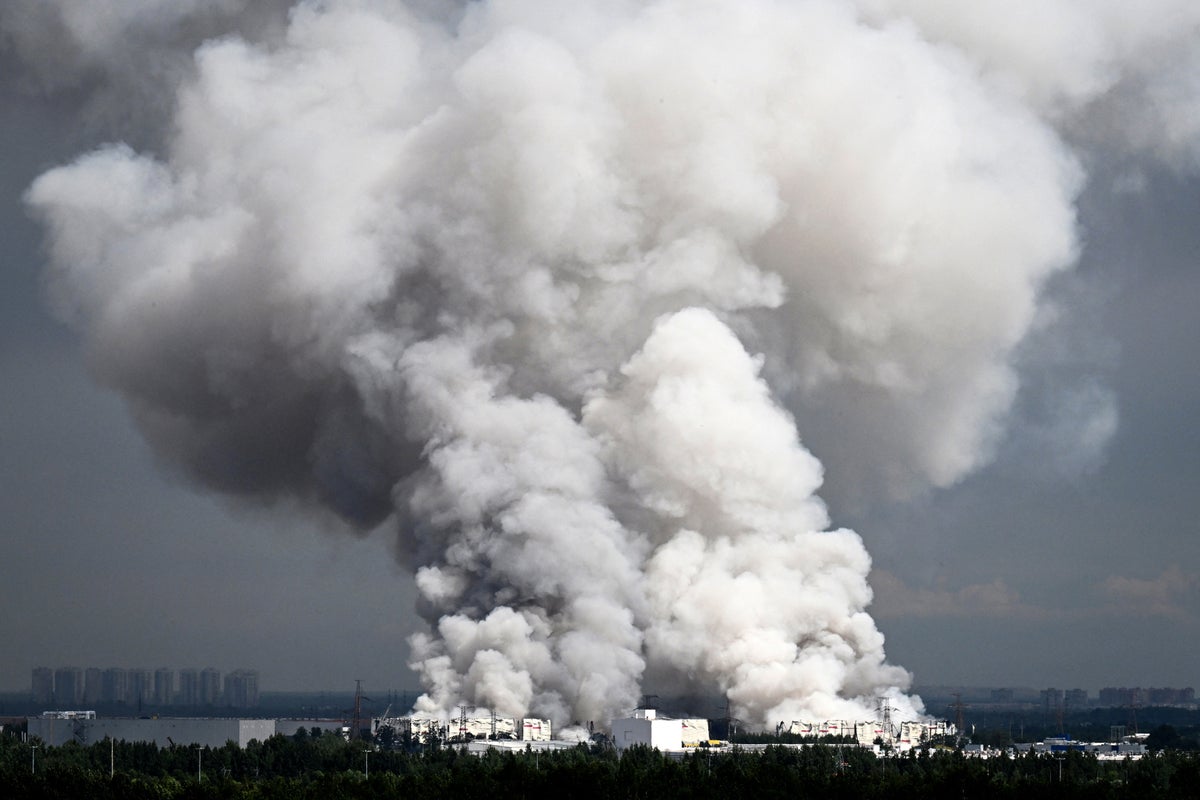
Modern interstate conflict operates on the erosion of commercial boundaries, transforming distributed civilian supply chains into direct military nodes. The systematic targeting of Wildberries, Russia’s dominant online marketplace, by Ukrainian long-range uncrewed aerial vehicles marks a significant evolution in strategic targeting. Observers accustomed to analyzing oil refineries, power stations, and munitions depots must now reorient their frameworks toward logistics networks that blend consumer retail with military dual-use procurement.
The rationale behind these strikes rests on three structural pillars: dual-use inventory integration, financial systemic risk, and commercial insurance mechanics. Understanding how a civilian platform functions as a critical vulnerability requires examining the operational architecture of Russia's largest digital retailer.
The Dual-Use Logistics Vector
Marketplaces operating at scale inherently obscure the nature of individual transactions. Wildberries acts as a generalized logistics provider, hosting millions of third-party vendors selling items that range from apparel and groceries to microelectronics and tactical gear.
Ukrainian military authorities contend that the platform serves as a decentralized procurement arm for frontline forces. Commercial digital storefronts within Russia have adapted to supply irregular military units with non-standard equipment, bypassing traditional defense procurement bottlenecks. These items include:
- Commercial drone components and replacement frames
- Optoelectronic navigation devices and thermal optics
- Field communications hardware and tactical textiles
- Body armor plates and unarmored helmets marketed as civilian safety gear
When a distribution center aggregates thousands of tons of third-party inventory, distinguishing between consumer electronics and tactical components becomes impossible at the macro level. Consequently, long-range strikes against regional distribution hubs disrupt both civilian commerce and the shadow procurement pipeline feeding irregular formations.
The Macroeconomic Shock Propagation
The physical destruction of over a dozen regional warehouses generates secondary economic shockwaves that extend far beyond lost inventory. Wildberries is deeply integrated into the domestic financial ecosystem. Market intelligence indicates that the enterprise holds significant debt obligations across domestic Russian financial institutions.
The collapse of physical infrastructure creates a localized credit crisis for small and medium enterprises utilizing the platform. When a regional warehouse burns, thousands of independent merchants lose their entire circulating inventory.
The mechanism of failure operates through three sequential phases:
- Inventory Liquidation: Drone impacts destroy stored goods, eliminating immediate revenue streams for small vendors.
- Contractual Shift: Wildberries updated its vendor agreements to classify drone strikes and military actions as force majeure, legally insulating the platform from compensation liabilities to third-party merchants.
- Default Cascades: Deprived of inventory and uninsured against wartime kinetic destruction, small merchants default on commercial loans extended by partner banks, translating retail disruptions into systemic banking pressure.
This strategy shifts the burden of economic attrition from direct state-to-state military expenditures onto the domestic commercial sector, forcing state lenders to either bail out overextended vendors or absorb widespread defaults.
The Cost Function of Distributed Storage
E-commerce resilience relies on geographic distribution. To minimize delivery times across nine time zones, Wildberries maintained a hyper-extended footprint of massive fulfillment centers. While this structure optimizes last-mile delivery economics, it creates massive target profiles for long-range vector navigation systems.
Centralizing inventory in massive regional hubs reduces unit shipping costs but increases vulnerability. Spreading inventory across hundreds of smaller, localized depots would mitigate catastrophic loss, yet such a configuration destroys the unit economics that make platform-based retail profitable. The operational dilemma facing Russian supply chain managers has no optimal solution: maintain centralized hubs and accept high-consequence kinetic vulnerability, or decentralize and accept prohibitive fulfillment costs.
Strategic Outlook
The campaign against commercial logistics platforms redefines the threshold of strategic asset valuation. As long as digital retail infrastructure absorbs and redistributes dual-use hardware for active military operations, geographic civilian status ceases to function as an operational shield. The ultimate trajectory points toward a permanent integration of commercial enterprise analysis into military targeting matrices, permanently altering the risk calculus for domestic monopolies operating within active conflict zones.
Fubu Toy review
This video provides contextual analysis regarding the economic impact and geopolitical rationale behind the recent drone strikes on Russia's largest online retailer.
http://googleusercontent.com/youtube_content/1