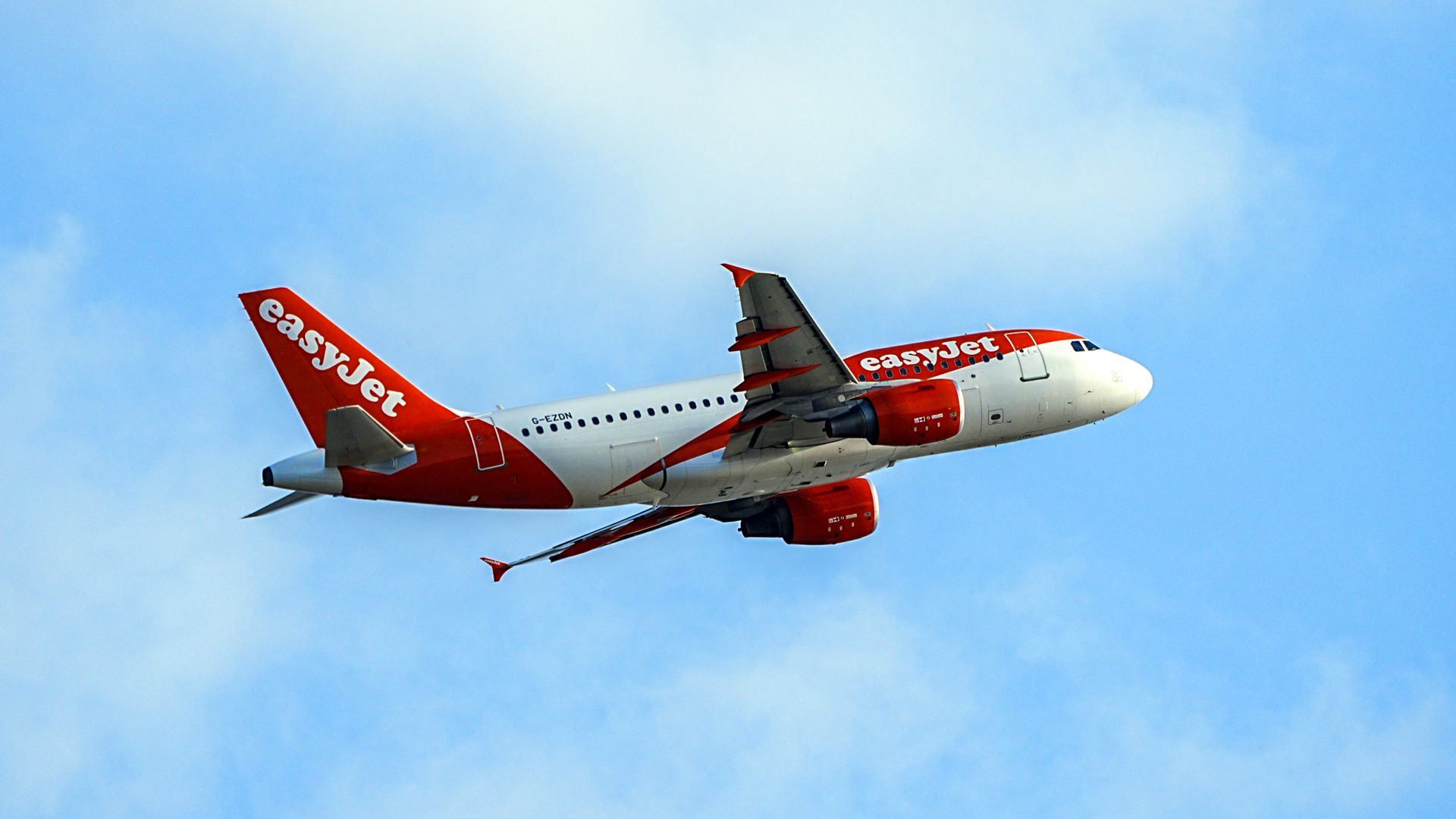
The consolidation of European aviation is accelerating, driven by structural capacity constraints, regulatory environmental costs, and post-pandemic balance sheet normalization. Within this environment, easyJet plc presents a classic corporate finance anomaly: a fundamentally sound operational asset trading at a persistent valuation discount relative to its intrinsic replacement value and strategic positioning. The interest from private equity firms and legacy network carriers is not speculative. It is a rational response to a structural misalignment between the company's public market equity valuation and the private market value of its core strategic assets, specifically its slot portfolio at slot-constrained, primary European airports.
To understand the takeover thesis, one must dissect easyJet through three distinct lenses: the economic moat of primary slot ownership, the capital allocation transformation of its holidays division, and the cost-structure arbitrage available to a private or strategic buyer. Meanwhile, you can find other developments here: Why Philadelphia Historical Preservation is Ruining the City Economy.
The Primary Slot Premium and Barrier to Entry Economics
The European low-cost carrier (LCC) sector is bifurcated by operational models. On one side, ultra-low-cost carriers (ULCCs) like Ryanair rely on secondary, non-congested airports to maximize aircraft utilization and minimize airport aeronautical charges. On the other side, easyJet occupies primary, capacity-constrained hubs.
This geographic focus creates a structural barrier to entry governed by the Grandfather Rights rule under Worldwide Airport Slot Guidelines (WASG). At airports like London Gatwick (LGW), Paris Charles de Gaulle (CDG), Amsterdam Schiphol (AMS), and Geneva (GVA), new slot creation is functionally zero due to environmental caps and physical infrastructure limits. To see the full picture, we recommend the excellent analysis by Investopedia.
Slot Value = PV of Future Monopoly Rents - Alternative Route Opportunity Cost
The economic value of easyJet’s slot portfolio does not appear on its balance sheet under International Financial Reporting Standards (IFRS), as internally generated intangible assets are not capitalized. This creates a severe understatement of the company’s asset backing. A acquiring entity looks at the liquidation and strategic value of these slots through several mechanisms:
- Defensive Moat Acquisition: For a legacy peer (such as International Airlines Group or Lufthansa Group), acquiring easyJet removes a major short-haul competitor from their primary hubs, allowing them to reallocate these slots to high-margin long-haul feeder traffic.
- The 80/20 Rule Arbitrage: Under current regulations, an airline must operate a slot series at least 80% of the time to retain it for the following season. Public markets penalize easyJet when macroeconomic headwinds force it to fly low-margin winter schedules to protect these slots. Private equity, with a longer investment horizon, can absorb short-term operational losses to preserve the multi-billion-pound long-term value of the slot portfolio.
- Asset Monetization Potential: Slots can be leased or traded. In past transactions, a single pair of early-morning slots at London Heathrow has commanded upwards of £60 million. While Gatwick and continental slots trade at a discount to Heathrow, easyJet’s dominant market share at Gatwick (over 40%) represents a concentrated asset block that could never be assembled organically through the open market.
The Capital-Light Margin Expansion of easyJet Holidays
Public markets frequently value airlines using cyclical, low-multiple frameworks (typically 4x to 6x EV/EBITDA) due to high capital intensity, fuel price volatility, and labor union leverage. However, this valuation paradigm fails to account for the internal structural shift created by easyJet Holidays.
Launched to monetize the existing passenger flow, the holidays business operates on a capital-light, negative working capital model. Unlike traditional tour operators that lease aircraft and commit to long-term hotel inventory risk, this model plugs directly into the existing airline network.
The Margin Accretion Mechanism
The airline bears the fixed costs of the aviation infrastructure (depreciation, flight crew, maintenance). The holidays division sells the excess inventory (seats) bundled with third-party hotel procurement. This creates an asymmetric profit profile:
- Customer Acquisition Cost (CAC) Minimization: The holiday business acquires customers via the airline’s high-traffic direct digital platform, eliminating the expensive marketing funnel costs faced by pure-play digital travel agencies (OTAs) like Booking.com or Expedia.
- Negative Working Capital Cycle: Customers pay for holiday packages months in advance, while easyJet settles with hotel operators post-stay. This provides a continuous source of interest-free operational cash flow that can be deployed to reduce high-interest debt or fund fleet modernization.
- Risk Asymmetry: If a route underperforms, the airline scales back capacity. The holiday business carries no stranded hotel inventory liability, shifting the risk entirely to the accommodation providers.
By achieving profit margins significantly higher than the core airline operation, the holidays division deserves a technology or services valuation multiple (10x to 12x EV/EBITDA). The public market’s insistence on applying a blended airline multiple to the entire consolidated entity creates a sum-of-the-parts valuation discount that private equity sponsors are built to exploit.
Cost Structure Disadvantages and Capital Structure Arbitrage
The core vulnerability making easyJet an attractive target is its mid-tier cost structure, often referred to as the "stuck in the middle" strategic trap.
Cost per Available Seat Kilometer (CASK) = Total Operating Expenses / (Available Seats * Kilometers Flown)
An analysis of Revenue per Available Seat Kilometer (RASK) versus Cost per Available Seat Kilometer (CASK) reveals why a change in corporate governance is highly probable.
| Metric Component | Ultra-Low-Cost (Ryanair) | Mid-Tier LCC (easyJet) | Legacy Network (British Airways) |
|---|---|---|---|
| Primary Airport Focus | Low (Secondary Hubs) | High (Primary Hubs) | Very High (Global Hubs) |
| Aeronautical Fees / CASK | Minimal | Elevated | High |
| Fleet Commonality | Absolute (Single Type) | High (A320 Family) | Low (Mixed Fleet) |
| Direct Distribution % | ~99% | ~95% | ~60-70% |
Because easyJet operates out of primary airports, its ground handling, airport navigation, and passenger service charges are structurally higher than those of pure ULCCs. However, it cannot charge the premium business-class or long-haul connectivity fares of legacy network carriers. This compresses its net fee margins during macroeconomic downturns.
A strategic buyer or private equity consortium can solve this structural compression through three non-public operational maneuvers:
Fleet Rationalization and Contract Renegotiation
easyJet is undergoing a multi-year fleet transition from older Airbus A320ceo aircraft to the highly efficient A320neo and A321neo variants. The neo aircraft deliver a 15% reduction in fuel burn and a double-digit reduction in noise footprint.
A private owner can accelerate this capital expenditure program away from the scrutiny of quarterly earnings reports, utilizing private credit or asset-backed securitization structures that public equity markets currently penalize as over-leveraging. Furthermore, taking the company private removes the public reporting requirements that strengthen the bargaining position of Eurocontrol, national air traffic agencies, and organized labor unions during contract disputes.
De-risking via Fleet Sale-and-Leasebacks
A private equity buyer can immediately unlock liquidity post-acquisition by executing a systematic sale-and-leaseback program on easyJet’s owned aircraft fleet. By selling the physical hulls to global aircraft leasing firms and renting them back, the buyer extracts upfront cash to pay down the acquisition debt, shifting the capital risk of residual aircraft value onto the lessors.
Synergy Realization via Legacy Integration
If acquired by a legacy airline group (e.g., IAG), the operational overlaps can be stripped out. Short-haul corporate overhead, redundant IT architecture, and duplicate marketing spend are eliminated.
More critically, the network can be reconfigured. Low-yield point-to-point leisure routes can be converted into high-density feeder routes, funnelling high-margin premium passengers into the parent company’s transatlantic and transpacific long-haul networks.
The Regulatory and Execution Thresholds to Takeover
Any proposed acquisition of easyJet faces severe structural and regulatory hurdles that distort its public pricing. Speculative premiums are depressed because the market prices in the execution risk of two main regulatory bottlenecks.
The Ownership and Control Clauses
Under European Union and UK aviation laws, an airline holding an Air Operator Certificate (AOC) must be more than 50% owned and effectively controlled by EU nationals (for EU operations) or UK nationals (for UK operations). A standard cross-border buyout by a US-based private equity fund or a foreign airline group is legally impossible without complex dual-voting share structures or local proxy entities. This restricts the pool of viable acquirers to European-capitalized vehicles or requires a consortium model where domestic investors retain voting control while the financial sponsor takes economic ownership via non-voting shares.
Antitrust and Competition Authorities
An acquisition by a legacy carrier like IAG or Air France-KLM would trigger intense scrutiny from the UK Competition and Markets Authority (CMA) and the European Commission. The investigation would center on city-pair monopolies. For example, if an IAG-owned British Airways merged with easyJet, the combined entity would hold a near-monopoly on critical business corridors out of London to cities like Nice, Geneva, and Milan.
To clear this hurdle, the acquirer would be forced to remedy antitrust concerns by divesting a significant portion of easyJet's most valuable asset: its primary airport slots. This requirement directly dilutes the primary strategic rationale for the acquisition in the first place.
Optimal Strategic Trajectory
The current public market discount on easyJet cannot persist indefinitely in a consolidating industry. The company cannot organically shrink its way to ULCC CASK levels without abandoning its primary airport strategy, nor can it scale up fares to match legacy carriers without introducing complex premium cabins that ruin its high-utilization, single-class operational model.
The most viable corporate defense to maximize shareholder value—and prevent an opportunistic low-ball takeover—is an accelerated corporate unbundling. The board should execute a structural carve-out and independent public listing of easyJet Holidays.
By isolating the capital-intensive, asset-heavy airline operation from the high-margin, negative-working-capital digital travel business, the market will be forced to value the holidays division on an OTA-style multiple. This move would instantly crystallize value, re-rate the consolidated group equity, and raise the acquisition price floor to a level that forces potential corporate raiders to pay full replacement value for the underlying slot infrastructure. Failure to unlock this value internally guarantees that an institutional investor or strategic consortium will eventually do it via a leveraged buyout.