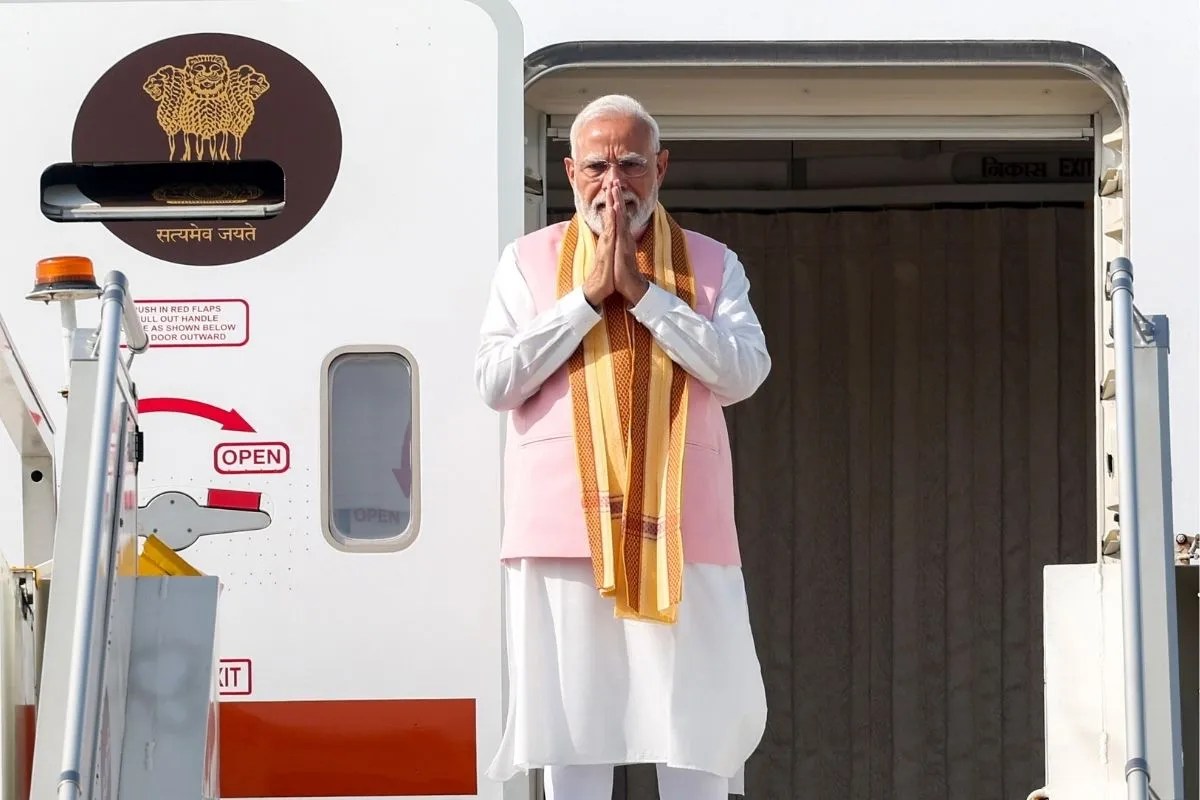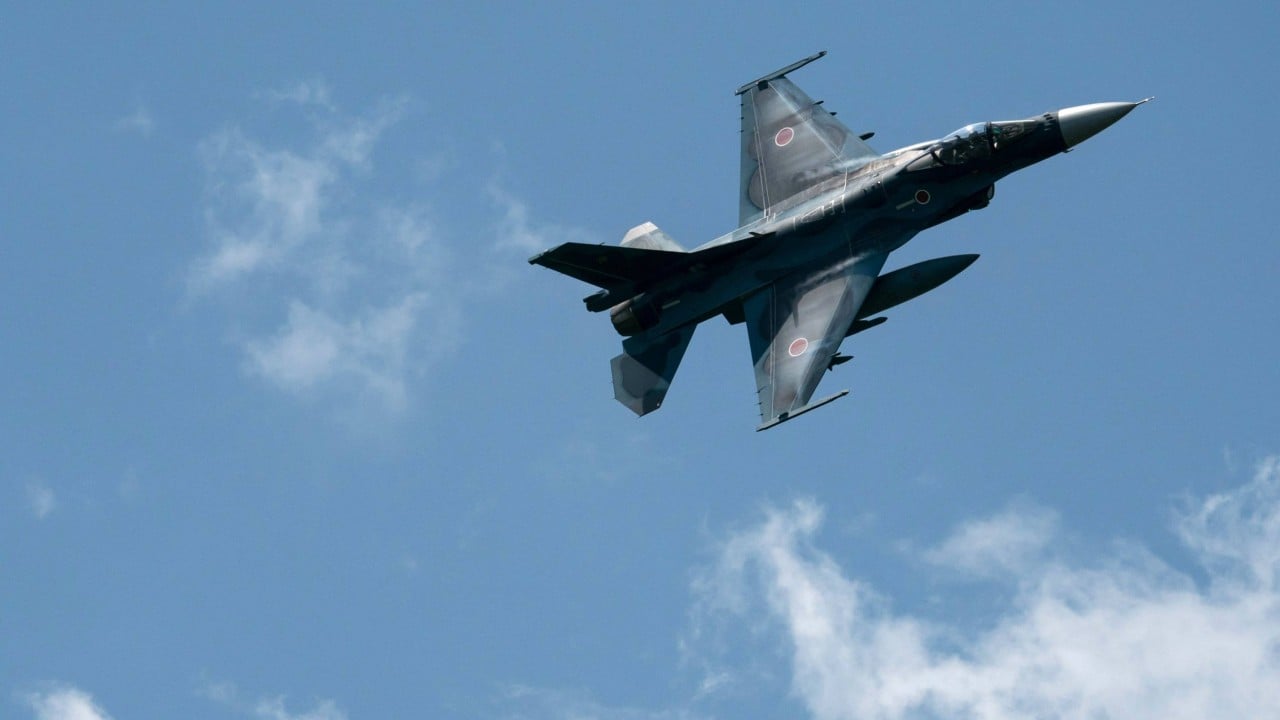
The deployment of Japan Air Self-Defense Force F-2 fighter aircraft to India for the Veer Guardian exercises represents a structural evolution in Indo-Pacific security architecture. Standard geopolitical commentary often reduces this bilateral maneuver to simple containment rhetoric directed against Beijing. Beneath the diplomatic signaling lies a complex calculus of expeditionary logistics, defense industrial integration, and force interoperability.
The Logistics Cost Function of Expeditionary Power Projection
Moving tactical fighter aircraft thousands of miles outside domestic command zones tests an air force's logistical baseline. For decades, Article 9 of Japan's constitution restricted the Japan Air Self-Defense Force to localized territorial defense. Projecting three F-2 fighters and approximately 110 personnel from Tsuiki Air Base to the western Indian state of Rajasthan requires overcoming severe operational friction. You might also find this similar coverage interesting: What Everyone Gets Wrong About the Military Purges in Beijing.
The exercise forces Tokyo to solve three primary logistical hurdles:
- En-route staging and transit approvals: Securing diplomatic clearance and refueling corridors across intermediate Asian airspace.
- Maintenance supply chain resilience: Sustaining high-tempo sorties without permanent overseas maintenance depots or native spare-part stockpiles.
- Command and control interoperability: Integrating tactical data links and communication protocols between Japanese crews and Indian Air Force infrastructure.
By executing this deployment, Tokyo converts abstract security partnerships into tangible expeditionary muscle. The Japan Air Self-Defense Force gains critical empirical data on long-range deployment friction, transforming theoretical defense cooperation into operational readiness. As extensively documented in detailed reports by USA Today, the effects are widespread.
The Industrial and Technological Vector
The military alignment between Japan and India functions as a dual-purpose mechanism encompassing both strategic signaling and defense industrial restructuring. Tokyo's recent relaxation of defense equipment transfer restrictions enables a shift from passive security dialogue to active technological trade.
The defense industrial strategy operates on two distinct tiers:
- Subsystem integration: Transferring high-value defense electronics, such as the UNICORN integrated communications antenna system derived from Maritime Self-Defense Force frigates, to modernize Indian naval platforms.
- Platform co-development potential: Laying the groundwork for joint research into next-generation avionics, radar systems, and counter-stealth sensors.
For New Delhi, acquiring access to Japanese electronics and manufacturing precision mitigates heavy reliance on legacy defense suppliers. For Tokyo, exporting defense technology expands the domestic manufacturing base, lowering unit costs through economies of scale and circumventing strict domestic procurement caps.
Strategic Asymmetries and Regional Friction
Beijing evaluates this bilateral consolidation through the lens of strategic encirclement. Chinese foreign policy analysts consistently frame the deepening security nexus between Tokyo and New Delhi as an attempt to construct a southern maritime and aerial counterweight.
The structural tension stems from a fundamental divergence in strategic intent:
- The Japanese objective: Institutionalizing a network of like-minded Indo-Pacific partners to deter unilateral territorial changes in the East and South China Seas while breaking out of post-war military self-sufficiency limits.
- The Indian objective: Maximizing strategic autonomy by diversifying defense partnerships, acquiring critical dual-use technology, and maintaining operational dominance along the contested Himalayan frontier and the Indian Ocean Region.
Beijing's counter-strategy relies on deepening its own economic and military integration with regional partners, particularly through the China-Pakistan economic corridor, creating a persistent two-front operational dilemma for the Indian military establishment. This dynamic ensures that every tactical aviation exercise in Rajasthan carries immediate strategic ramifications for the balance of power across continental and maritime Asia.
Operational Execution
Integrate secure, encrypted data-link bridges between disparate command nodes during bilateral air combat training to mitigate interoperability bottlenecks before transitioning to joint maritime choke-point surveillance operations.