The operational reality of a US military intervention in Cuba rests not on political rhetoric but on the structural readiness of the United States Southern Command (SOUTHCOM) and the specific logistical friction points of the Florida Straits. While media reports focus on the executive intent of a potential Trump administration, the technical readiness of the Pentagon involves a three-tier escalation framework: Intelligence, Surveillance, and Reconnaissance (ISR) saturation, blockade mechanics, and kinetic amphibious entry. Any direct intervention requires a radical shift from the current "deterrence through presence" model to a high-intensity "regime destabilization" posture, a transition that triggers immediate geopolitical and economic bottlenecks.
The Tri-Node Escalation Framework
Strategic planners categorize intervention into three distinct operational phases. Each phase possesses a unique cost-benefit profile and requires specific hardware deployments that cannot be hidden from satellite observation.
Phase I: ISR Saturation and Electronic Warfare
Before a single kinetic action occurs, the US military must achieve total information dominance. This involves the deployment of high-altitude long-endurance (HALE) platforms, such as the RQ-4 Global Hawk, to map Cuban integrated air defense systems (IADS).
The primary objective here is the neutralization of the Cuban S-125 Pechora and S-75 Dvina surface-to-air missile systems. Although these systems are aged, their integration into a dense, mountainous terrain creates a "denial of access" risk for low-flying transport aircraft. A strategic shift under a Trump administration would involve:
- Signal Intelligence (SIGINT) Expansion: Monitoring Cuban military communications to identify command-and-control (C2) nodes.
- Cyber-Kinetic Integration: Disabling electrical grids or communication hubs via non-kinetic electronic attack (EA) to induce domestic friction.
Phase II: The Maritime Exclusion Zone (Blockade Logic)
A naval blockade, often termed a "quarantine" for legal cushioning, represents the most likely intermediate step. The logistical goal is the severance of Cuban energy imports, specifically those originating from Venezuela.
Cuba’s energy grid is fragile. The 2024 total grid collapses demonstrated that the nation operates on a razor-thin margin of fuel reserves. A US Navy blockade focused on the Port of Mariel and the Matanzas supertanker terminal would likely induce a systemic state failure within 14 to 30 days. The military must calculate the "humanitarian friction" of this move; a total blackout triggers mass migration events (Mariel 2.0 scenarios), which complicates the very naval assets enforcing the blockade by forcing them into Search and Rescue (SAR) roles.
Phase III: Kinetic Entry and Amphibious Assault
This is the highest-risk tier. Unlike the 1983 invasion of Grenada or the 1989 intervention in Panama, Cuba possesses a standing professional military (the Revolutionary Armed Forces or FAR) and a deeply embedded Territorial Troops Militia (MTT).
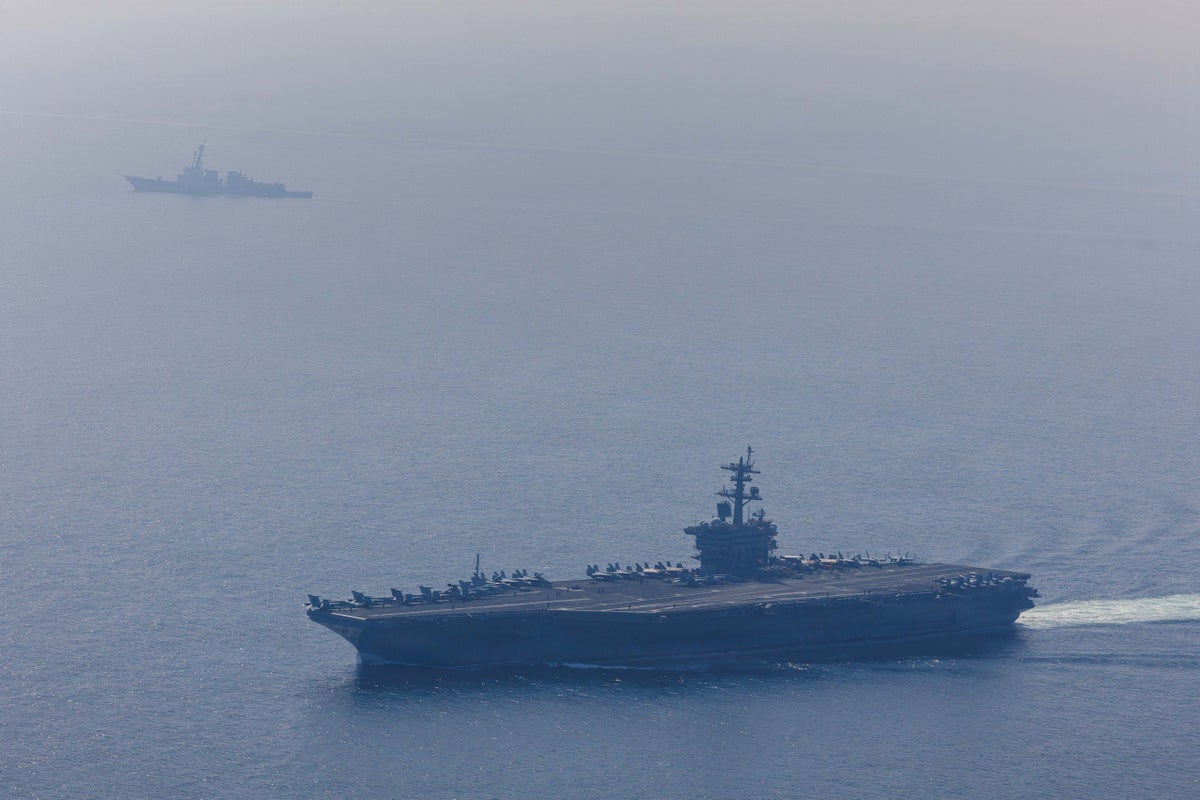
Military planners must account for the "Urban Siege" variable. Havana is a dense, high-complexity urban environment. A direct intervention would require at least two Brigade Combat Teams (BCTs) to secure primary landing zones, supported by Carrier Strike Group (CSG) air cover. The friction here is not the initial entry, but the transition to "Stability Operations" (Phase IV), where the US would face an asymmetrical insurgency supported by the Cuban interior’s karst topography (cave systems).
The Logistics of Migration as a Weapon
In any Cuba intervention scenario, the "Migration Pressure Variable" acts as a counter-intervention tool used by the Cuban state. Historically, the Cuban government has utilized the threat of mass exodus to force US diplomatic concessions.
If the Pentagon ramps up plans, they must simultaneously mobilize the Department of Homeland Security (DHS) and the Coast Guard for a massive interdiction effort. This creates a resource drain. For every destroyer positioned for a blockade, several cutters must be positioned for migrant processing.
The Cost of Containment
The fiscal burden of a sustained blockade and migration containment is estimated in the range of $150 million to $400 million per month, depending on the level of maritime engagement. This does not include the long-term cost of a "post-intervention" administration.
Geometric Realities of the Florida Straits
The 90-mile distance between Key West and Havana is a tactical double-edged sword. While it allows for rapid US power projection, it places the Florida coastline within the range of Cuban asymmetrical assets.
- Small Craft Vulnerability: Cuba’s navy consists largely of fast-attack craft and midget submarines. In a confined littoral space, these represent a "mosquito threat" that can harass larger US vessels.
- Airspace Congestion: The proximity to Florida means that combat sorties from Homestead Air Reserve Base or NAS Key West have zero "dwell time" issues, but they must navigate one of the busiest civilian flight corridors in the world.
Geopolitical Counter-Moves: The Russia-China Pivot
The Pentagon’s planning cannot occur in a vacuum. A direct intervention in Cuba would likely trigger a reciprocal escalation in other theaters.
Russia maintains a SIGINT facility at Lourdes (historically) and has recently increased naval visits to Havana. China has invested heavily in Cuban telecommunications infrastructure. A US move to "order direct intervention" would be viewed by Moscow and Beijing as a violation of the "Sphere of Influence" status quo, potentially leading to increased naval presence in the Caribbean or reciprocal pressure in the Taiwan Strait or Eastern Europe.
The "Pillar of Sovereignty" argument used by the Cuban government remains their strongest diplomatic defense. By framing US intervention as an imperialist relic, they secure a degree of diplomatic cover from the Global South, complicating the formation of any multilateral "Coalition of the Willing."
The Logic of the "Regime Collapse" Threshold
Strategic planners must identify the "Tipping Point"—the moment where the Cuban military (FAR) decides that the cost of defending the current administration exceeds the benefit of cooperation with an incoming transitional authority.
The FAR is not merely a military wing; it is a business conglomerate (GAESA) that controls approximately 60% of the Cuban economy, including tourism and retail. This creates a unique "Economic Leverage Point."
- Financial Targeted Sanctions: If the US can freeze GAESA’s international accounts effectively, it undermines the military's loyalty to the political leadership.
- The Officer Class Dilemma: Intervention strategies include psychological operations (PSYOP) targeting middle-ranking officers, offering them amnesty or roles in a post-transition government in exchange for non-resistance.
Institutional Resistance within the Pentagon
There is a documented divergence between executive political desire and Joint Chiefs of Staff (JCS) caution. Military leadership historically resists "Open-Ended Commitments" that lack a defined exit strategy.
The "Powell Doctrine" requirements for overwhelming force and clear objectives are difficult to satisfy in a Cuban scenario. The Pentagon’s "ramped up plans" are likely contingency-based (CONPLANs) rather than a definitive "Execution Order" (EXORD). These plans are updated every cycle regardless of the administration, but the current geopolitical climate has increased the "Ready-to-Deploy" status of these documents.
The Problem of "Post-Conflict" Governance
Occupying a nation of 11 million people with a history of anti-colonialist sentiment is a logistical nightmare. The US would be responsible for:
- Energy Grid Reconstruction: Replacing the entire aging Soviet-era infrastructure.
- Currency Unification: Managing the transition from a dual or failing currency to a stable market.
- Food Security: Cuba imports nearly 70% of its food. A disruption in the supply chain during intervention would necessitate a massive US-led humanitarian airlift.
Operational Conclusion and Strategic Forecast
The probability of a kinetic "boots on the ground" intervention remains lower than the probability of a "Maximum Pressure 2.0" naval and electronic blockade. The Pentagon’s current activity is best understood as a "Pressure Calibration" exercise.
The strategic play for any administration is not a full-scale invasion, which carries too much political and migratory risk, but rather a "Surgical Attrition" model. This involves:
- Strict Maritime Interdiction: Cutting the oil-for-doctors swap with Venezuela to zero.
- Targeting GAESA: Decoupling the Cuban military's financial interests from the Communist Party's political survival.
- Information Infiltration: Using Starlink or similar satellite-based internet to bypass state-controlled servers and facilitate internal organization among dissident groups.
Investors and regional actors should watch for the deployment of "Hospital Ships" and "Amphibious Ready Groups" (ARGs) to the Caribbean as the primary signal that planning has shifted from the "Contingency" phase to the "Execution" phase. Until such hardware movements are verified, the "ramping up" remains a tool of psychological warfare rather than a precursor to immediate combat.